
Table of Contents
Sardar VallabhBhai Patel – The Iron Man of India 🇮🇳
Have you ever wondered how a fragmented nation of over 560 princely states transformed into the united India we know today? The answer lies in the extraordinary efforts of one man: Sardar VallabhBhai Patel. Known as the “Iron Man of India,” Patel’s unwavering determination and strategic brilliance played a pivotal role in shaping the country’s destiny.
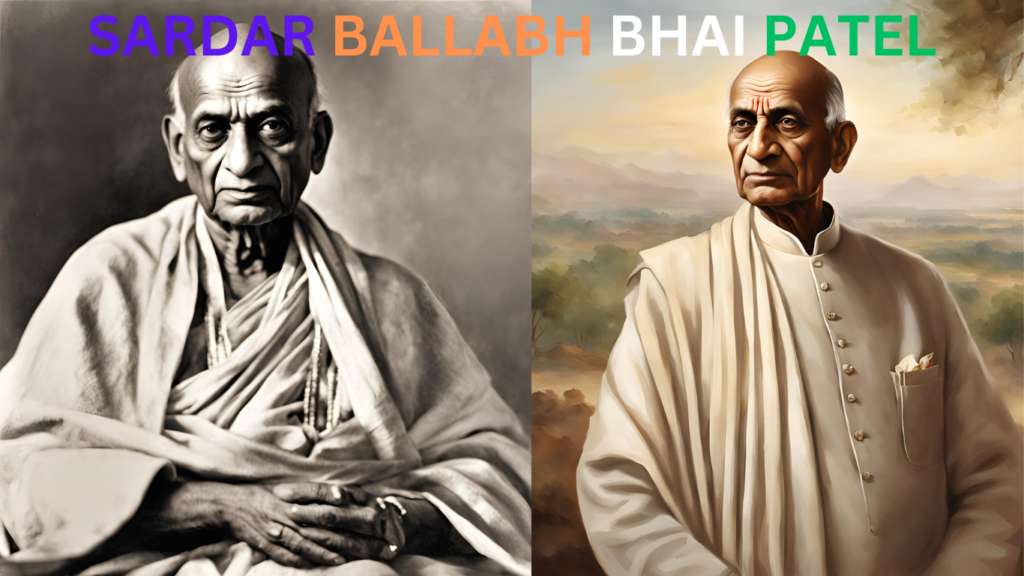
Imagine a India torn apart by conflicting interests, with hundreds of rulers reluctant to give up their power. It was a daunting challenge that threatened to derail India’s hard-won independence. This is where SARDAR Vallabhbhai Patel stepped in, armed with his exceptional negotiation skills and vision for a unified nation. His contributions to India’s freedom struggle and the subsequent integration of princely states are nothing short of remarkable. Join us as we delve into the life and legacy of this extraordinary leader, exploring how he helped forge the India we know today.
Sardar Patel’s Early Life and Political Career
Childhood and education
SARDAR Vallabhbhai Patel, born on October 31, 1875, in Nadiad, Gujarat, grew up in a farming family. His early years were marked by simplicity and hard work, instilling in him values that would shape his future leadership. Patel’s formal education began relatively late, but he quickly proved to be an exceptional student.
- Key aspects of Patel’s childhood:
- Born into a Patidar family
- Grew up in a rural environment
- Developed a strong work ethic from an early age
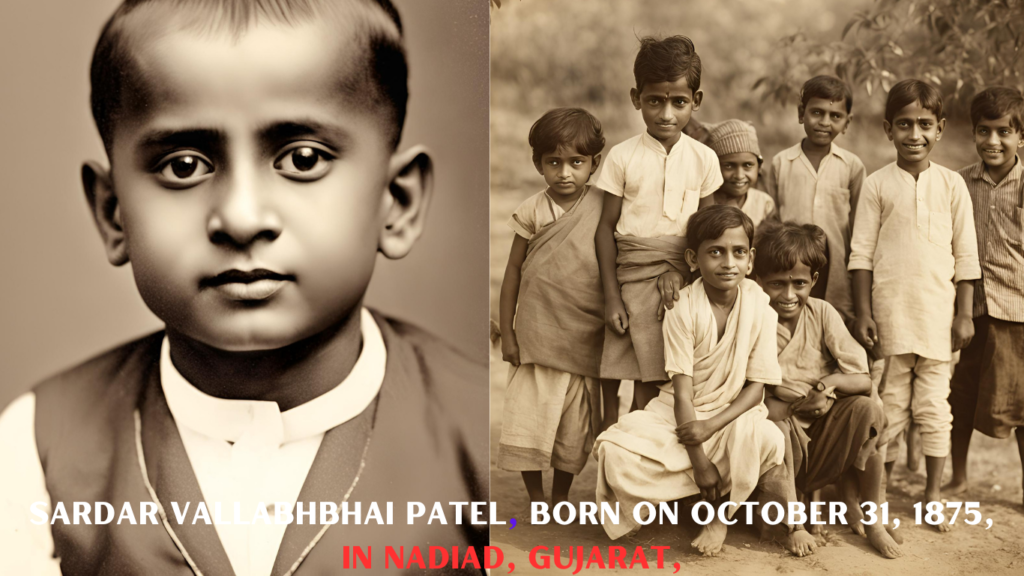
Patel’s educational journey:
- Completed primary education in Karamsad
- Passed matriculation at the age of 22
- Studied law in England
| Education Level | Institution | Year |
|---|---|---|
| Primary | Karamsad | – |
| Matriculation | Nadiad | 1897 |
| Law | Middle Temple, London | 1910-1913 |
Entry into Indian politics
SARDAR Vallabhbhai Patel’s entry into politics was gradual but impactful. After returning from England as a barrister, he established a successful legal practice in Ahmedabad. His political awakening came through local civic issues, where he demonstrated his leadership skills and ability to mobilize people.
Key milestones in Patel’s political entry:
- Elected to Ahmedabad Municipality (1917)
- Led Kheda Satyagraha (1918)
- Joined Non-Cooperation Movement (1920)
Role in the Indian National Congress
SARDAR Vallabhbhai Patel’s involvement in the Indian National Congress marked a turning point in his political career. He quickly rose through the ranks, becoming one of the most influential leaders of the freedom movement.
- Patel’s contributions to the Congress:
- Organized Bardoli Satyagraha (1928)
- Elected President of Indian National Congress (1931)
- Played a crucial role in the Quit India Movement (1942)
SARDAR Vallabhbhai Patel’s leadership style, characterized by pragmatism and decisiveness, earned him the title “Sardar” (leader). His ability to unite people and his unwavering commitment to India’s independence made him an indispensable figure in the Congress and the broader freedom struggle.
Key Contributions to India’s Independence Movement
A. Participation in Non-Cooperation Movement
Sardar Vallabhbhai Patel’s involvement in the Non-Cooperation Movement marked a significant turning point in India’s struggle for independence. His dedication and leadership during this period were instrumental in mobilizing the masses against British rule.
- Key actions during the Non-Cooperation Movement:
- Resigned from government service
- Organized boycotts of foreign goods
- Promoted the use of khadi and indigenous products
- Encouraged non-payment of taxes
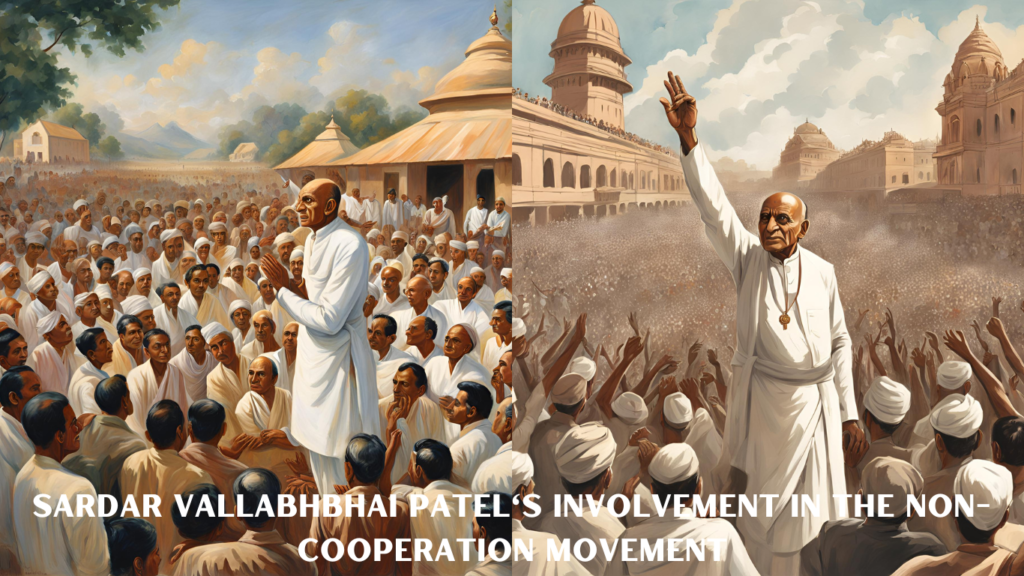
SARDAR Vallabhbhai Patel’s efforts in Gujarat were particularly noteworthy, as he successfully organized farmers and workers to participate in the movement.
B. Leadership in Civil Disobedience Movement
During the Civil Disobedience Movement, SARDAR Vallabhbhai Patel emerged as a prominent leader, showcasing his organizational skills and unwavering commitment to the cause of independence.
| Aspect | Patel’s Contribution |
|---|---|
| Salt Satyagraha | Led the Bardoli Satyagraha |
| Mass Mobilization | Organized protests and rallies |
| Legal Support | Provided assistance to arrested activists |
| Strategic Planning | Coordinated with other national leaders |
C. Role in Quit India Movement
The Quit India Movement saw SARDAR Vallabhbhai Patel playing a crucial role in coordinating underground activities and maintaining the momentum of the struggle.
- Patel’s contributions to the Quit India Movement:
- Organized secret communication networks
- Provided guidance to young activists
- Maintained unity among different factions
- Kept the movement alive despite widespread arrests
D. Negotiations with British government
As India approached independence, Patel’s pragmatic approach and negotiation skills proved invaluable. SARDAR Vallabhbhai Patel played a key role in discussions with the British government, advocating for a swift and peaceful transfer of power. Patel’s ability to balance firmness with diplomacy helped secure favorable terms for India during these critical negotiations.
Unification of Princely States
A. Challenges faced in integrating princely states
The unification of princely states presented numerous challenges for SARDAR Vallabhbhai Patel and the newly independent India. These states, which were not directly under British rule, had to be convinced or coerced to join the Indian Union. Some key challenges included:
- Diverse political landscapes
- Resistance from ruling princes
- Interference from external powers
- Complex legal and administrative issues
| Challenge | Description |
|---|---|
| Political diversity | Each state had its own governance structure |
| Princely resistance | Many rulers were reluctant to give up power |
| External interference | Some foreign powers sought to influence the process |
| Legal complexities | Integrating different legal systems was challenging |
B. Diplomacy and persuasion tactics
SARDAR Vallabhbhai Patelemployed a range of diplomatic strategies to convince princely states to join the Indian Union:
- Personal meetings with rulers
- Appealing to patriotic sentiments
- Offering favorable terms for integration
- Leveraging public opinion within princely states
C. Use of force when necessary
In cases where diplomacy failed, Patel did not hesitate to use force:
- Military action against Hyderabad
- Police action in Junagadh
- Threat of force against other resistant states
D. Success in integrating over 560 princely states
SARDAR Vallabhbhai Patels efforts resulted in the successful integration of more than 560 princely states into the Indian Union. This remarkable achievement laid the foundation for a unified and strong India, earning Patel the title “Iron Man of India.”
Examining the Ban on RSS: Historical Context and Implications
Reasons for the Ban
The Rashtriya Swayamsevak Sangh (RSS) faced a temporary ban in 1948 due to several controversial factors:
- Suspected involvement in Gandhi’s assassination
- Perceived threat to national unity
- Concerns about their ideological stance
Implementation of the Ban
SARDAR Vallabhbhai Patel, as the Home Minister, took decisive action to implement the ban:
- Issued official orders to outlaw RSS activities
- Arrested key RSS leaders and members
- Seized organizational assets and documents
| Action | Purpose |
|---|---|
| Outlawing activities | Prevent further spread of ideology |
| Arrests | Disrupt leadership and organization |
| Asset seizure | Weaken financial and operational capabilities |
Duration and Lifting of the Ban
The ban on RSS was relatively short-lived:
- Imposed in February 1948
- Lifted in July 1949
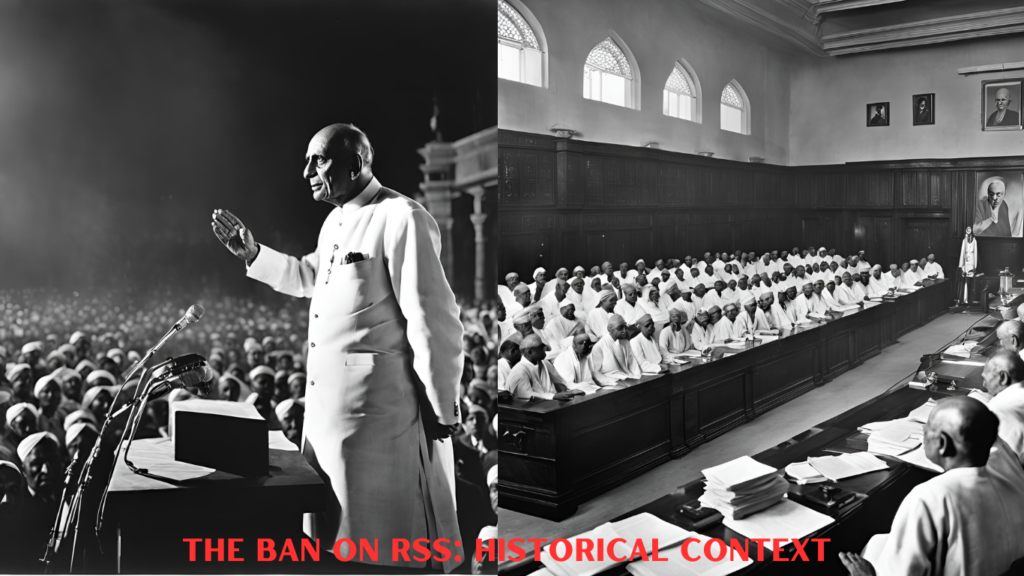
Patel’s Stance and Conditions
SARDAR Vallabhbhai Patel’s approach to the RSS ban was nuanced:
- Initially supported the ban due to security concerns
- Later advocated for lifting the ban under specific conditions
- Required RSS to adopt a formal constitution and limit activities to cultural matters
Impact on RSS and Indian Politics
The ban had lasting effects on both the RSS and India’s political landscape:
- RSS restructured its organization
- Adopted a more moderate public image
- Influenced the formation of political affiliates in later years
Now that we’ve examined the RSS ban, let’s explore Patel’s broader vision for a united India.
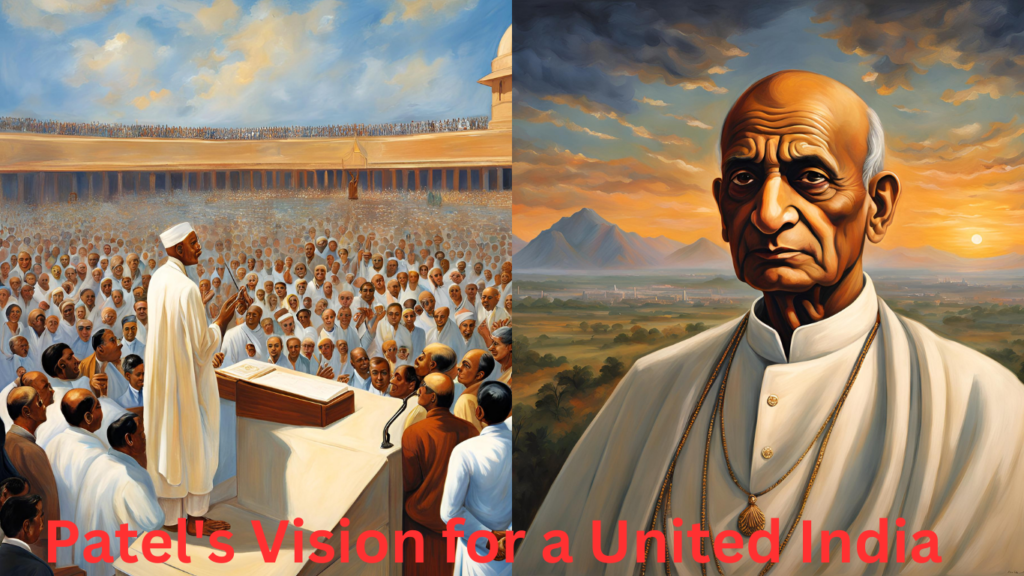
Patel’s Vision for a United India
Emphasis on national unity
Sardar Vallabhbhai Patel’s vision for a united India was rooted in his unwavering commitment to national unity. He believed that a strong, cohesive nation was essential for India’s progress and prosperity. Patel’s approach to unity focused on:
- Cultural integration
- Economic cooperation
- Political harmony
His efforts to promote national unity were evident in his speeches and actions, emphasizing the importance of:
- Shared history and cultural heritage
- Common national goals
- Collective responsibility
Efforts to prevent balkanization
Patel recognized the danger of balkanization and worked tirelessly to prevent the fragmentation of India. His strategies included:
- Diplomatic negotiations with princely states
- Firm stance against separatist movements
- Promotion of a pan-Indian identity
| Challenge | Patel’s Solution |
|---|---|
| Princely states’ autonomy | Integration through persuasion and, if necessary, force |
| Regional separatism | Emphasizing shared national interests |
| Linguistic divisions | Advocating for a common national language |
Creation of the Indian Administrative Service
Recognizing the need for a robust administrative framework, Patel spearheaded the creation of the Indian Administrative Service (IAS). This institution was designed to:
- Ensure efficient governance across the country
- Maintain national unity through standardized administration
- Provide a pool of talented civil servants dedicated to nation-building
The IAS became a crucial tool in implementing Patel’s vision of a united India, serving as the backbone of the country’s administrative structure and fostering a sense of national identity among its officers.
Legacy and Impact
Earned title “Iron Man of India”
Sardar Vallabhbhai Patel’s unwavering determination and strength in unifying India earned him the moniker “Iron Man of India.” This title reflects his pivotal role in integrating over 560 princely states into the Indian Union, a feat that required exceptional diplomatic skills and resolute leadership.
| Attribute | Description |
|---|---|
| Strength | Firm resolve in negotiations |
| Diplomacy | Skillful handling of diverse princely states |
| Vision | Unified India as a single political entity |
Influence on modern Indian governance
Patel’s influence on modern Indian governance is profound and enduring. His administrative acumen and foresight laid the foundation for:
- A robust civil service system
- Efficient bureaucratic structure
- Emphasis on national unity and integrity
These principles continue to shape India’s governance framework, ensuring stability and cohesion in a diverse nation.
Commemorations and memorials
Patel’s legacy is honored through various commemorations and memorials across India:
- Statue of Unity: World’s tallest statue (182 meters) in Gujarat
- Sardar Patel National Memorial in Ahmedabad
- National Unity Day: Celebrated annually on October 31st
These tributes serve as reminders of Patel’s monumental contributions to India’s independence and integration. His vision of a united India continues to inspire generations, reinforcing the importance of national unity in the face of diversity.
CONCLUSION
Sardar Vallabhbhai Patel’s unwavering dedication and strategic brilliance played a pivotal role in India’s journey to independence and the subsequent integration of princely states. His leadership during the independence movement, coupled with his exceptional skills in negotiation and diplomacy, enabled him to unite over 560 princely states into a cohesive Indian nation. Patel’s vision for a united India, his decisive actions in banning the RSS, and his tireless efforts to strengthen the country’s foundations have left an indelible mark on India’s history.
The legacy of the “Iron Man of India” continues to inspire generations of Indians. Sardar Patel’s contributions serve as a reminder of the power of unity, determination, and selfless service in nation-building. As we reflect on his remarkable achievements, we are challenged to embody his values and work towards a stronger, more unified India that can face the challenges of the modern world with the same resilience and vision that Sardar Patel exemplified.
References:
To gain a deeper understanding of Sardar Patel’s life and contributions, the following books and references are highly recommended:
- “Sardar Patel’s Correspondence” (Volumes 1-10) edited by Durga Das – This collection of letters provides insights into Patel’s thought process and his role in shaping modern India.
- “The Man Who Saved India” by Hindol Sengupta – A compelling biography that delves into Patel’s contributions to India’s freedom and integration.
- “Iron Man of India: Sardar Patel” by B. Krishna – A detailed account of Patel’s life, emphasizing his leadership during critical moments in Indian history.
- “Patel: A Life” by Rajmohan Gandhi – This book offers a comprehensive biography of Patel, exploring his political philosophy and personal life.
- “India After Gandhi” by Ramachandra Guha – While focusing on India’s post-independence history, this book highlights Patel’s pivotal role in shaping the country’s early years.