
Religious Demographics of India, a nation renowned for its rich tapestry of religions and cultures, is undergoing significant demographic and ideological transformations. While discussions often center on the population growth rates of Hindus and Muslims, deeper currents—including rising secularism, religious disaffiliation, and fundamentalism—are reshaping the country’s future. This comprehensive analysis delves into:
Table of Contents
- The projected population trends of Hindus and Muslims.
- The rise of secularism, atheism, and rationalist movements.
- The growing influence of religious fundamentalism.
- The role of neutral/moderate individuals in society.
- Prospective scenarios for India’s religious landscape.
By integrating research findings, demographic reports, and academic studies, this article offers a data-backed perspective on India’s evolving religious dynamics.
1. Hindu-Muslim Population Growth: Current Trends and Projections
Current Demographics
As of recent estimates:
- Hindus constitute approximately 79.8% of India’s population.
- Muslims account for about 14.2% .
Fertility Rates and Growth Patterns
Historically, Muslims have exhibited higher fertility rates compared to Hindus. However, this gap is narrowing:
- Muslim fertility rate: Declined from 4.4 children per woman in 1992 to 2.6 in 2015.
- Hindu fertility rate: Reduced from 3.3 to 2.1 in the same period .
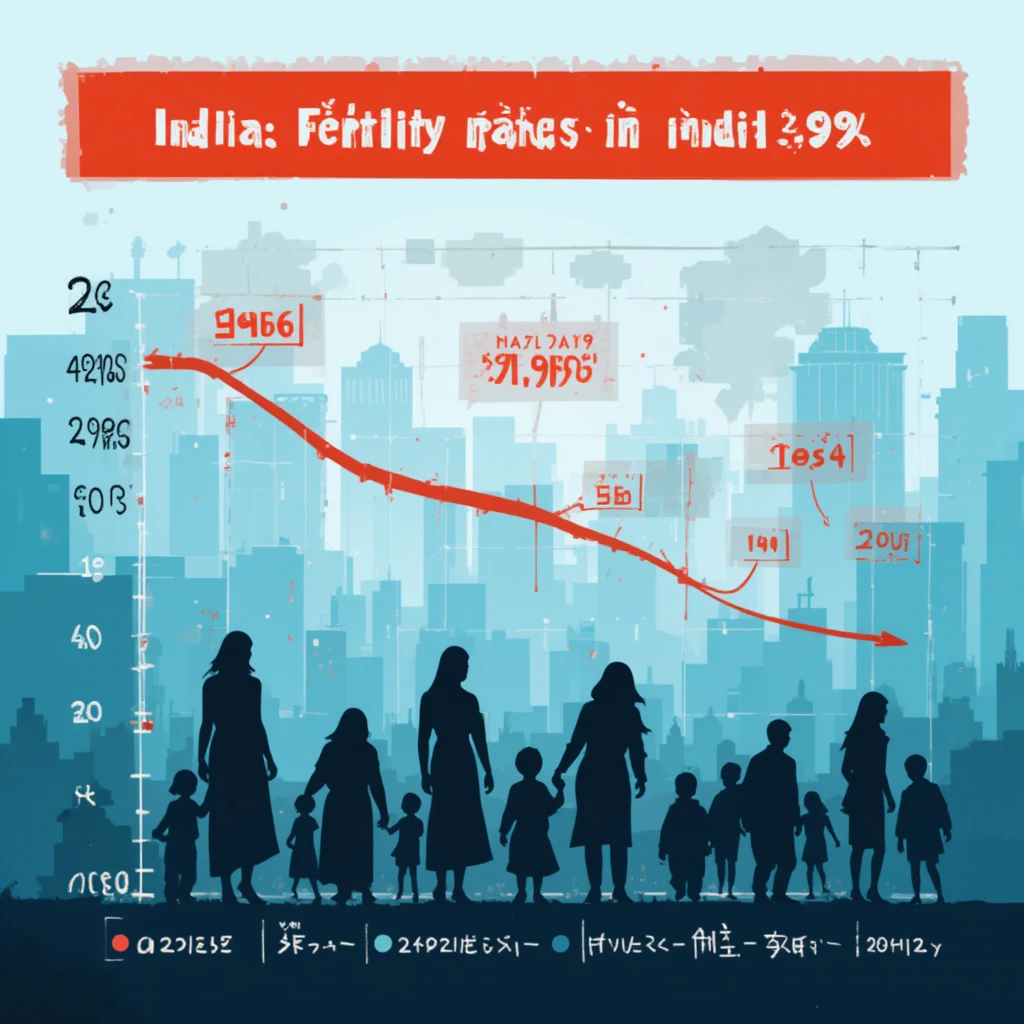
This convergence suggests that while Muslims may continue to grow at a slightly faster rate in the short term, the long-term demographic balance is stabilizing.
Future Projections
According to the Pew Research Center:
- By 2050, India is projected to have the world’s largest Muslim population, surpassing Indonesia, while maintaining a Hindu majority .
However, given the declining fertility rates across all religious groups, the notion of Hindus and Muslims reaching equal population numbers is highly improbable.
2. The Rise of Secularism, Atheism, and Rational Thought
Historical Context
India’s philosophical traditions have long embraced skepticism and rational inquiry. Ancient schools like Charvaka advocated materialism and atheism, challenging orthodox religious doctrines.
Contemporary Trends
Recent studies indicate a gradual shift towards secularism:
- A Pew Research Center survey found that 20% of Indians equated secularism with atheism, and 11% identified as completely non-spiritual .
- Urbanization, higher education, and exposure to global cultures contribute to this trend, especially among the youth.
Challenges Faced
Despite constitutional guarantees of freedom of belief, nonreligious individuals often encounter societal resistance:
- Activists promoting rationalism and atheism, such as those from the Maharashtra Andhashraddha Nirmulan Samiti, face threats and marginalization .
- Government forms and societal norms frequently assume religious affiliation, complicating the expression of nonreligious identities.
3. The Surge of Religious Fundamentalism
Defining Fundamentalism
Religious fundamentalism involves a strict adherence to specific theological doctrines, often in opposition to modernist interpretations. In India, this manifests across various religions:
- Hindu Fundamentalism (Hindutva): Advocates for Hindu cultural and political dominance. The Rashtriya Swayamsevak Sangh (RSS) and affiliated organizations promote this ideology, influencing national policies and societal norms .
- Islamic Fundamentalism: Certain groups resist secular reforms, advocating for the implementation of Sharia law and opposing modern educational systems.
- Christian Evangelical Movements: Emphasize proselytization and may oppose secular policies that conflict with their doctrines.

Societal Impacts
The rise in fundamentalism has led to:
- Increased Communal Tensions: Incidents of violence and discrimination against religious minorities have escalated.
- Policy Shifts: Laws and amendments, such as the Waqf (Amendment) Act, 2025, have raised concerns about the erosion of secular principles .
- Suppression of Dissent: Voices advocating for secularism and minority rights often face backlash and censorship.
4. The Role of Neutral and Moderate Individuals
Between the poles of fundamentalism and atheism lies a significant demographic that:
- Practices religion privately without endorsing extremist views.
- Supports secular governance while maintaining personal faith.
- Advocates for interfaith dialogue and communal harmony.
This group plays a crucial role in:

- Bridging Divides: Facilitating conversations between opposing ideological camps.
- Promoting Tolerance: Upholding the constitutional values of pluralism and secularism.
- Stabilizing Society: Acting as a buffer against radicalization and polarization.
5. Prospective Scenarios for India’s Religious Landscape
Scenario 1: Rising Polarization
If current trends continue unchecked:
- Fundamentalist ideologies may gain further ground.
- Secular institutions could weaken, leading to increased communal conflicts.
Scenario 2: Gradual Secularization
With continued emphasis on education and rational thought:
- Secularism and nonreligious identities may become more mainstream.
- Religious practices could become more personal and less politicized.
Scenario 3: Strengthening of Moderates
Empowering moderate voices might:
- Foster inclusive policies that respect all beliefs.
- Reduce the influence of extremist groups.
- Enhance social cohesion and national unity.
Conclusion
India stands at a crossroads, with its rich religious heritage juxtaposed against modern challenges of secularism and fundamentalism. The nation’s future will depend on:
- Upholding constitutional values that guarantee freedom of belief.
- Promoting education and critical thinking.
- Encouraging dialogue between diverse communities.
By navigating these complexities thoughtfully, India can aspire to a harmonious and inclusive society that honors its pluralistic legacy.
References:
- Pew Research Center. (2021). Population growth and religious composition in India. Retrieved from https://www.pewresearch.org/religion/2021/09/21/population-growth-and-religious-composition/
- Pew Research Center. (2015). The Future of World Religions: Population Growth Projections, 2010-2050. Retrieved from https://www.pewresearch.org/religion/2015/04/02/religious-projections-2010-2050/
- Pew Research Center. (2021). Religious Composition of India. Retrieved from https://www.pewresearch.org/religion/2021/09/21/religious-composition-of-india/
- Lausanne Movement. (2019). The Rise of Hindu Fundamentalism. Retrieved from https://lausanne.org/global-analysis/the-rise-of-hindu-fundamentalism
- East Asia Forum. (2025). Hindu nationalism threatens India’s secular foundations. Retrieved from https://eastasiaforum.org/2025/05/08/hindu-nationalism-threatens-indias-secular-foundations/
- AP News. (2023). Nonreligious struggle to find their voice and place in Indian society and politics. Retrieved from https://apnews.com/article/7967186eb3bffade80e0d96e354a1baf
- Wikipedia. (2008). Irreligion in India. Retrieved from https://en.wikipedia.org/wiki/Irreligion_in_India
- Indian Currents. (2024). Religious Fundamentalism: Enemy of Humanity. Retrieved from https://www.indiancurrents.org/article-religious-fundamentalism-enemy-of-humanity-jacob-peenikaparambil-2096.php
- The Guardian. (2024). India is witnessing the slow-motion rise of fascism. Retrieved from https://www.theguardian.com/commentisfree/article/2024/sep/08/india-slow-motion-rise-of-fascism
- Reuters. (2025). Anti-minority hate speech in India rose by 74% in 2024, research group says. Retrieved from https://www.reuters.com/world/india/anti-minority-hate-speech-india-rose-by-74-2024-research-group-says-2025-02-10/