
Introduction
The term “saffron terror” emerged as a polarizing label in Indian politics, used to describe alleged terrorist acts by Hindu nationalist groups, most notably in the context of the 2008 Malegaon blast. On September 29, 2008, a motorcycle bomb detonated near a mosque in Malegaon, Maharashtra, during Ramzan, killing six and injuring over 100. Initially attributed to Islamist groups, investigations by the Maharashtra Anti-Terrorism Squad (ATS) shifted focus to Hindu extremists, implicating Abhinav Bharat, a right-wing organization. Raj Kumar Singh (R.K. Singh), Union Home Secretary from 2011 to 2013 under the United Progressive Alliance (UPA), played a significant role in highlighting evidence linking Hindu nationalist elements to this and other attacks. His subsequent induction into the Bharatiya Janata Party (BJP) in 2013, a party aligned with Hindutva ideology, sparked debates about political opportunism and the credibility of the “saffron terror” narrative. Abhinav Bharat, accused in the blast, also carries symbolic ties to the 1948 assassination of Mahatma Gandhi through its ideological roots in Vinayak Damodar Savarkar’s legacy.

Table of Contents
This expanded article revisits R.K. Singh’s role in presenting saffron terror evidence, the BJP’s rationale for inducting him, Abhinav Bharat’s alleged involvement in the 2008 Malegaon blast, and its historical resonance with Gandhi’s murder. It integrates recent developments, notably the July 31, 2025, acquittal of all accused in the Malegaon case, drawing from court records, media reports, and public sentiments on platforms like X for a nuanced perspective.
R.K. Singh’s Evidence on Saffron Terror and the 2008 Malegaon Blast
R.K. Singh, as Home Secretary, did not coin the term “saffron terror”—often attributed to former Home Minister Sushil Kumar Shinde in 2013—but he lent significant weight to it by citing investigative evidence. In January 2013, Singh stated that the Home Ministry had evidence linking at least 10 individuals associated with the Rashtriya Swayamsevak Sangh (RSS), the ideological parent of the BJP, to a series of bomb blasts between 2006 and 2008, including the Malegaon attack. His statements built on probes by the ATS and later the National Investigation Agency (NIA), which shifted suspicion from groups like SIMI to Hindu extremists.

The 2008 Malegaon blast evidence included:
- Confessions: Swami Aseemanand, an RSS pracharak, allegedly confessed (later retracted) to planning the Malegaon and other blasts as retaliation for Islamist terrorism, describing it as “bomb ka badla bomb” (bomb for a bomb). His statement implicated other RSS affiliates like Sunil Joshi (deceased).
- Forensic Evidence: Traces of RDX, a military explosive, were allegedly linked to Lt. Col. Prasad Shrikant Purohit, a serving Army officer and Abhinav Bharat co-founder, with claims he sourced it from military stocks.
- Witness Testimonies: Accounts of meetings in Bhopal, Faridabad, and Nashik, where suspects, including Sadhvi Pragya Singh Thakur, discussed targeting Muslim-majority areas like Malegaon.
- Material Links: The motorcycle used in the blast was registered to Pragya, strengthening the case against Abhinav Bharat.
These findings, initially pursued by ATS chief Hemant Karkare (killed in the 2008 Mumbai attacks), fueled the saffron terror narrative. Singh’s public endorsement of these investigations, including warnings of RSS-linked “bomb-making factories,” intensified accusations against Hindu nationalist groups. However, the BJP and RSS dismissed these as politically motivated fabrications by the UPA to polarize voters. The narrative faced a major setback on July 31, 2025, when a special NIA court acquitted all seven accused in the Malegaon case—Pragya, Purohit, Sameer Kulkarni, Ramesh Upadhyay, Ajay Rahirkar, Rakesh Dhawade, and Sudhakar Chaturvedi—citing insufficient evidence. The court criticized the prosecution for relying on “mere suspicion” and “imagination,” noting contaminated evidence, unreliable witnesses, and ATS misconduct, including allegations of torture. BJP leaders like Piyush Goyal and Amit Shah hailed the verdict as exposing a Congress-orchestrated smear campaign against Hindus.
Public discourse on X reflected polarized views: some users celebrated the acquittal as vindicating Hindutva, while others, including victims’ families, expressed dismay, planning to appeal. Posts also highlighted a retired ATS officer’s claim of pressure to implicate RSS chief Mohan Bhagwat, suggesting political interference in building the saffron terror case.
Why Did the BJP Induct R.K. Singh Despite His Saffron Terror Evidence?
R.K. Singh’s decision to join the BJP in December 2013, months after citing RSS links to terrorism, was a surprising pivot. As a 1975-batch IAS officer from Bihar with a reputation for decisiveness—evident in his 1990 arrest of BJP leader L.K. Advani during the Rath Yatra—Singh brought significant credentials. He justified his move by aligning with the BJP’s stance on national unity and security, downplaying his earlier statements as based on investigative files rather than personal conviction. He later emphasized that terrorism transcends religious labels.

The BJP’s rationale for inducting Singh appears multifaceted:
- Electoral Advantage in Bihar: Singh’s victory in the Arrah Lok Sabha seat in 2014 and 2019 strengthened the BJP’s foothold in Bihar, a politically critical state. His local influence was a strategic asset.
- Bureaucratic Expertise: Singh’s tenure as Home Secretary under P. Chidambaram and Shinde showcased his administrative prowess, enhancing the BJP’s governance narrative.
- Neutralizing the Narrative: By absorbing Singh, the BJP could temper the saffron terror allegations he had endorsed, especially as investigations like Malegaon’s began faltering under their rule post-2014.
Critics, including Congress leader Digvijaya Singh, labeled him an opportunist, arguing his induction reflected the BJP’s willingness to overlook saffron terror evidence for political gain. However, no direct evidence suggests the BJP recruited Singh to suppress such evidence; rather, it aligns with India’s fluid political landscape, where past positions are often subordinated to strategic alliances. Singh’s ministerial roles in Power and Renewable Energy under Modi further distanced him from the controversy, while the 2025 Malegaon acquittal bolstered the BJP’s rejection of the saffron terror label.
Abhinav Bharat’s Alleged Role in the 2008 Malegaon Blast
Abhinav Bharat, founded in 2006 by Lt. Col. Purohit and Sadhvi Pragya, with Himani Savarkar (niece-in-law of V.D. Savarkar) as a key figure, was accused of orchestrating the Malegaon blast to advance a “Hindu Rashtra” agenda. The ATS alleged the group sought to retaliate against perceived Muslim aggression, targeting Malegaon’s Muslim-majority area during a sensitive period.
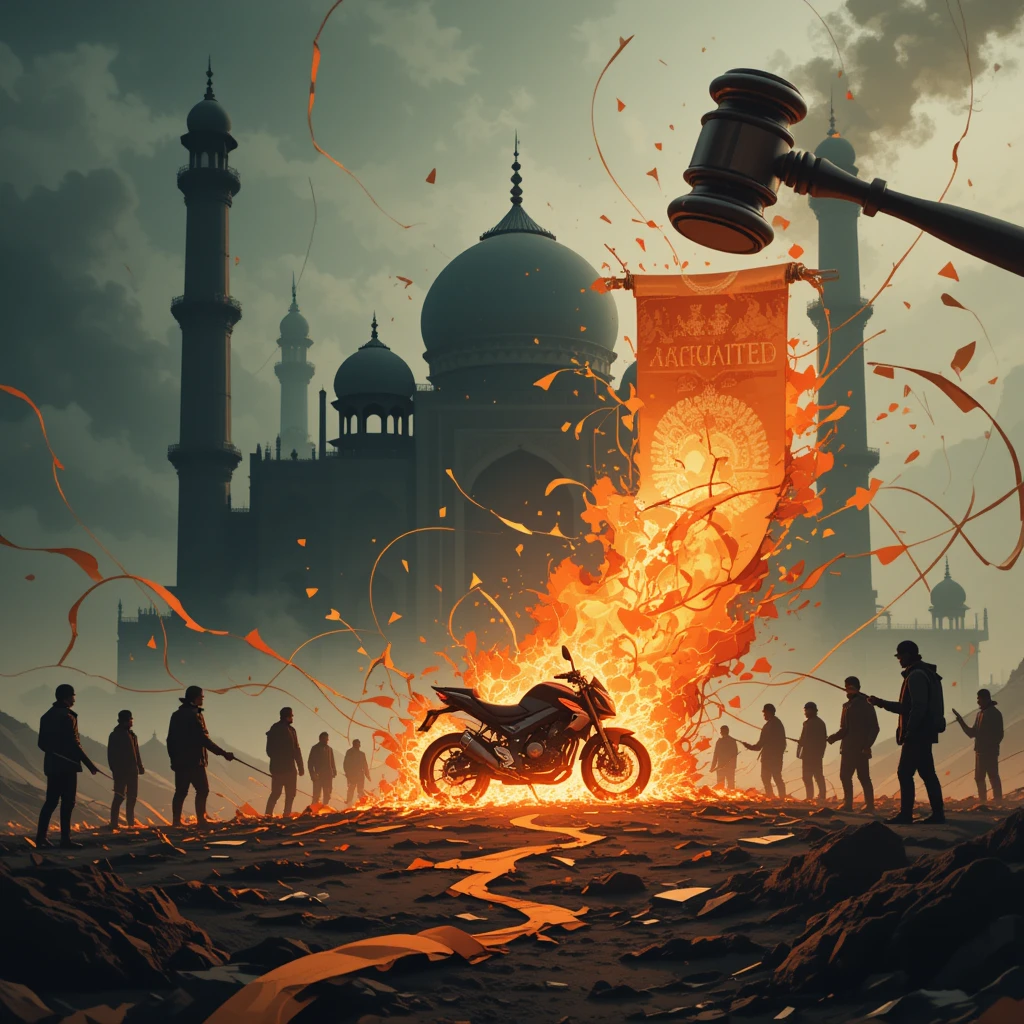
Key allegations:
- Explosive Logistics: Purohit, leveraging his Army position, allegedly supplied RDX and trained members in bomb-making.
- Conspiracy Evidence: Meetings in 2007-2008, attended by Pragya, Purohit, and others, planned attacks, with Malegaon selected for its demographic.
- Direct Links: The motorcycle used was traced to Pragya, and call records suggested coordination among suspects.
The case’s trajectory shifted over time:
- 2008-2011: ATS arrests led to charges under the Unlawful Activities (Prevention) Act (UAPA) and MCOCA, with Karkare’s probe framing Abhinav Bharat as a terrorist outfit.
- 2011-2016: The NIA took over, and MCOCA was dropped in 2016 due to weak evidence.
- 2017-2019: Pragya and Purohit received bail; Pragya joined the BJP and won the Bhopal Lok Sabha seat in 2019.
- 2025: The NIA court’s acquittal ruled Abhinav Bharat a charitable organization, not terrorist, dismissing evidence as fabricated or coerced. The verdict noted ATS’s questionable methods, including planted evidence and custodial torture.
Victims’ kin, supported by groups like Jamiat Ulama-i-Hind, plan to appeal to the Bombay High Court, citing justice denied. Two suspects, Ramchandra Kalsangra and Sandeep Dange, remain absconding, also linked to other cases like the Gauri Lankesh murder. The BJP leveraged the acquittal to denounce the saffron terror narrative, with leaders calling it a UPA conspiracy tied to electoral politics and the 2008 Mumbai attacks’ timing.
Abhinav Bharat’s Ideological Connection to Mahatma Gandhi’s Murder
Abhinav Bharat’s name invokes Savarkar’s 1904 revolutionary society, which advocated armed resistance against British rule but dissolved post-independence. Savarkar, a Hindutva ideologue, was acquitted in the 1948 Gandhi assassination trial but faced accusations of moral complicity. Nathuram Godse, the assassin and a former RSS and Hindu Mahasabha member, was influenced by Savarkar’s writings, resenting Gandhi’s perceived appeasement of Muslims during Partition.
While no direct operational link ties the 2006 Abhinav Bharat to Gandhi’s murder, symbolic connections persist:
- Leadership Continuity: Himani Savarkar’s presidency tied the modern group to Savarkar’s legacy.
- Revisionist Efforts: Abhinav Bharat trustee Pankaj Phadnis filed petitions (2017-2019) to reopen Gandhi’s case, alleging a “fourth bullet” and foreign involvement (e.g., British Force 136). The Supreme Court rejected these as baseless.
- Ideological Resonance: Both the historical and modern groups share anti-Gandhian sentiments, framing his policies as detrimental to Hindu interests.

These efforts reflect an attempt to reframe history, aligning with the saffron terror debate’s broader ideological battles but lacking concrete evidence connecting the 2008 blast to the 1948 murder.
Conclusion
The BJP’s induction of R.K. Singh, despite his role in advancing saffron terror evidence, underscores the pragmatic nature of Indian politics, where electoral and strategic imperatives often overshadow ideological disputes. The 2008 Malegaon blast, once a cornerstone of the saffron terror narrative, collapsed with the 2025 acquittal, exposing weaknesses in evidence and raising questions about investigative integrity under the UPA. Abhinav Bharat’s alleged role, while symbolically tied to Savarkar’s legacy and Gandhi’s assassination, remains unproven in court, fueling polarized narratives. As victims seek justice and public discourse on X demands accountability for the “saffron terror” label, the saga highlights the need for evidence-driven justice in India’s complex socio-political landscape.
References
- Times of India, July 31, 2025: Malegaon Blast Case: All Accused Acquitted by NIA Court
- Hindustan Times, January 21, 2013: Home Secretary R.K. Singh on RSS Links to Terror
- The Hindu, August 1, 2025: BJP Demands Apology Over Malegaon Verdict
- Indian Express, December 27, 2013: R.K. Singh Joins BJP
- NDTV, January 22, 2013: R.K. Singh on RSS Bomb-Making Factories
- Frontline, February 2011: Swami Aseemanand’s Confession
- The Wire, August 2, 2025: Malegaon Acquittal Sparks Debate on Saffron Terror
- Scroll.in, August 1, 2025: Victims’ Families to Appeal Malegaon Verdict
- X Post, August 1, 2025: Retired ATS Officer on Pressure to Implicate RSS
- Economic Times, July 31, 2025: Piyush Goyal on Malegaon Verdict
- X Post, August 1, 2025: User on Congress’s Saffron Terror Narrative
- X Post, July 31, 2025: Malegaon Verdict and 26/11 Timing
- LiveLaw, July 31, 2025: Malegaon Blast Case Judgment
- India Today, October 2008: Malegaon Blast Initial Probe
- The Hindu, November 2008: Purohit’s RDX Allegations
- Firstpost, August 1, 2025: ATS Torture Allegations in Malegaon Case
- Bar and Bench, July 31, 2025: Malegaon Court on Evidence Failures
- Deccan Herald, July 31, 2025: Malegaon Acquittal Details
- Outlook, October 2008: ATS on Malegaon Conspiracy
- Times Now, August 1, 2025: Malegaon Verdict Analysis
- The Print, July 31, 2025: Abhinav Bharat in Malegaon Case
- Indian Express, November 2008: Pragya’s Motorcycle in Malegaon
- The Hindu, April 2011: NIA Takes Over Malegaon Case
- Frontline, January 2009: Abhinav Bharat’s Hindutva Agenda
- Hindustan Times, August 2, 2025: Malegaon Victims Plan Appeal
- DNA India, October 2008: Malegaon Meeting Details
- The Caravan, February 2019: Abhinav Bharat and Gandhi Case
- The Hindu, January 2018: Godse’s Motives in Gandhi Assassination
- Indian Express, October 2017: Phadnis Petition on Gandhi Murder
- Frontline, March 2018: Savarkar’s Role in Gandhi Case
- The Wire, January 2019: Abhinav Bharat’s Historical Roots
- LiveLaw, November 2019: Supreme Court on Gandhi Petition
- India Today, February 2019: Savarkar’s Abhinav Bharat Society
- Scroll.in, January 2018: Godse and Savarkar Ideology
- The Print, August 2019: Phadnis on Gandhi Conspiracy