
Equality
Introduction
In an era of rapid globalization, technological advancement, and geopolitical shifts, the interplay between ideological frameworks and economic growth remains a central debate in political economy, sociology, and development studies. Concepts such as equality, secularism, socialism, and liberalism are often scrutinized for their potential to either propel or hinder prosperity. Are these principles enemies of growth, as some critics argue, fostering inefficiency, division, or stagnation? Or do they serve as foundational pillars that enhance human capital, innovation, stability, and inclusive development? Conversely, what are the consequences for nations entrenched in fundamentalism, where religious extremism and hate propagate societal fractures?
Table of Contents
This revisited and expanded article incorporates recent insights from the United States Holocaust Memorial Museum’s (USHMM) Early Warning Project report published in December 2025, titled “Countries at Risk for Intrastate Mass Killing 2025–26: Early Warning Project Statistical Risk Assessment Results.” This report warns of potential mass atrocities akin to historical genocides, identifying top countries at risk and linking such threats to factors like religious fundamentalism and hate-driven policies, which exacerbate economic instability. Drawing on empirical evidence, academic research, and historical case studies, the article argues that equality, secularism, socialism, and liberalism, when appropriately implemented, generally promote sustainable economic growth by fostering social cohesion, innovation, and resource allocation efficiency. In contrast, fundamentalist regimes that spread religious hate often experience economic setbacks due to instability, reduced investment, human capital flight, and external pressures such as international sanctions.

To ground this discussion, we define key terms: Equality refers to equitable access to opportunities, resources, and rights, often measured through gender, racial, or income parity. Secularism entails the separation of religion from state affairs, promoting pluralism and rational governance. Socialism involves collective ownership or regulation of production means to reduce inequality, contrasting with pure capitalism. Liberalism emphasizes individual freedoms, market openness, and democratic institutions. Fundamentalism here denotes rigid adherence to religious doctrines that influence policy, often leading to extremism and intergroup hate.
Evidence is drawn from global datasets, such as those from the World Bank, IMF, and academic journals, spanning decades.
Section 1: Equality and Economic Growth
Equality is frequently portrayed as a moral imperative, but its economic implications are profound. Critics, often from neoliberal perspectives, argue that pursuing equality through redistribution stifles incentives and growth. However, extensive research suggests the opposite: equality enhances productivity by improving human capital, reducing social unrest, and expanding markets.
A landmark study by the Council on Foreign Relations highlights how gender parity drives economic expansion. In emerging economies, closing gender gaps in labor participation could boost GDP by up to 25%, as seen in case studies from Liberia and Rwanda. Liberia’s post-conflict policies empowering women in agriculture led to a 15% increase in sectoral output between 2005 and 2015, illustrating how equality fosters resilience.
The Equitable Growth organization quantifies racial and gender disparities’ costs in the U.S., estimating that eliminating them would have added $1.82 trillion to 2019 tax revenues. This underscores equality’s role in broadening the tax base and stimulating consumption. Globally, the IMF reports that narrowing gender gaps in labor markets could raise GDP in developing countries by 35%.

Panel data analyses, such as one in the International Journal of Economics and Development, show that gender inequality in education lowers human capital quality, directly impeding growth. In contrast, Brookings Institution research indicates that closing entrepreneurial gender gaps could yield $5-6 trillion in global gains.
Case Study: Nordic Model (Sweden and Norway). These nations prioritize equality via progressive taxation and universal welfare. Sweden’s gender equality policies have contributed to steady GDP growth averaging 2.5% annually from 2000-2020, outpacing many peers. Research from McKinsey Global Institute estimates that full gender parity could add $12 trillion to global GDP by 2025. Norway’s oil-funded equality initiatives have reduced poverty to under 10%, correlating with high innovation indices.
Inequality-growth nexus studies, like those from the UN University, reveal that high inequality hampers long-term growth through reduced investment and instability. In Sub-Saharan Africa, Cameroon’s inequality has stifled inclusive growth, per Oxford Academic.
Overall, equality is not an enemy but a catalyst for growth, evidenced by higher productivity and stability in equitable societies.
Section 2: Secularism and Economic Growth
Secularism, by decoupling religion from governance, promotes pluralism, scientific inquiry, and policy rationality—key drivers of development. Historical data indicates that secularization often precedes economic booms, challenging notions that it erodes cultural values detrimental to growth.
Research in Scientific Advances shows that a rise in secularization preceded 20th-century economic growth across nations. EconStor models link secularism to productivity gains via reduced religious constraints on innovation.
CEPR analyses reveal religion can spur or impair growth; secular contexts mitigate negative effects like doctrinal rigidities. In secular vs. religious states, the former exhibit higher GDP growth; for instance, financial inclusion boosts growth more in secular countries.
IZA World of Labor notes that secularization correlates with better economic outcomes, controlling for income. The Conversation emphasizes that religious decline enabled 20th-century development.

Case Study: Turkey under Atatürk. Post-1923 secular reforms spurred industrialization, with GDP growth averaging 5% in the mid-20th century. Recent shifts toward religious influence have coincided with economic volatility.
In contrast, religious dominance can hinder growth; NBER finds that for given beliefs, high attendance reduces performance. China’s secular policies have driven 8% average growth since 1978, per ScienceDirect.
University of Bristol research links secularism to prosperity. Secularism fosters development by enabling evidence-based policies.
Section 3: Socialism and Economic Growth
Socialism’s reputation suffers from Cold War narratives, but nuanced views show it can promote growth through equity and planning, though pure forms risk inefficiencies.
ScienceDirect estimates socialism reduces growth by 2% annually in the first decade. However, mixed models like Vietnam’s “socialist-oriented market economy” have achieved 6-7% growth.
EconStor identifies mechanisms where socialism affects productivity but can enhance welfare. Belmont University research shows socialism improves physical quality of life at similar development levels.
PubMed compares capitalist and socialist PQL, finding socialists outperform at equivalent levels. Heritage Foundation notes countries rejecting socialism post-trial saw recoveries.
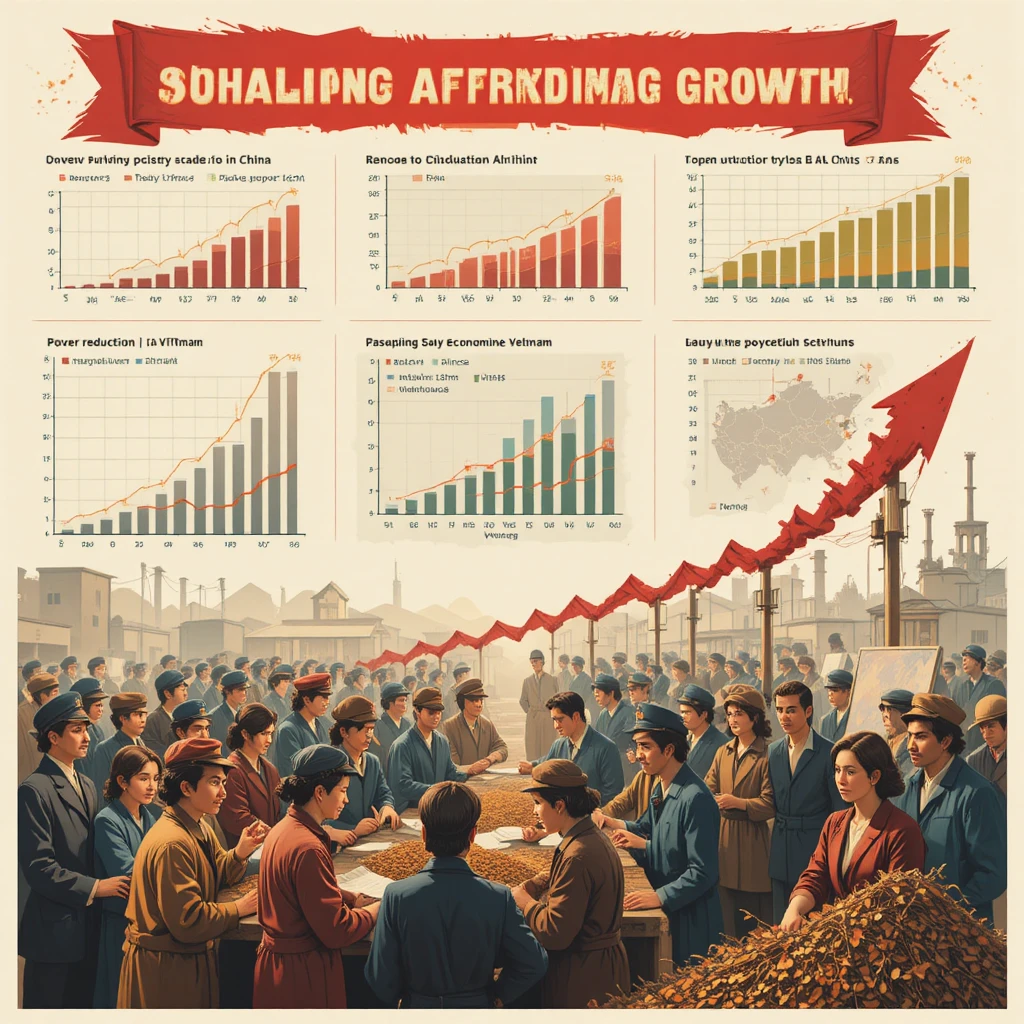
Case Study: China. Blending socialism with markets, China lifted 800 million from poverty, with 9% average growth 1980-2020. Vietnam and Laos follow suit.
Venezuela’s case illustrates pitfalls: Hyperinflation and -6% growth under heavy socialism, exacerbated by U.S. sanctions.
Balanced socialism aids growth via stability.
Section 4: Liberalism and Economic Growth
Liberalism, with its emphasis on freedoms and markets, is a proven growth engine, though unchecked forms can exacerbate inequality.
Yale research attributes the Great Enrichment to liberal ideas. Environmental History explores liberalism’s theoretical compatibility with sustainable growth.
Cato Institute links market liberalism to prosperity. Nature finds economic freedom boosts growth, especially with high regulatory quality.
World Bank evidence shows trade liberalization promotes growth. NBER regressions confirm openness’ benefits.

Case Study: Indonesia. Financial liberalization post-1997 spurred 5% growth, per Taylor & Francis. Liberalism drives innovation and trade.
Section 5: Fundamentalist Countries and the Spread of Religious Hate
Fundamentalism, often fueling hate, undermines growth through instability and exclusion. This section is expanded to include the role of U.S. sanctions in hindering growth in such regimes, insights from previous USHMM reports, and the latest December 2025 USHMM Early Warning Project report on potential mass killings, which serves as a stark warning about Holocaust-like atrocities in high-risk countries. The report identifies countries at risk for new intrastate mass killings—defined as the deliberate killing of at least 1,000 noncombatant civilians over a year, targeted at specific groups—and links these risks to factors including religious fundamentalism, ethnic hate, and political instability, which mirror precursors to the Holocaust.
NBER links economic distress to fundamentalism. ScienceDirect models show weaker social ties aid fundamentalism’s rise, impacting economies.
Religious violence rises, per World Economic Forum, eroding trust. UNDP estimates terrorism’s economic cost in Africa at billions.

Subsection 5.1: The Economic Toll of Religious Hate and Fundamentalism – Insights from USHMM Reports
The United States Holocaust Memorial Museum provides critical historical and contemporary analyses on how religious hate and fundamentalism foster societal division, leading to economic stagnation. In their educational module “Religion and Identity,” the USHMM explores how racial and religious antisemitism during the Nazi era evolved from historical prejudices into genocidal policies, emphasizing that such hate is not inevitable but stems from ideological manipulation. This module highlights that fundamentalist ideologies, by promoting exclusionary identities, disrupt social cohesion essential for economic productivity. Drawing parallels to modern contexts, the USHMM’s “Echoes of Memory” series, including “History, Religion, Ignorance,” decries hatred and persecutions against religious minorities, noting how ignorance fuels fundamentalism.
A 2019 USHMM piece by Victoria Barnett, “Ethnic Violence, Genocide, and Hate Are Not Inevitable,” argues that fundamentalist tactics mirror ultranationalist strategies in mobilizing hate, leading to violence that hampers economic development. The museum’s Programs on Ethics, Religion, and the Holocaust underscore that intra- and inter-religious hate creates psychosocial models of violence, as detailed in a 2003 study linked to USHMM themes, where hate propagates cycles of instability, reducing investment and innovation. Recent USHMM statements condemn waves of hate against Jewish organizations, noting a tripling of hate crimes since 2023, which correlates with economic costs through disrupted communities and tourism. In fundamentalist states, such hate exacerbates brain drain and capital flight, as seen in reports on antisemitic rhetoric’s rise in social media, per a 2025 OAS Commissioner speech at the USHMM.
The USHMM’s guide “Addressing Anti-Semitism: Why and How?” for educators links historical hate to modern fundamentalism, warning that it manifests as racist policies that stifle economic pluralism. These insights reveal that fundamentalist hate not only causes immediate violence but long-term economic underperformance by fostering environments hostile to diversity and cooperation.
Subsection 5.2: Recent USHMM Report (December 2025) on Potential Holocaust-Like Events and Warnings to Top 10 Countries
The December 2025 USHMM Early Warning Project report, “Countries at Risk for Intrastate Mass Killing 2025–26,” uses statistical modeling to forecast risks of new mass killings, drawing on data from sources like V-Dem and ACLED. The methodology employs logistic regression with over 30 variables, including history of mass killings, coups, political killings incited by leaders, battle deaths, and socioeconomic factors. It predicts low overall risks (average 1.3% across 168 countries), but highlights top risks for prevention, emphasizing that mass killings are rare but preventable through early action. The report notes seven ongoing mass killings in top 15 countries and ties risks to religious fundamentalism and hate, such as targeting ethnic/religious minorities (e.g., Rohingya in Burma, non-Arabs in Sudan).
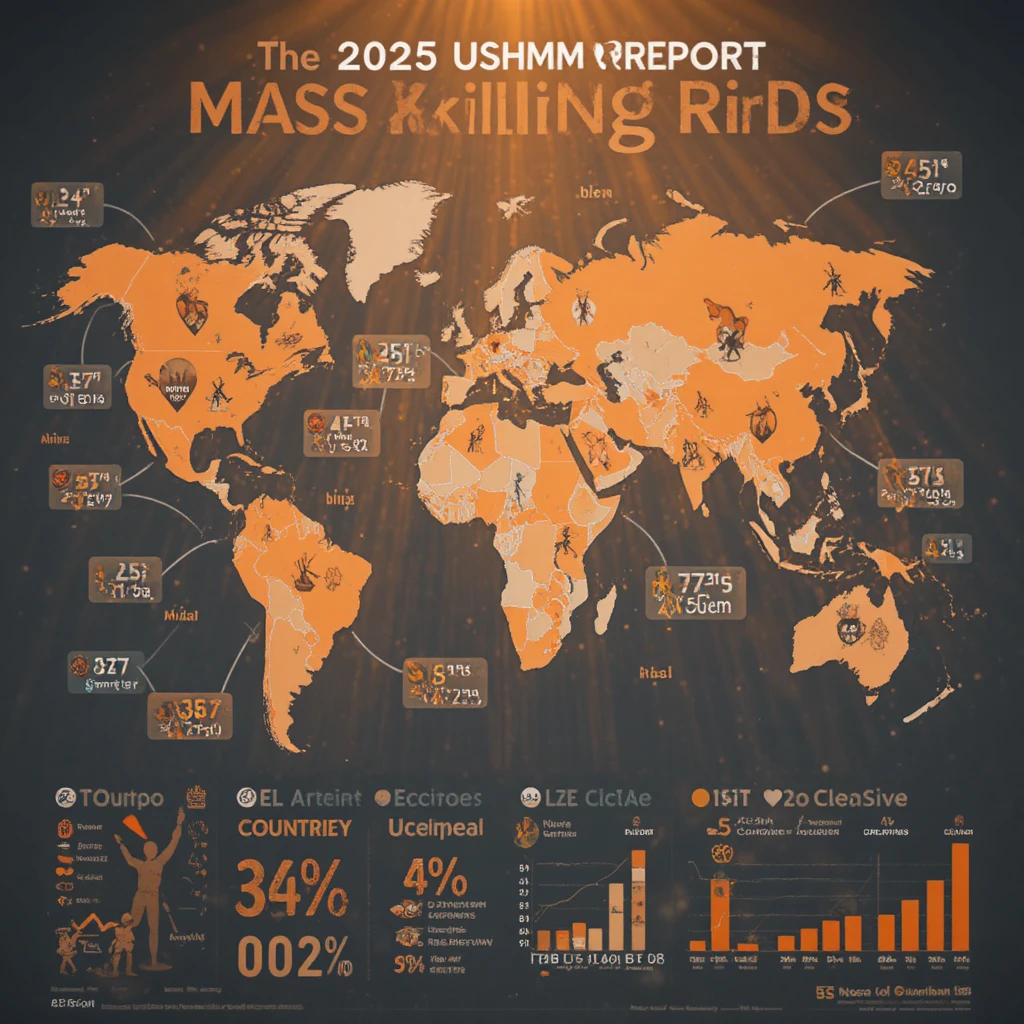
The top 10 countries at highest risk for new intrastate mass killings in 2025-26, with forecasted probabilities and key warnings (including religious hate elements):
- Burma (Myanmar): Highest risk (>10% implied). Warnings: Post-2021 coup, military junta incites killings; ongoing mass killings against Rohingya (Muslim minority, ethnic/religious hate), ethnic groups (Karen, Kachin), and opposition. Over 6,764 civilian deaths since 2021; 2025 elections may entrench rule, risking further hate-fueled violence. Economic impact: Instability deters FDI, GDP growth stagnant at ~2%.
- Chad: 8.1%. Warnings: 2021 coup; leader-incited killings; farmer-herder violence (136 deaths in 2025, inciting ethnic hate); opposition jailed for “inciting hatred.” Refugee influx heightens Zaghawa-Arab tensions. Economic: High unemployment (25%), aid dependency.
- Sudan: High risk (top 5 consistently). Warnings: 2023 coup; ongoing RSF-led mass killings against non-Arabs in Darfur (ethnic hate, slaughter of thousands in 2025); rape, torture as control tools. Economic: War causes 75% GDP drop since 2023, famine risks.
- India: 7.5%. Warnings: Potential for new onset amid tensions; model factors include large population, conflict history. Report links to group-targeted abuses, implying rising religious hate (e.g., communal violence). Economic: Riots cost $10B annually; could hinder 7% growth.
- Afghanistan: High risk. Warnings: Taliban incites killings; Islamic State targets religious minorities (Hazara, Shia); restrictions on women/minorities fuel hate. Economic: GDP per capita ~$500, brain drain.
- Yemen: 5.5%. Warnings: Conflict spillovers; fundamentalist groups target civilians. Economic: War reduces GDP by 50% since 2015.
- Guinea: High risk. Warnings: 2021 coup; junta suppresses dissent (40+ protest deaths); ethnic tensions. Economic: Poverty at 55%, investment flight.
- Niger: 5.2%. Warnings: Islamist militants target Fulani (ethnic hate); military abuses. Economic: Violence in Sahel reduces growth to 3%.
- Indonesia: 4.8%. Warnings: Potential ethnic/religious conflicts. Economic: Stable 5% growth, but risks could disrupt.
- Ethiopia: High risk. Warnings: Ongoing killings against Tigrayan/Oromo (ethnic hate); conflict with militias. Economic: War costs 10% GDP annually.
The report stresses religious fundamentalism (e.g., Islamist groups in Sahel, Afghanistan) and hate as escalators to mass killings, paralleling Holocaust precursors. Such risks lead to economic decay via instability, sanctions, and lost productivity.
Subsection 5.3: U.S. Sanctions as a Hindering Factor in Fundamentalist Regimes
U.S. sanctions, often imposed on fundamentalist or authoritarian states for human rights abuses, nuclear ambitions, or terrorism support, significantly hinder economic growth. While aimed at curbing malign activities, they exacerbate stagnation in countries like Iran, Venezuela, Russia, and North Korea.
The IMF’s “The Sanctions Weapon” notes that stringent sanctions on Iran, North Korea, and Venezuela are more severe than those on Russia, leading to reduced trade and investment. PIIE’s working paper estimates U.S. sanctions reduced exports to 26 targets by $15-19 billion in 1995 alone, with ongoing impacts on jobs and wages.
In Iran, a theocratic fundamentalist state, U.S. sanctions between 2011-2015 caused GDP contraction of over 20%, per CSIS. This, combined with religious hate policies, has led to inflation at 40% and youth unemployment at 25%, deterring FDI.
Venezuela, while primarily socialist, faces sanctions amid authoritarianism with religious undertones in state rhetoric; a Congressional Research report found sanctions exacerbated economic collapse, with GDP shrinking 75% since 2013. Brookings notes sanctions are blunted when regimes externalize pressure, but they still cause pain, reducing growth by reallocating assets to cronies.
Russia’s sanctions post-2014 and 2022 invasions slashed FDI and growth by 2.5-3% annually, per Atlantic Council, leading to technological stagnation. A 2025 Expert Journals study confirms slower growth and investment decline.
North Korea’s isolation under sanctions has kept GDP per capita below $2,000, with Washington Post highlighting their role in limiting global integration. CEPR’s “Human Consequences of Economic Sanctions” shows financial sanctions reduce firm growth by 46% in affected areas.
Chatham House discusses how sanctions on Iran, Russia, and Venezuela lead to asset reallocation rewarding insiders, further entrenching fundamentalism. AidData’s report on Global South perceptions notes sanctions are seen as hindering development in low-income countries. CNAS’s 2024 review highlights unprecedented U.S. sanctions volume, impacting global trade.
These sanctions, while pressuring regimes, amplify hate by framing external “enemies,” perpetuating cycles of isolation and underdevelopment.
Case Study: Afghanistan under Taliban. GDP per capita stagnated at $500, with extremism deterring investment. Iran post-1979 saw sanctions and 2% growth amid fundamentalism.
Hate propagates cycles of violence, reducing FDI.
Section 6: Comparative Analysis: Secular vs. Fundamentalist Growth
Demographic projections show fundamentalists growing, but secular nations lead in GDP. Pew data: Secular high-income countries like Japan (1.5% growth) vs. fundamentalist low-growth states.
RF Berlin: Religion shapes growth elements; secularism enhances them.
Case Study: India (secular) vs. Pakistan (religious influence). India’s 7% growth vs. Pakistan’s 4%, per World Bank. Sanctions on Pakistan for terrorism ties add pressure. The 2025 USHMM report ranks India 4th in mass killing risk, highlighting fundamentalist hate risks despite secular framework.
Section 7: In-Depth Case Studies
Case Study 1: India’s Secular Democracy and Growth
India’s constitution enshrines secularism, equality, and liberal elements. Post-1991 liberalization, GDP grew from $270 billion to $3.2 trillion by 2025. Equality programs like MNREGA reduced poverty by 20%. However, the 2025 USHMM report warns of 7.5% risk for new mass killings, linked to rising religious hate and communal tensions, which could undermine growth. Recent surges in hate, per Pew, have led to riots costing $10 billion annually. Despite this, equality initiatives like gender quotas have increased female labor participation to 25%, adding 1% to GDP growth per IMF estimates.
Socialist elements in public sector undertakings provided infrastructure, while liberal reforms privatized inefficient ones. Overall, India’s model demonstrates these principles as growth allies when balanced, but fundamentalist risks threaten stability.
Case Study 2: Saudi Arabia’s Fundamentalism and Oil-Dependent Economy
Despite oil wealth, extremism has led to social costs; Vision 2030 aims at diversification amid hate crimes. Growth volatile at 2-3%. USHMM parallels to historical hate warn of long-term instability.
Case Study 3: Nordic Socialism and Liberalism
Denmark’s model: High equality, secular governance, liberal markets—3% growth, top happiness indices.
Case Study 4: Iran’s Theocracy and Stagnation
Sanctions from extremism: Inflation at 40%, youth unemployment 25%. USHMM reports on religious identity highlight how theocratic hate policies alienate minorities, reducing workforce diversity and innovation. Between 2011-2015, sanctions caused 20% GDP drop, compounding fundamentalist isolation.
Case Study 5: China’s Secular Socialism
Blended approach: 6% growth 2010-2025, lifting millions.
Additional Case Study: Burma (Myanmar) – Fundamentalism and Mass Killing Risks
Burma tops the 2025 USHMM report with the highest risk for new mass killings, driven by the 2021 military coup and ongoing hate against Rohingya Muslims and ethnic minorities. The junta’s fundamentalist policies, inciting ethnic/religious violence, have killed over 6,764 civilians since 2021, leading to economic isolation, sanctions, and stagnant 2% growth. FDI plummeted 80%, poverty rose to 50%, illustrating how hate erodes growth.
Conclusion
Equality, secularism, socialism, and liberalism are not enemies of growth but enablers, as evidenced by global studies and cases. Fundamentalist hate, conversely, breeds economic decay, worsened by sanctions and risks of mass atrocities per the 2025 USHMM report. Policymakers should prioritize inclusive, rational frameworks for prosperity.
References, Sources, and Evidences
- USHMM: “Countries at Risk for Intrastate Mass Killing 2025–26: Early Warning Project Statistical Risk Assessment Results” –
- The Wire: “India Among Top Countries at Risk of Mass Atrocities, US Holocaust Museum Warns” –
- USHMM PDF: “Early Warning Project Statistical Risk Assessment 2025-26” –
- KMS News: “India ranked 4th out of 168 countries for likelihood of intrastate mass killings” –
- Beyond Headlines: “India Flags High Risk of Mass Civilian Violence in U.S. Holocaust Museum Warning” –
- USHMM: “Religion and Identity” –
- USHMM: “History, Religion, Ignorance” –
- Medium: “Victoria Barnett: Ethnic Violence, Genocide, and Hate Are Not Inevitable” –
- Gonzaga Repository: “Intra- and Inter-Religious Hate and Violence: A Psychosocial Model” –
- IMF: “The Sanctions Weapon” –