Introduction: A Landmark in Indian Peasant Revolts and Resistance Narratives
Gokula Jat, often immortalized in historical accounts and folk legends as Veer Gokula, Gokul Singh, or Gokul Dev, represents a crucial chapter in the history of agrarian uprisings against imperial authority in late Mughal India. As a prominent zamindar from the village of Tilpat in the Mathura-Agra region, Gokula spearheaded a formidable rebellion in 1669–1670, rallying thousands of Jat peasants, along with allied communities such as Ahirs, Gujars, Meos, and others, against the backdrop of escalating Mughal oppression under Emperor Aurangzeb (r. 1658–1707). This uprising was not merely a spontaneous outburst but a structured challenge to imperial policies that blended economic exploitation with religious discrimination, ultimately forcing Aurangzeb to intervene personally and highlighting the empire’s internal fragilities.
Table of Contents
Primary historical sources, including the official Mughal chronicle Maasir-i-Alamgiri compiled by Saqi Mustaid Khan, offer imperial perspectives on the events, framing Gokula’s forces as disruptive rebels who threatened administrative order. These are supplemented by Ishwar Das Nagar’s Fatuhat-i-Alamgiri and the court newsletters known as Akhbarat-i-Darbar-i-Mualla, which provide detailed timelines and military accounts. Modern scholarly interpretations, such as those in Jadunath Sarkar’s multi-volume History of Aurangzeb (1912–1916) and Girish Chandra Dwivedi’s The Jats: Their Role in the Mughal Empire (2003), contextualize the revolt within broader socio-economic dynamics, portraying it as a precursor to sustained Jat resistance that paved the way for the establishment of the independent Jat kingdom of Bharatpur in the 18th century.
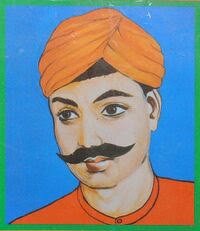
Gokula’s rebellion mobilized a diverse coalition, transcending narrow ethnic or religious lines, and underscored themes of local autonomy, cultural preservation, and peasant solidarity. His ultimate defiance—refusing conversion to Islam and enduring a gruesome execution—transformed him into a symbol of martyrdom, inspiring subsequent leaders like Raja Ram and resonating in regional folklore. This article delves into Gokula’s life, the ideological underpinnings of his movement, the key events including the Battle of Tilpat, the tragic act of Jauhar, his connection to Raja Ram, and the broader historical context, including Aurangzeb’s fiscal policies like the Jizya tax and its exemptions for certain groups such as priests and Brahmins.

Historical Context: Aurangzeb’s Policies, Religious Orthodoxy, and Agrarian Discontent
Aurangzeb’s reign marked the zenith of Mughal territorial expansion but also sowed the seeds of decline through policies that increasingly emphasized Islamic orthodoxy, alienating vast segments of the empire’s diverse population. Ascending the throne after a fratricidal war in 1658, Aurangzeb pursued a vision of governance rooted in Sharia principles, which manifested in discriminatory measures against non-Muslims. Early actions included doubling customs duties on Hindu merchants from 2.5% to 5% in 1665, prohibiting the construction of new Hindu temples in 1669, and issuing a farman on April 9, 1669, mandating the demolition of Hindu temples and schools deemed contrary to Islamic norms (Maasir-i-Alamgiri, p. 81). These policies were part of a broader shift toward religious conformity, exacerbated by the empire’s fiscal strains from prolonged military campaigns in the Deccan against the Marathas and other regional powers.
In the Braj region—encompassing Mathura, a pivotal center of Krishna devotion and Hindu pilgrimage—these tensions were particularly acute. The appointment of Abdun Nabi Khan as faujdar (military governor) in early 1669 intensified local grievances. Described in Mughal sources as a zealous enforcer, Abdun Nabi established a military cantonment at Sadabad (also known as Mauzabad) and engaged in excesses, including arbitrary revenue collections, interference in Hindu religious practices, and reported desecrations of sacred sites. Historians like Sarkar argue that these actions aligned with Aurangzeb’s directives to curb “idolatrous” practices, while Marxist scholars such as Irfan Habib interpret them as extensions of class-based exploitation, where peasant cultivators bore the brunt of imperial revenue demands amid economic pressures.
The Jats, an agrarian community renowned for their martial prowess, egalitarian clan structures, and historical resistance to external domination, were disproportionately affected. Predominantly cultivators and zamindars in the fertile Doab region between the Yamuna and Ganges rivers, they had long maintained a degree of autonomy, often clashing with imperial authorities over land rights and taxation. Dwivedi emphasizes the religious dimension, noting how the sanctity of Mathura as Krishna’s birthplace amplified resentment against perceived encroachments on Hindu dharma. Economic historians like Habib, in works such as Essays in Indian History, frame the revolt as a manifestation of peasant class struggles against feudal extraction, where high revenue assessments (often 50% or more of produce) combined with natural calamities like famines to fuel discontent.
The Jizya Tax: Reimposition, Exemptions, and Implications for Priests and Brahmins
A key element of Aurangzeb’s orthodox policies was the reimposition of the Jizya (or Jizyah), a poll tax levied on non-Muslim subjects as per Islamic jurisprudence. Originating in early Islamic governance, Jizya served as a form of protection tax (dhimma), exempting payers from military service while obligating the state to safeguard them. It had been abolished by Emperor Akbar in 1579 to promote religious harmony and administrative efficiency, but Aurangzeb reinstated it on April 2, 1679—nearly a decade after Gokula’s rebellion—as part of his efforts to align the empire more closely with Sharia principles. The tax was graded by economic status: 48 dirhams for the wealthy, 24 for the middle class, and 12 for the poor, collected annually in silver or kind.
However, Jizya was not universally imposed on all non-Muslims. Classical Islamic law, as outlined in texts like the Hanafi school’s interpretations followed by the Mughals, provided exemptions for certain vulnerable or non-combatant groups. These included women, children, the elderly, the handicapped, slaves, and those devoted exclusively to religious worship, such as monks and priests, who were deemed unable to bear arms or contribute to military defense. In the Indian context, this extended to Brahmins, the priestly caste of Hindus, who were often classified similarly to monks due to their roles in temple rituals, scholarship, and spiritual guidance, without engaging in worldly occupations like trade or warfare.
Historical records confirm these exemptions under Aurangzeb. For instance, in his fatwa on Jizya (as translated and analyzed in sources like the UCLA MANAS project), the tax was not levied on groups like idol worshippers’ women and children, and by extension, priestly classes. Scholarly accounts, such as those in S.A.A. Rizvi’s A History of Sufism in India and other studies on Mughal fiscal policies, note that priestly classes and government officials were explicitly exempted to mitigate administrative disruptions and potential revolts. Brahmins, as influential intermediaries in Hindu society, were spared to avoid widespread backlash; their exemption aligned with precedents set by earlier rulers like the Delhi Sultans, who often waived Jizya for Brahmins to secure loyalty or reduce resistance. Even Firoz Shah Tughlaq, who imposed Jizya on Brahmins in the 14th century, faced criticism for deviating from norms, as noted in historical journals like Historicity Research Journal.
Why these exemptions? Primarily, they stemmed from Islamic juridical principles emphasizing equity and protection for non-combatants. Priests and Brahmins, dedicated to religious duties and often living ascetic lives, were seen as analogous to Muslim ascetics or faqirs, who were also tax-exempt. Pragmatically, exempting them prevented alienation of key social influencers, maintained social order, and focused collection on economically productive males. In Aurangzeb’s case, despite his orthodoxy, exemptions for Rajputs (as warrior allies) and Brahmins reflected strategic concessions amid empire-wide unrest. Rizvi’s analysis indicates that Gujarat’s contributions to Jizya (about 3.5% of total) accounted for such exemptions, underscoring their fiscal impact.
Though Jizya’s full reimposition postdated Gokula’s revolt, its anticipation through discriminatory edicts (like the 1669 temple farman) contributed to the charged atmosphere. The exemptions highlight the nuanced application of Mughal policies—not blanket oppression but targeted measures with loopholes for elites, which nonetheless fueled peasant resentment as ordinary cultivators like Jats bore the empire’s fiscal burdens without such relief.
This fiscal-religious framework amplified grievances in regions like Mathura, where non-exempt peasants viewed such policies as symbols of inequality, further igniting revolts like Gokula’s.

(Maps and illustrations of the Mathura-Agra region during the Mughal Empire, showing key sites like Tilpat, Sadabad, and Mathura, alongside depictions of Mughal taxation scenes.)
Gokula Jat: Early Life, Family Background, and Path to Leadership
Gokula, born as Ola or Gokul Dev, was the son of Madu Singh (or Madu), a respected zamindar of Tilpat village belonging to the Haga (or Agre/Agha) gotra of the Jat community. Tilpat, located near modern-day Faridabad in Haryana and part of the Agra suba (province), was a fertile agrarian hub where Jats maintained strong kinship networks. Gokula had three brothers—Sindhuraj (the eldest), Jhaman, and Saman—and his uncle Uday Singh (or Udai Singh Singhi) played a pivotal role as a co-leader in the rebellion. While no precise birth date is recorded in primary sources, family disputes in the 1650s, including alliances with Mughals against local Rajputs, suggest Gokula was born around the 1630s or 1640s, making him a mature leader in his thirties or forties by 1669.
As a zamindar, Gokula inherited responsibilities over land revenue collection and local governance, which positioned him as a natural intermediary between peasants and imperial officials. His rise to prominence stemmed from growing disillusionment with Mughal overreach: arbitrary tax hikes, forced labor, and religious interferences eroded traditional Jat autonomy. Unlike the later Sinsinwar Jats of Bharatpur (to which Raja Ram belonged), Gokula’s Haga gotra tied him to the northern Jat heartlands, with scholarly consensus (Dwivedi, Sarkar) distinguishing his regional base from southern clans. Gokula’s leadership was forged in community assemblies (panchayats), where he advocated withholding taxes and arming peasants, transforming local grievances into organized resistance.
Triggers of the Rebellion: From Local Excesses to Open Defiance
The spark for Gokula’s uprising ignited amid escalating tensions in early 1669. Abdun Nabi Khan’s aggressive enforcement—building the Sadabad cantonment, imposing heavy levies, and reportedly molesting local customs—provoked widespread outrage. On May 12, 1669 (corresponding to 21 Zil-Hijja 1079 A.H. in the Islamic calendar), Gokula’s forces ambushed and killed Abdun Nabi at the village of Sahora (or Sura), a bold act that signaled the revolt’s commencement (Maasir-i-Alamgiri). Emboldened, the rebels sacked the Sadabad cantonment, looting arms and disrupting Mughal revenue chains, which extended their influence across the Mathura-Agra tract.
Aurangzeb, viewing this as a direct challenge to imperial sovereignty, dispatched reinforcements under commanders like Hasan Ali Khan, equipped with musketeers, rocketmen, and artillery. Initial attempts at negotiation—offering amnesty in exchange for submission and tribute—were rebuffed by Gokula, who demanded the withdrawal of oppressive officials. The emperor’s decision to march personally from Delhi on November 28, 1669, with a large army underscored the rebellion’s gravity, especially amid concurrent threats from other frontiers.
These triggers were multifaceted: economic exploitation through revenue demands, religious affronts via temple interferences, and administrative abuses by local faujdars. The anticipation of harsher policies, like the eventual Jizya, further galvanized non-exempt peasant classes, who saw no relief akin to that granted to Brahmins and priests.
Detailed Analysis of the Battle of Tilpat (Late December 1669–Early January 1670)
The Battle of Tilpat represented the rebellion’s military pinnacle and its tragic downfall. Situated approximately 20 miles from Mathura, Tilpat served as Gokula’s fortified base, where he amassed an estimated 20,000 fighters, predominantly Jats but including significant contingents of Ahirs, Gujars, Meos (Muslim pastoralists), Meenas, Narukas, and Panwars (as detailed in Dwivedi’s analysis). This composite force highlighted the revolt’s inclusive nature, drawing on shared agrarian grievances rather than ethnic exclusivity.
Prelude and Initial Clashes: As Mughal forces under Hasan Ali Khan advanced, Gokula’s troops engaged in skirmishes, leveraging familiarity with the terrain—dense fields and riverine barriers—to inflict early casualties. Mughal sources concede heavy imperial losses, with rebels employing guerrilla tactics like ambushes and hit-and-run raids.
The Siege Phase: By late December 1669, the rebels withdrew to Tilpat’s mud-and-thatch fortifications. Hasan Ali, reinforced by Amanulla Khan from Agra, besieged the site with a superior force of over 10,000, including elite musketeers, rocket artillery (ban), and cannons. The siege lasted three to four days, marked by relentless bombardment that breached the walls. Rebels countered with bows, matchlocks, and desperate charges, but lacked comparable firepower.
Final Assault and Aftermath: In the climactic hand-to-hand combat, Mughal discipline prevailed amid chaos. Casualties were staggering: approximately 4,000 Mughals killed or wounded, and 5,000–7,000 rebels slain, with another 7,000 captured (Maasir-i-Alamgiri; Sarkar, Vol. III). Gokula and Uday Singh were taken alive through the efforts of officers like Shaikh Razi-ud-Din.
Tactical Evaluation: Gokula’s strengths lay in high morale, numerical superiority in locals, and defensive positioning, but weaknesses included inadequate artillery and training for pitched battles. Mughals excelled in coordinated assaults and technology. The defeat taught future Jat leaders, like Raja Ram, to favor guerrilla “Dhar” warfare over open confrontations. Though a Mughal victory, the battle’s costliness exposed vulnerabilities in imperial control, contributing to long-term regional instability.

(Artistic reconstructions of the Battle of Tilpat, depicting Jat warriors clashing with Mughal forces, and maps showing battle formations.)
What Was the Ideology of Gokula Jat? Religious Fundamentalist or Defender of Fundamental Rights, Morals, Bhaichara, and Anti-Feudal?
Inferring Gokula’s ideology from actions and historical context—absent any surviving manifestos—reveals a pragmatic, multifaceted worldview shaped by peasant realities rather than abstract doctrines. Primary sources like Maasir-i-Alamgiri and Fatuhat-i-Alamgiri depict him as a defiant rebel, notably in his refusal of conversion during captivity, which underscores a commitment to personal and cultural integrity.
Rejection of Religious Fundamentalism: Gokula was not a religious fundamentalist imposing dogmatic views or persecuting others based on faith. His revolt reacted to Mughal religious encroachments—such as temple threats and discriminatory edicts—but did not involve proactive attacks on Muslims as a group. Evidence of Meo Muslim participation in his forces debunks communal interpretations, indicating a defense of pluralism against imposed orthodoxy.
Economic and Religious Motivations Intertwined: At its core, the ideology blended economic justice with religious preservation. Grievances over oppressive taxation (including anticipatory resentment toward Jizya-like burdens) drove tax withholding and raids, aligning with Habib’s class-struggle framework. Religiously, the protection of Mathura’s sacred sites reflected a dharma-centric ethos, ignited by Abdun Nabi’s excesses and the 1669 farman (Dwivedi, Sarkar). Yet, this was defensive, not expansionist.
Commitment to Fundamental Rights and Morals: In pre-modern terms, Gokula championed “fundamental rights” like freedom from forced conversion and cultural erasure. His execution defiance embodied moral resilience, upholding dignity amid tyranny. The Jauhar act further illustrates adherence to honor codes, prioritizing collective morals over survival.
Emphasis on Bhaichara (Brotherhood): The rebellion’s hallmark was inclusivity—”bhaichara”—uniting diverse castes and faiths (Jats with Ahirs, Gujars, Meos) against common foes. This egalitarian spirit drew from Jat traditions of clan democracy, fostering solidarity beyond hierarchies.
Anti-Feudal Elements: While operating as a zamindar within feudal structures, Gokula challenged imperial feudalism through peasant mobilization against extraction. His actions hinted at proto-anti-feudalism, defending local rights against centralized exploitation, though not abolishing zamindari outright.
Overall, Gokula’s ideology was a grounded peasant resistance: defending economic equity, cultural morals, communal brotherhood, and autonomy. It promoted inclusive justice, far from extremism, as evidenced by alliances and historical records.
Capture, Trial, Execution, and Mughal Reprisals
Gokula and Uday Singh, captured amid the melee, were transported to Agra. Offered clemency in exchange for embracing Islam, Gokula reportedly taunted Aurangzeb, affirming his unyielding faith (Fatuhat-i-Alamgiri). On January 1, 1670, they were executed at the Agra Kotwali through dismemberment—a barbaric spectacle intended to deter insurgents but instead immortalized Gokula as a martyr (Maasir-i-Alamgiri).
In reprisal, Aurangzeb ordered the demolition of Mathura’s Keshav Rai Temple in January–February 1670, with its idols smashed and buried under a mosque’s steps, symbolizing imperial dominance. Gokula’s family suffered forced conversions, further entrenching Jat bitterness.
Raja Ram: Ideological Heir and Continuation of the Struggle
Though not blood-related to Gokula—hailing from the Sinsinwar gotra and based in Sinsini (near Bharatpur, Rajasthan)—Raja Ram (d. 1688), son of Bhajja Singh, emerged as his spiritual successor around 1685. Learning from Tilpat’s tactical flaws, Raja Ram innovated with guerrilla warfare (“Dhar”), constructing mud forts (thikris), unifying Jat clans, and training peasants in captured firearms. His raids targeted Mughal caravans, defeating commanders like Khan-i-Jahan and avenging past atrocities by desecrating Akbar’s tomb at Sikandra (digging up and burning the bones, as per European traveler Niccolao Manucci’s Storia do Mogor and Khafi Khan’s Muntakhab-ul-Lubab).
Raja Ram’s death in battle at Bijal on July 4, 1688, against Mughal-allied Shekhawats, did not halt the momentum; his nephew Churaman continued the fight, eventually founding the Bharatpur state. The ideological link to Gokula lay in shared themes of resistance to oppression, with Raja Ram’s strategies refining Gokula’s bold but unsustainable approach.

(Portraits and depictions of Raja Ram Jat, Jat fortifications, and rural resistance scenes.)
Chronology of Key Events in Gokula’s Life and Legacy
- c. 1630s–1640s: Gokula born in Tilpat to Madu Singh.
- 1650s: Family involved in local conflicts, shaping Gokula’s early experiences.
- Early 1669: Abdun Nabi appointed faujdar; excesses on locals begin.
- April 9, 1669: Aurangzeb issues farman for temple demolitions.
- May 12, 1669: Abdun Nabi killed at Sahora; rebellion erupts.
- Mid-1669: Rebels sack Sadabad cantonment, expanding control.
- November 28, 1669: Aurangzeb marches from Delhi with army.
- Late December 1669–Early January 1670: Battle and Siege of Tilpat; Gokula captured.
- January 1, 1670: Gokula and Uday Singh executed at Agra.
- January–February 1670: Keshav Rai Temple destroyed as reprisal.
- April 2, 1679: Aurangzeb reimposes Jizya, with exemptions for Brahmins and priests.
- c. 1685–1688: Raja Ram revives Jat resistance with guerrilla tactics.
- July 4, 1688: Raja Ram killed at Bijal; legacy continues through Churaman.
Legacy and Enduring Historical Significance
Gokula’s revolt, though suppressed, eroded Mughal authority in the Doab, exposing the empire’s overextension and inspiring a chain of uprisings that contributed to its 18th-century fragmentation. It exemplified peasant agency, blending economic defiance with cultural resilience, and laid ideological foundations for Jat state-building. In folk memory, Gokula endures as a hero of dharma and bhaichara; scholarly evidence confirms his role as a catalyst against tyranny.
The exemptions in policies like Jizya highlight the selective nature of Mughal oppression—sparing elites while burdening masses—further underscoring why revolts like Gokula’s resonated among ordinary cultivators. His story remains relevant in discussions of subaltern resistance, religious policy, and agrarian history.
References
- Saqi Mustaid Khan. Maasir-i-Alamgiri (translated by Jadunath Sarkar, 1947).
- Ishwar Das Nagar. Fatuhat-i-Alamgiri.
- Jadunath Sarkar. History of Aurangzeb (1912–1916, Vols. III–V).
- Girish Chandra Dwivedi. The Jats: Their Role in the Mughal Empire (2003).
- Irfan Habib. Essays in Indian History: Towards a Marxist Interpretation (1995).
- Niccolao Manucci. Storia do Mogor (translated by William Irvine, 1907–1908).
- Khafi Khan. Muntakhab-ul-Lubab.
- S.A.A. Rizvi. A History of Sufism in India (1978–1983).
- Additional sources on Jizya: Wikipedia entries on Jizya; UCLA MANAS project on Aurangzeb’s Fatwa; Historicity Research Journal articles.