
Introduction
Monkeys, with their uncanny resemblance to humans in behavior, intelligence, and social structure, have long been woven into the fabric of global mythologies. From the compassionate monkey kings of Buddhist Jataka tales to the devoted Hanuman of Hindu epics and the rebellious Sun Wukong of Chinese literature, these primate figures embody a spectrum of virtues and vices that resonate across cultures. This article an exploration of these narratives, emphasizing their similarities while incorporating additional monkey deities from diverse traditions: Sarugami in Japanese Shinto, the howler monkey gods as patrons of the arts in Maya civilization, and the baboon form of Thoth in ancient Egyptian mythology. By drawing on archaeological evidence, historical periods, and scholarly studies, we illuminate how these figures reflect universal themes of wisdom, sacrifice, creativity, and cosmic mediation.
Table of Contents
The Jataka tales, part of the Pali Canon in Theravada Buddhism, recount the Bodhisattva’s (future Buddha’s) past lives, often as animals, to illustrate moral lessons. Compiled around the 1st century BCE in Sri Lanka, their origins trace back to oral traditions from the 5th century BCE or earlier. Monkey stories, like the Mahakapi Jataka, highlight leadership and selflessness. These influenced Hindu and Chinese myths through cultural diffusion via the Silk Road (2nd century BCE–14th century CE), where Buddhism carried Indian lore eastward.
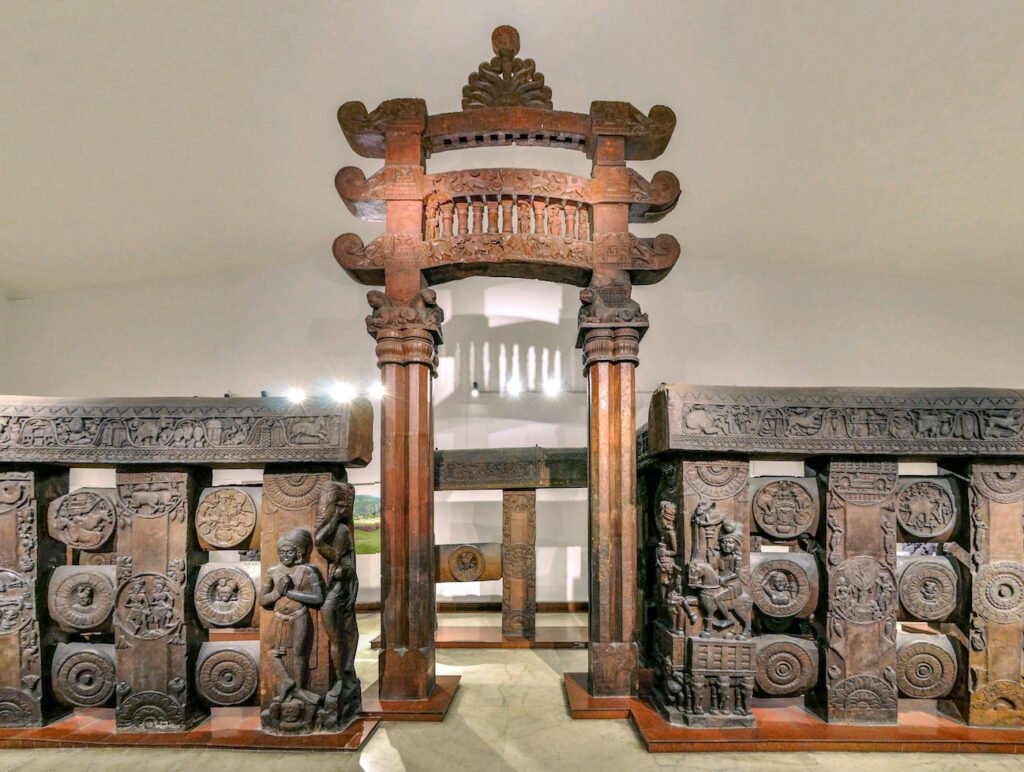
Hanuman, from the Ramayana (5th–4th century BCE-No Archeological Evidences ), represents unwavering devotion, while Sun Wukong from Journey to the West (16th century CE, Ming Dynasty) blends mischief with enlightenment. Similarities—such as superhuman leaps, troop leadership, and moral growth—suggest shared archetypes.
Expanding globally, Sarugami in Shinto (from 8th century CE records) acts as a solar messenger and sometimes malevolent spirit, rooted in pre-Buddhist cults. Maya howler monkey gods, patrons of scribes and artists (Classic period, 250–900 CE), appear in ceramics and codices, symbolizing creativity. Thoth’s baboon form in Egypt (from Predynastic, c. 3000 BCE) embodies wisdom, with mummified remains evidencing trade.
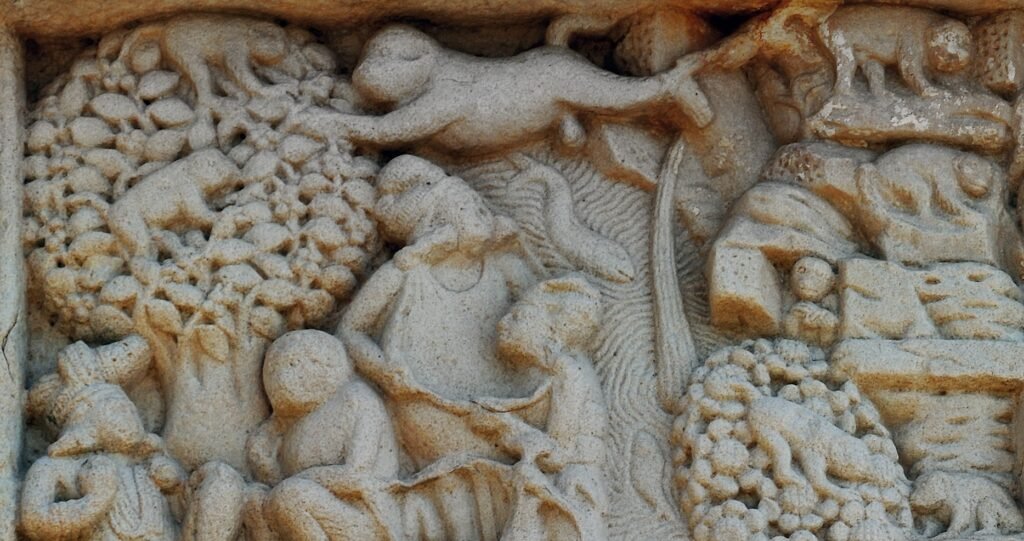
Archaeological sites like Bharhut Stupa (2nd century BCE) for Jatakas, Hampi ruins (14th–16th CE) for Hanuman, and Dunhuang Caves (4th–14th CE) for Chinese influences provide concrete evidence. Scholarly works, such as Victor Mair’s on Indo-Chinese links and Michael Coe’s on Maya primates, underscore these connections.
This integrates these elements into a cohesive narrative, exploring how monkey myths bridge continents and eras, offering insights into human spirituality.
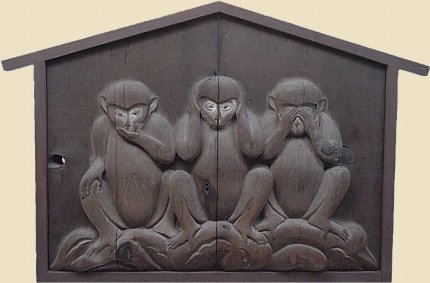
Ancient depiction of monkeys in Japanese Shinto lore, illustrating Sarugami influences.
The Jataka Tales: Origins, Monkey Narratives, and Archaeological Evidence
The Jataka tales, numbering over 550, form an integral part of Buddhist scripture, depicting the Bodhisattva’s rebirths to cultivate perfections (paramitas). Orally transmitted in ancient India, they were formalized in the Pali Canon during the 1st century BCE in Sri Lanka under King Vattagamani. Elements date to the Buddha’s era (c. 563–483 BCE), drawing from folk tales.
Monkey Jatakas emphasize compassion. The Mahakapi Jataka (No. 407): The Bodhisattva, king of 80,000 monkeys by the Ganges, protects his troop from hunters after a mango fruit betrayal. He forms a body-bridge, enduring betrayal by Devadatta’s past form, and teaches righteousness before dying.
Other tales: Tayodhamma Jataka (monkey leadership), Monkey and Crocodile (wit vs. greed).
Archaeology: Bharhut Stupa (2nd century BCE, Shunga period) reliefs, discovered 1873 by Cunningham, show the bridge scene with inscriptions. Sanchi (3rd century BCE–1st CE) and Kanganahalli (1st BCE–3rd CE) panels depict Jatakas. Kolhua stupa (3rd century BCE) links to monkey offerings.
Studies: Fausböll’s 19th-century editions note Southeast Asian spread via Ashoka’s missions (3rd century BCE). ASI surveys confirm 2nd century BCE iconographic peak.
These tales, blending ethics with animal lore, influenced global myths, as seen in primate behaviors mirroring human societies.
Hanuman in Hindu Mythology: Historical Context and Archaeological Finds
Hanuman, the vanara devotee in the Ramayana (5th–4th century BCE, late Vedic period), symbolizes bhakti. Son of Vayu, he leaps oceans, lifts mountains, burns Lanka.
Feats: Childish sun-leap; Sita rescue; herb mountain.
Buddhist adaptations (Dasaratha Jataka, 3rd century CE) reference Rama sans Hanuman.
Archaeology: Gyanvapi Hanuman sculpture (late medieval, 2024 dig). Hampi temples (Vijayanagara, 14th–16th CE) with ASI-excavated statues. Debated 6,000-year-old Mesopotamian carving. Rama Setu geology aligns with epic.
Studies: Lutgendorf traces cult from Gupta (4th–6th CE) to 11th century prominence.
Hanuman’s syncretism with Vedic elements parallels monkey gods elsewhere.
Sun Wukong in Chinese Literature: Development and Influences
Sun Wukong, from Ming Journey to the West (1592 CE), born from stone, masters powers, rebels, redeems via pilgrimage. Roots in Song (10th–13th CE) folklore, Yuan plays.
Archaeology: Dunhuang monkey motifs (4th–14th CE). Han Dynasty (206 BCE–220 CE) longevity symbols.
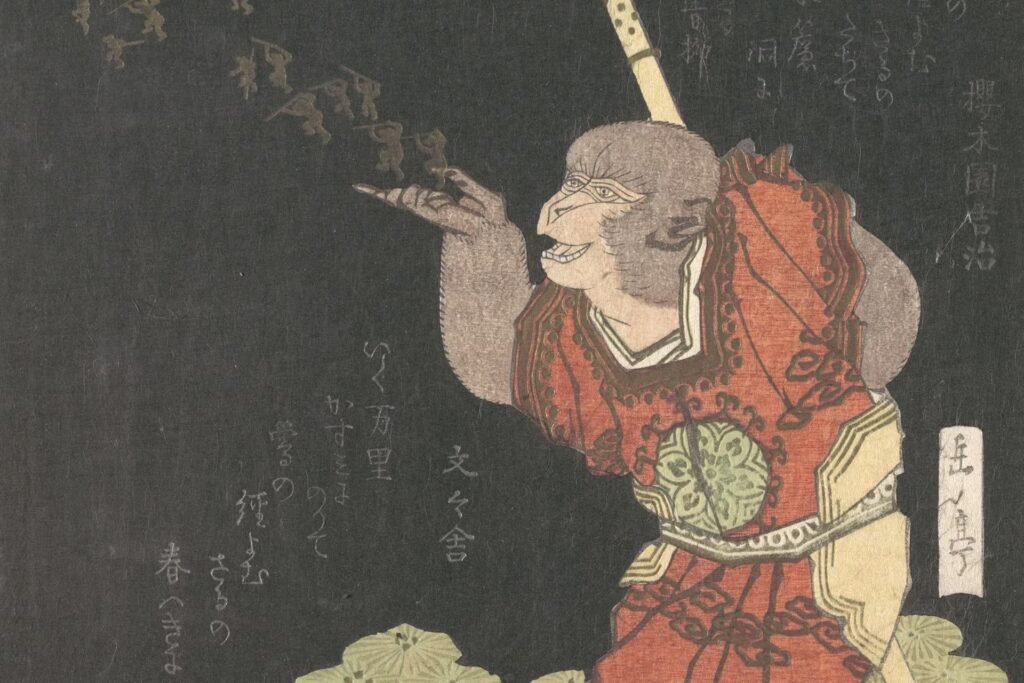
Studies: Lu Xun, Mair on Hanuman origins via Tang Buddhism.
Comparative Analysis: Similarities, Differences, and Scholarly Debates
Leadership: 80,000 monkeys in Mahakapi; vanara army for Hanuman; monkey kingdom for Sun.
Abilities: Leaps, strength, transformations.
Themes: Sacrifice, redemption.
Differences: Buddhist ego-denial, Hindu devotion, Chinese syncretism.
Studies: 2025 paper on motifs; Duke thesis; Sino-Platonic; Deepak 2024.
Table of Similarities:
| Attribute | Jataka Monkey King | Hanuman | Sun Wukong |
|---|---|---|---|
| Leadership | Troop protector | Army commander | Kingdom ruler |
| Powers | Leap, sacrifice | Leap, strength | Transformations, leap |
| Moral Arc | Compassion | Devotion | Rebellion to enlightenment |
Cultural Transmission via Silk Road and Buddhism
Monkey myths traveled from India to China via the Silk Road (c. 2nd century BCE-14th century CE), with Buddhist monks like Xuanzang carrying Jatakas and Ramayana elements. Khotan pet monkeys and Dunhuang art show diffusion.
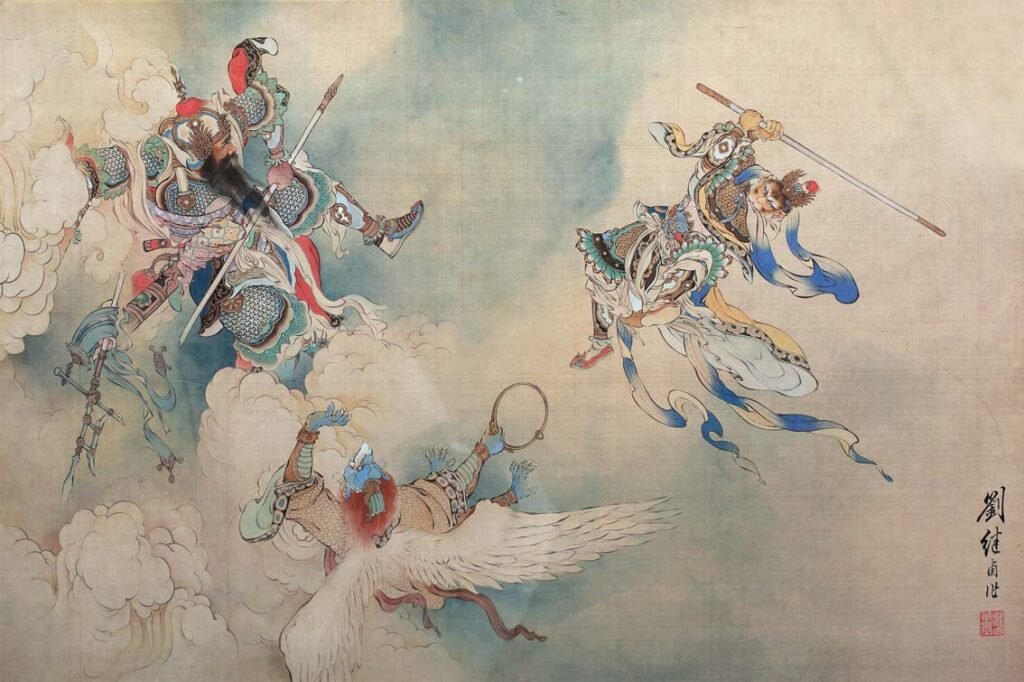
Chinese veneration of monkeys as immortals blended with Indian tales, evolving Sun Wukong.
Other Monkey Gods and Global Parallels
Sarugami in Japanese Shinto
Sarugami, a Shinto monkey deity, serves as messenger to sun gods like Hiyoshi-kami, active at dawn/dusk. From 8th century records, evolving from ancient cults pre-Buddhism (before 6th CE).
Myths: Three wise monkeys at Nikko Toshogu (17th CE); evil sarugami as fallen gods.
Archaeology: Nakayama, Hiyoshi shrines (Heian period, 794–1185 CE); Sarushima island legend (national historic site).
Studies: Onmarkproductions details Shinto-Buddhist syncretism; folklore ties to sun worship.
Similarities: Messenger role like Hanuman; wisdom parallels Thoth.
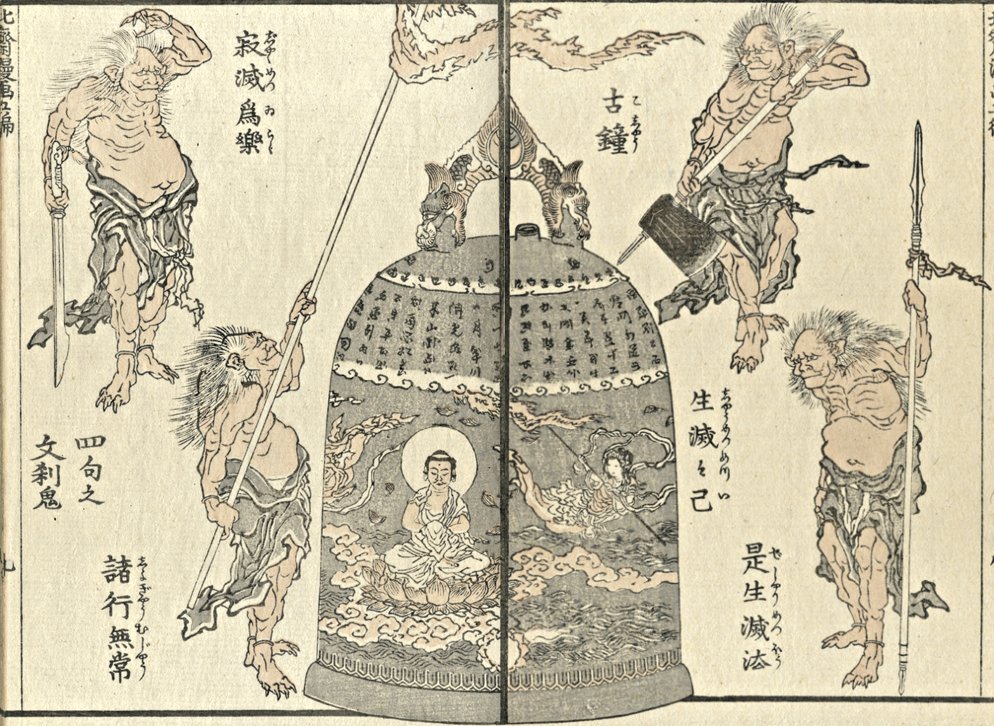
Historical artwork depicting Sarugami in Shinto context.
Maya Howler Monkey Gods as Patrons of the Arts
In Maya mythology, howler monkeys (Alouatta pigra) are divine patrons of scribes, artists, musicians—glyph Chuwen represents them. Popol Vuh: Hun Batz, Hun Chuen turned monkeys by Hero Twins.
Periods: Classic (250–900 CE) vases; Post-Classic (900–1500 CE) like Mayapan burner.
Archaeology: Copan sculptures; Met Museum artifacts.
Studies: Coe (1978, 1989) on howler dominance; Cambridge archaeoprimatology duality with spider monkeys.
Parallels: Creativity like Thoth; transformation like Sun Wukong.
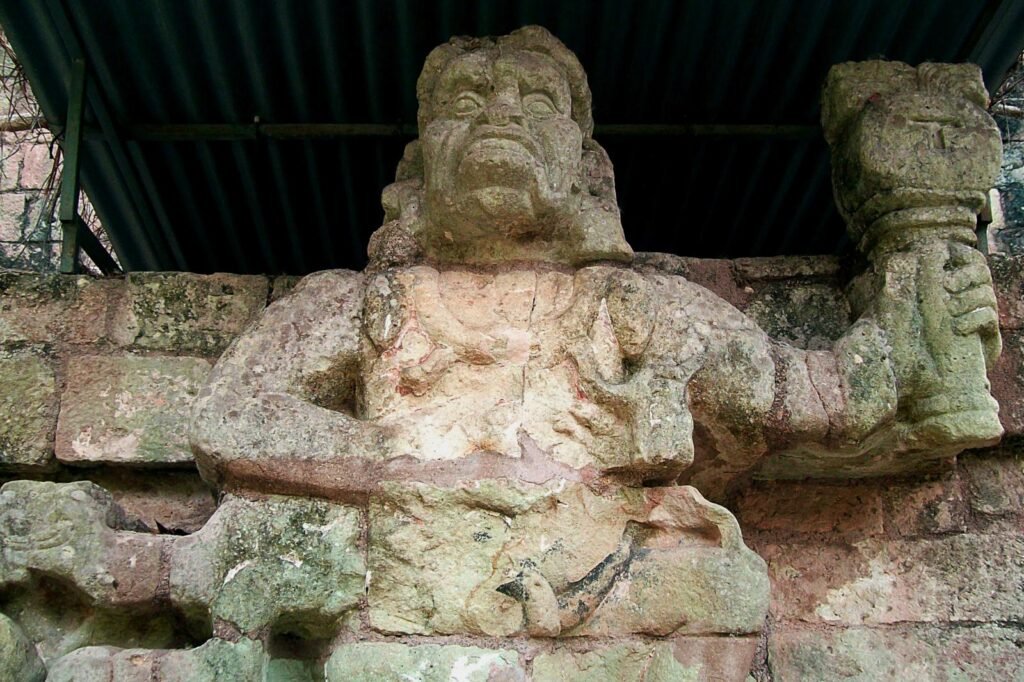
Maya sculpture of howler monkey god from Copan.
Egyptian Thoth in Baboon Form
Thoth, god of wisdom, often baboon-headed, from Predynastic (c. 3000 BCE) to Greco-Roman (332 BCE–395 CE). Associated with moon, writing; baboons as j j (worship) for Amun.
Myths: Baba, baboon god of kingship; underworld role.
Archaeology: Saqqara catacomb mummies (Old Kingdom, 2686–2181 BCE); Tuna el-Gebel; water clocks. 2020 eLife study on imports.
Studies: Cambridge on Thoth incarnate; Ancient Origins on deification.
Similarities: Wisdom like Maya patrons; mediation like Sarugami.
Conclusion
Buddhism spread Jataka tales to China/Southeast Asia, evolving into local heroes. Today, Hanuman worshiped in India; Sun Wukong in pop culture (games, films).
These figures remind us of universal human traits: Strength balanced with wisdom, ego tamed by service.
Monkey myths, from Jatakas to global deities, reveal shared human insights, backed by archaeology and studies. Their legacy persists.
Studies by scholars like Viggo Fausböll (who edited the Jataka commentary from 1877-1897) highlight how these tales influenced Southeast Asian art, with periods of transmission via Ashokan missions (3rd century BCE). Archaeological surveys by the Archaeological Survey of India (ASI) confirm the 2nd century BCE as a peak for Jataka iconography, aligning with Buddhism’s expansion.
These evidences not only date the tales but also show their role in moral education, carved on stupas for pilgrims. The monkey king’s sacrifice parallels real primate behaviors observed in ancient texts, blending folklore with ethics.
References :- Monkey Gods, Kings, and Jataka Tales: Archaeological Evidence, Inscriptions, and Manuscripts
Below is a comprehensive list of references to monkey gods, kings, and monkey-related Jataka tales, drawn from archaeological evidence, inscriptions, manuscripts, and historical records. This compilation focuses on verifiable sources with associated time periods and places. Entries are categorized by cultural tradition for clarity. Note that some figures (e.g., Sun Wukong) are more literary than archaeological, but I’ve included related evidence where available. Controversial or debated claims (e.g., extremely ancient carvings outside traditional contexts) are noted as such.
1. Buddhist Jataka Tales (Monkey Kings)
These tales often depict the Bodhisattva as a monkey king, emphasizing compassion and sacrifice. Evidence primarily comes from stupa reliefs and ancient manuscripts.
- Mahakapi Jataka (Great Monkey King Tale): The Bodhisattva as king of 80,000 monkeys who forms a body-bridge to save his troop from hunters.
- Archaeological Evidence: Relief sculpture on the vedika (railing) of Bharhut Stupa, depicting the monkey king forming the bridge with inscriptions identifying the scene.
- Time Period: 2nd century BCE (Sunga Dynasty).
- Place: Bharhut, Madhya Pradesh, India.
- Archaeological Evidence: Relief panels at Sanchi Stupa, showing the Mahakapi story.
- Time Period: 3rd century BCE to 1st century CE (Maurya to Satavahana periods).
- Place: Sanchi, Madhya Pradesh, India.
- Archaeological Evidence: Carvings at Kanganahalli Stupa, including Jataka scenes with monkey motifs.
- Time Period: 1st century BCE to 3rd century CE (Satavahana period).
- Place: Kanganahalli, Karnataka, India.
- Manuscript Evidence: Pali Canon (Jatakatthavannana), part of the Khuddaka Nikaya, where the tale is recorded as No. 407.
- Time Period: Compiled 1st century BCE (oral traditions from 5th century BCE).
- Place: Sri Lanka (Anuradhapura period manuscripts).
- Inscription/Manuscript Evidence: 3rd-century CE Chinese translation of the Mahakapi Jataka, showing early transmission.
- Time Period: 3rd century CE.
- Place: China (early Buddhist manuscripts).
- Other Monkey Jatakas (e.g., Tayodhamma Jataka, Monkey and Crocodile): General depictions of monkeys as leaders or clever figures.
- Archaeological Evidence: Panels at Amaravati Stupa, with animal Jataka scenes including monkeys.
- Time Period: 2nd century BCE to 3rd century CE (Satavahana period).
- Place: Amaravati, Andhra Pradesh, India.
- Archaeological Evidence: Reliefs at Nagarjunakonda, showing various Jataka animal stories.
- Time Period: 3rd century CE (Ikshvaku period).
- Place: Nagarjunakonda, Andhra Pradesh, India.
2. Hindu Monkey God: Hanuman
Hanuman, the devoted vanara (monkey-like being) from the Ramayana, is widely depicted in temples and inscriptions.
- Hanuman: Son of the wind god, known for strength, devotion, and feats like leaping oceans.
- Inscription Evidence: Khajuraho Hanuman Inscription, a Sanskrit prasasti (eulogy) on a statue base, mentioning Hanuman worship.
- Time Period: 10th century CE (circa 922 CE, Chandela Dynasty).
- Place: Khajuraho, Madhya Pradesh, India.
- Archaeological Evidence: Oldest known independent Hanuman temple and statue, protected by the Archaeological Survey of India (ASI).
- Time Period: Circa 922 CE.
- Place: Khajuraho, Madhya Pradesh, India.
- Inscription Evidence: Rare Hanuman inscription depicting the figure, from Vijayanagara period.
- Time Period: 1371 CE (Vijayanagara Empire).
- Place: Udupi, Karnataka, India.
- Inscription Evidence: 300-year-old inscription in a Hanuman temple, attributed to Gajapati Prataparudra.
- Time Period: 1706–1748 CE (Gajapati Dynasty).
- Place: Likely Odisha or Andhra Pradesh, India (specific temple not detailed in sources).
- Archaeological Evidence: Late medieval Hanuman sculpture unearthed during excavations.
- Time Period: Late medieval (post-12th century CE).
- Place: Gyanvapi, Varanasi, Uttar Pradesh, India.
- Debated Archaeological Evidence: Carvings purportedly showing Rama and Hanuman (controversial, not widely accepted by scholars).
- Time Period: Circa 6000 years old (debated, possibly Mesopotamian influence).
- Place: Silemania, Iraq.
3. Chinese Monkey King: Sun Wukong
Sun Wukong, the rebellious monkey from Journey to the West, has roots in folklore influenced by Indian myths.
- Sun Wukong (Monkey King): Born from a stone, gains powers, rebels against heaven.
- Manuscript Evidence: Journey to the West (Xiyouji), the novel where Sun Wukong is central.
- Time Period: 16th century CE (Ming Dynasty, published 1592 CE).
- Place: China (attributed to Wu Cheng’en).
- Folklore/Manuscript Evidence: Earlier origins in Song Dynasty folklore and Yuan Dynasty plays (zaju), depicting monkey heroes.
- Time Period: 10th–13th century CE (Song Dynasty); 13th–14th century CE (Yuan Dynasty).
- Place: China.
- Archaeological Evidence: Monkey motifs in Buddhist cave art, possibly influencing Sun Wukong lore.
- Time Period: 4th–14th century CE (Tang to Yuan Dynasties).
- Place: Dunhuang Caves, Gansu Province, China.
- Folklore Evidence: White Monkey legends, revered gibbons.
- Time Period: 700–223 BCE (Chu Kingdom).
- Place: Ancient Chu region, China.
4. Japanese Shinto Monkey God: Sarugami
Sarugami is a monkey deity, often a mediator or malevolent spirit in folklore.
- Sarugami: Monkey god associated with easy childbirth and as a messenger; sometimes depicted as vicious.
- Historical Records/Manuscript Evidence: Earliest mentions in Kojiki and Nihon Shoki, sacred texts.
- Time Period: 8th century CE (Nara Period).
- Place: Japan.
- Archaeological/Shrine Evidence: Statues and decks at Hiyoshi Taisha Shrine, linked to Sarutahiko (related to Sarugami).
- Time Period: Heian Period (794–1185 CE).
- Place: Otsu, Shiga Prefecture, Japan.
- Folklore/Archaeological Evidence: Ancient monkey cults, pre-Buddhist shrines like Sarutahiko Shrine.
- Time Period: Before 6th century CE (pre-Buddhist era).
- Place: Fukuoka Prefecture, Japan.
5. Mesoamerican Maya Howler Monkey Gods
Howler monkeys as patrons of arts, scribes, and creation in Maya mythology.
- Howler Monkey Gods (e.g., Hun Batz, Hun Chuen): Patrons of scribes and artists; transformed figures in Popol Vuh.
- Archaeological Evidence: Simian sculptures on Temple 11, possibly howler monkey gods.
- Time Period: Classic Maya Period (250–900 CE).
- Place: Copán, Honduras.
- Archaeological Evidence: Ceramic incense burner modeled as a howler monkey scribe.
- Time Period: Post-Classic Period (900–1500 CE).
- Place: Mayapan, Yucatan, Mexico.
- Archaeological Evidence: Vases and ceramics with monkey images, including howler motifs.
- Time Period: Classic Period (250–900 CE).
- Place: Tikal, Guatemala, and general Maya sites.
- Manuscript Evidence: Popol Vuh, post-conquest codex recording myths.
- Time Period: 16th century CE (based on earlier oral traditions).
- Place: Guatemala (highlands).
6. Egyptian Baboon God: Thoth (Baboon Form)
Thoth, god of wisdom, often depicted as a baboon.
- Thoth (Baboon Form): Associated with moon, writing, and knowledge; baboons as sacred animals.
- Archaeological Evidence: Baboon statuettes and mummies in catacombs.
- Time Period: Old Kingdom (2686–2181 BCE).
- Place: Saqqara, Egypt.
- Archaeological Evidence: Statues of Thoth as baboon, including electrum-inlaid bronze.
- Time Period: New Kingdom to Late Period (1550–525 BCE).
- Place: Various sites, including Tuna el-Gebel necropolis, Egypt.
- Inscription Evidence: Inscribed Thoth Baboon Statuette, with dating via paleography.
- Time Period: New Kingdom, 19th Dynasty (1292–1189 BCE).
- Place: Egypt (specific findspot varies; e.g., Hermopolis).
- Archaeological Evidence: Baboon figures in temples, including worshipping baboons.
- Time Period: Predynastic to Greco-Roman (3000 BCE–395 CE).
- Place: Hermopolis (Ashmunein), Egypt.
- Archaeological Evidence: Statue of Minemheb with Thoth baboon.
- Time Period: New Kingdom (1391–1353 BCE).
- Place: Egypt.