
Introduction: The Significance of Anthropomorphic Art in Human Prehistory
Anthropomorphic representations—artifacts depicting human or human-like figures—stand as profound testaments to early human cognition, spirituality, symbolism, and social complexity. These objects, from portable ivory carvings to monumental stone pillars, mark the emergence of abstract thinking, ritual practices, and possibly proto-religious beliefs. The archaeological record reveals that such art appeared tens of thousands of years ago, challenging earlier assumptions that complex symbolism required settled agricultural societies.
Table of Contents

This article provides a detailed examination of the oldest verified anthropomorphic sculptures worldwide, drawing on peer-reviewed sources, excavation reports, and scientific dating methods. It covers Upper Paleolithic Europe, the early Holocene Shigir Idol, and Pre-Pottery Neolithic developments at Göbekli Tepe. The discussion then shifts to India’s earliest examples from the Indus Valley Civilization (IVC). Finally, it thoroughly debunks the modern hoax surrounding the alleged “Kalpa Vigraha,” a purported 26,000-year-old brass Shiva idol. All interpretations are grounded in archaeological evidence, with references to primary publications.
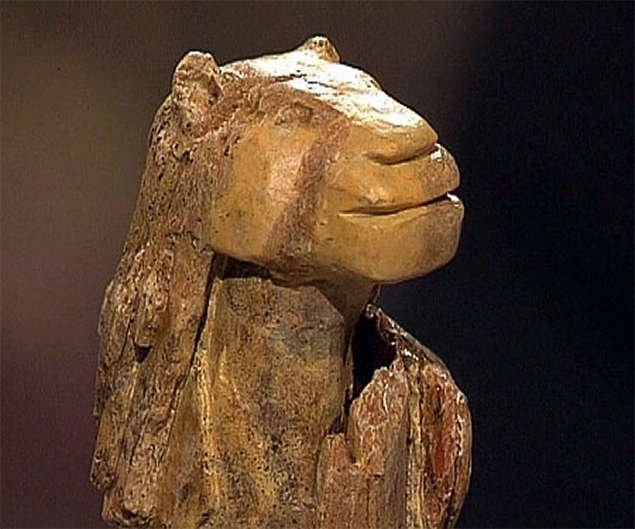
(Images: Various views of the Löwenmensch figurine, the oldest known therianthropic sculpture.)
Part 1: The Aurignacian Origins – Upper Paleolithic Europe (c. 43,000–35,000 BCE)
The earliest undisputed anthropomorphic sculptures emerge in the Aurignacian culture, associated with the arrival of Homo sapiens in Europe. These ivory carvings from Germany’s Swabian Jura demonstrate remarkable technical proficiency and imaginative depth.
1.1 The Löwenmensch (Lion-Man) of Hohlenstein-Stadel: The Oldest Therianthropic Figure
Discovered in 1939 in Hohlenstein-Stadel cave and reconstructed over decades (final assembly in 2013), the Löwenmensch is a 31.1 cm tall mammoth ivory figurine depicting a human body with a cave lion head. Radiocarbon dating of associated layers confirms an age of 35,000–41,000 years old, making it the oldest known anthropomorphic or zoomorphic-therianthropic sculpture.
Detailed Description: The upright figure features a human torso, legs, and arms, with engraved lines suggesting posture and possibly clothing. The lion head is meticulously carved, with eyes and muzzle details. Seven parallel incisions on the left arm may represent tattoos or scars.
Excavation Context: Found in fragments alongside bone tools, pendants, and perforated teeth, indicating a rich symbolic environment.
Significance: Interpreted as evidence of shamanism, mythology, or hybrid deities. It suggests early humans conceptualized beings beyond the natural world.
Archaeological Evidence and References:
- Conard, N.J. (2003). “Palaeolithic ivory sculptures from southwestern Germany and the origins of figurative art.” Nature 426: 830–832.
- Kind et al. (2014). “The Lion Man of Hohlenstein-Stadel.” Antiquity.
- UNESCO recognition as part of Swabian Jura Ice Age Art sites.
A smaller similar figurine from Hohle Fels reinforces shared cultural motifs.
1.2 The Venus of Hohle Fels: Oldest Fully Human Depiction
Unearthed in 2008 in Hohle Fels cave, this 6 cm ivory figurine is dated 35,000–40,000 years old. It features exaggerated breasts, hips, and vulva, with a perforated loop suggesting use as a pendant.
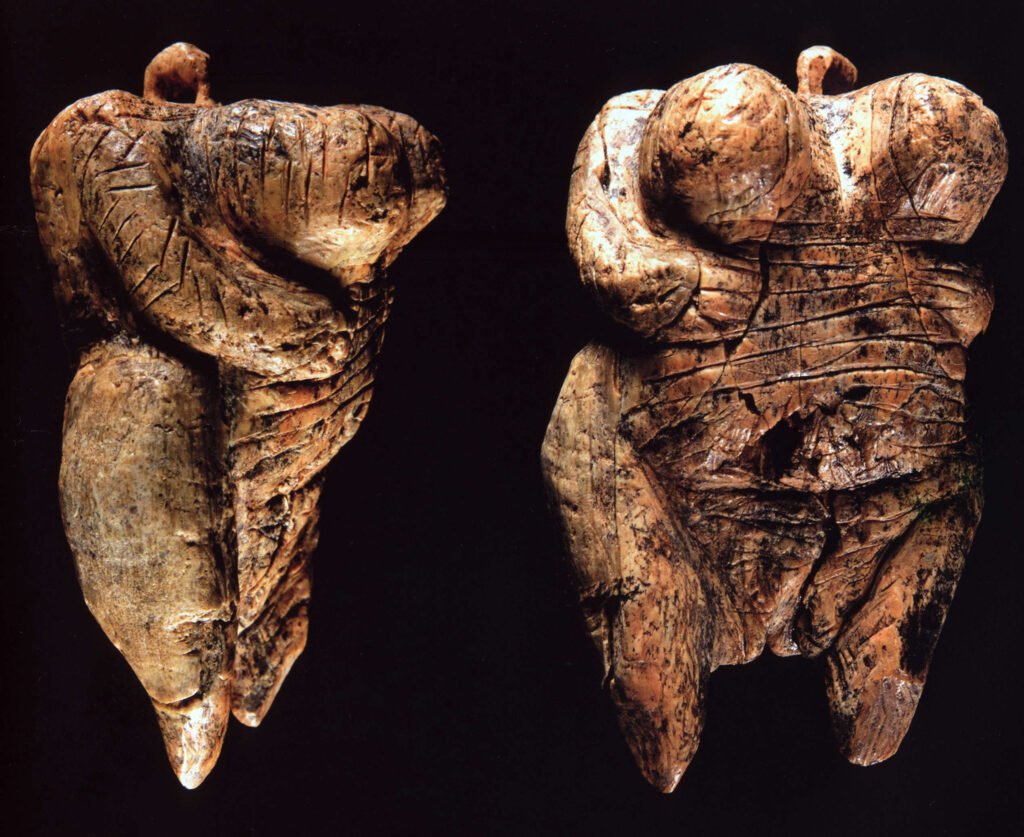
Detailed Description: No facial features; emphasis on reproductive anatomy. Associated with early bone flutes.
Significance: Part of the “Venus” tradition, possibly symbolizing fertility or female power. Pushes back evidence of figurative human art.
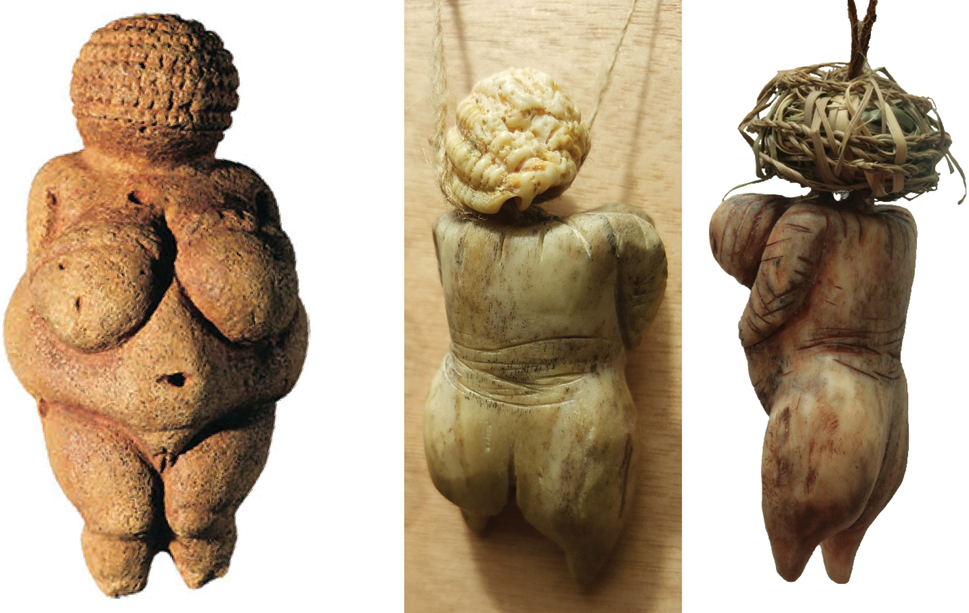
Evidence and References:
- Conard, N.J. (2009). “A female figurine from the basal Aurignacian of Hohle Fels Cave.” Nature 459: 248–252.
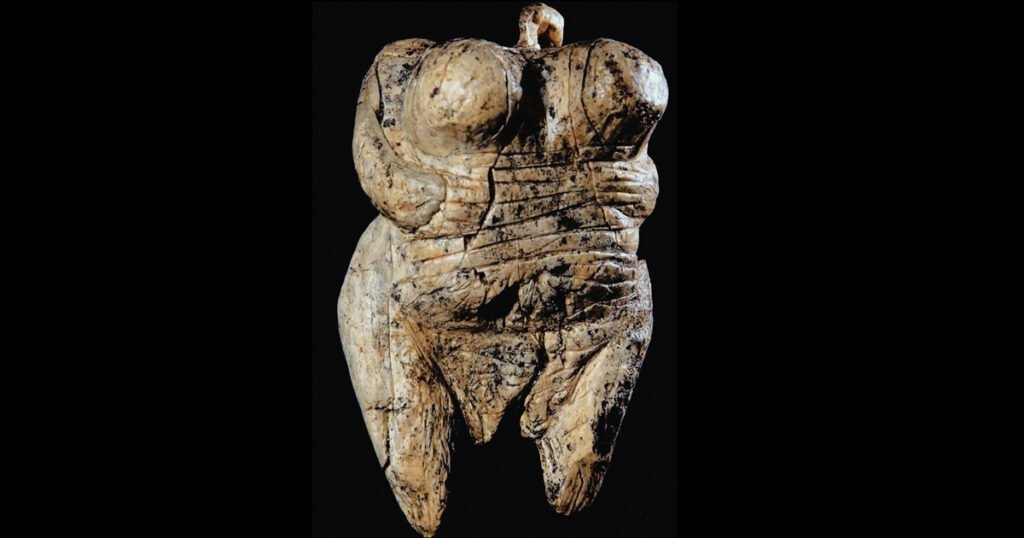
(Images: Multiple angles of the Venus of Hohle Fels.)
1.3 Broader Upper Paleolithic Context
Gravettian Venuses (e.g., Willendorf, 25,000–30,000 BCE) continue this tradition. Claims of older figures (e.g., Berekhat Ram, 230,000+ years) are disputed as natural with minimal modification.
Part 2: The Shigir Idol – Monumental Wooden Anthropomorphism in the Early Holocene
Discovered in 1890 in a Russian peat bog, the Shigir Idol is carved from larch and originally stood over 5 meters tall.
Description: Features eight faces (some 3D), geometric zigzags, chevrons, and herringbone patterns.
Latest Dating: Refined AMS radiocarbon in 2021 confirms ~12,100–12,500 years old.
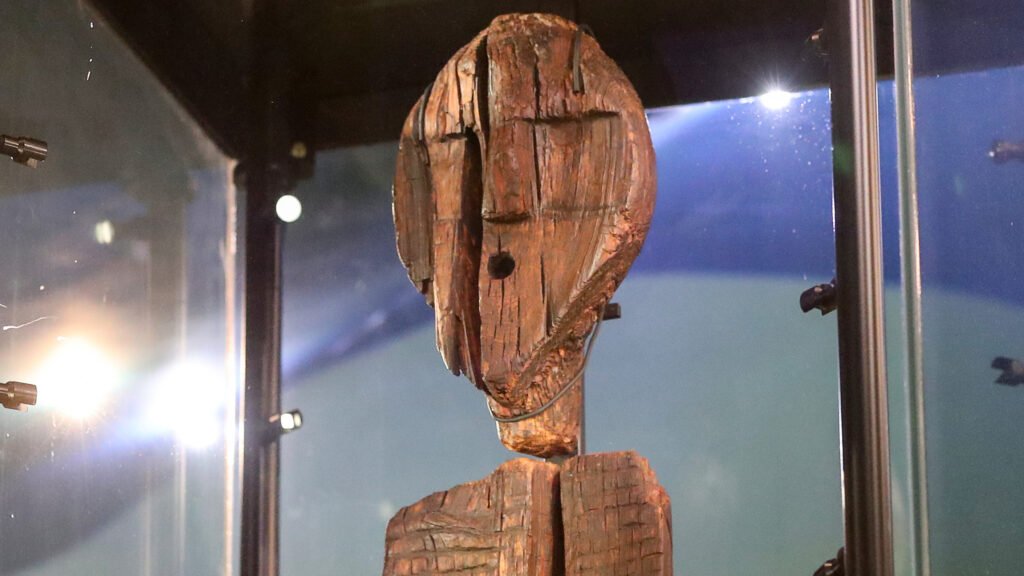
Significance: Demonstrates complex symbolism among hunter-gatherers post-Ice Age.
References:
- Terberger et al. (2021). “The Shigir idol in the context of early art in Eurasia.” Quaternary International 573: 14–29.
- Zhilin et al. (2018). Antiquity.
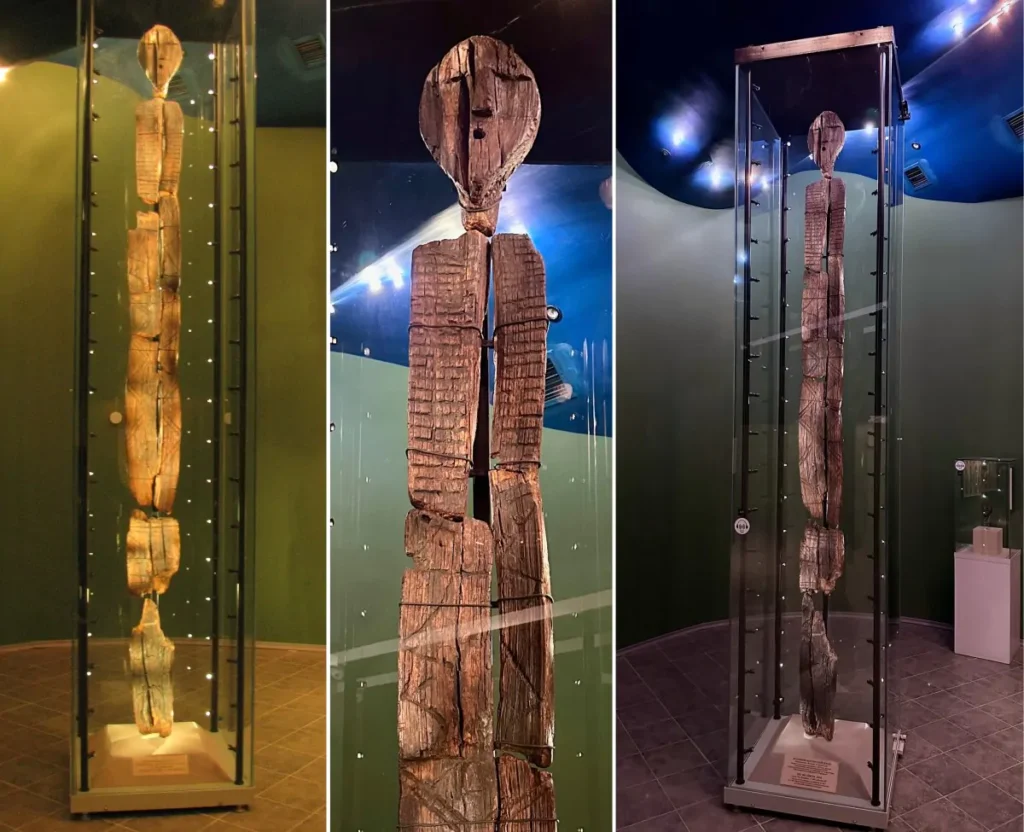
(Images: Views of the Shigir Idol, showing faces and patterns.)
Part 3: Göbekli Tepe – Monumental Anthropomorphic Pillars in the Pre-Pottery Neolithic
At ~11,500 years old, Göbekli Tepe features T-shaped limestone pillars up to 5.5 m tall, interpreted as stylized humans with arms, hands, and belts.
Description: Enclosures with central pairs; animal reliefs accompany.
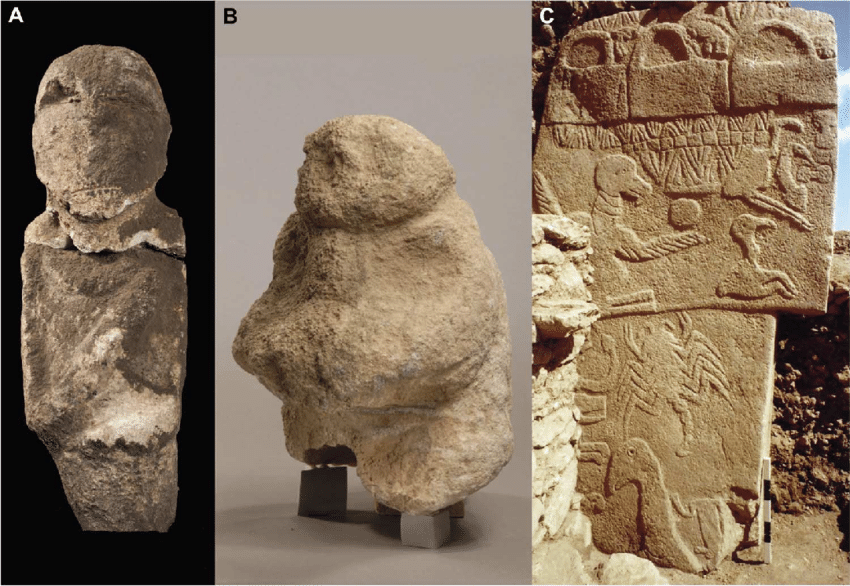
Significance: Built by hunter-gatherers; evidence of communal ritual.
References: Ongoing DAI excavations; UNESCO site.
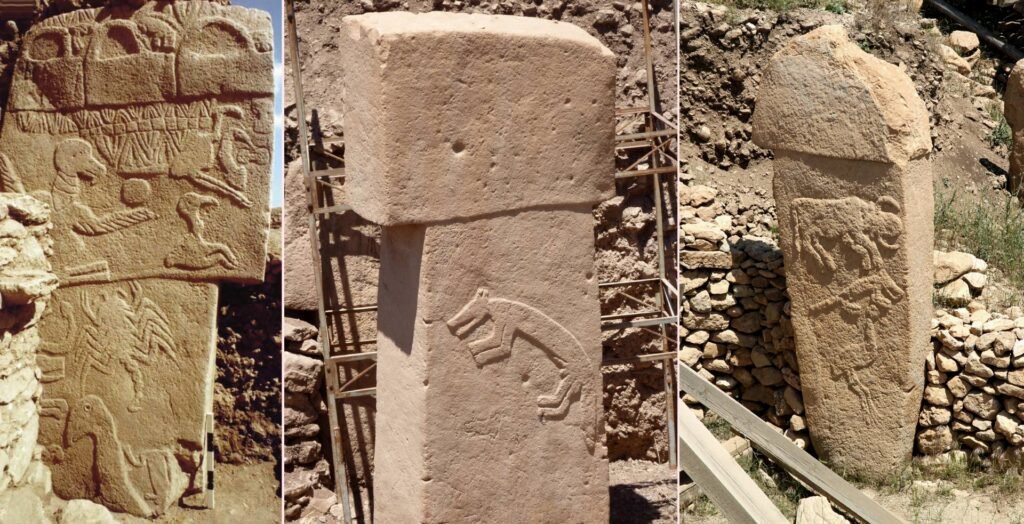
(Images: T-pillars with anthropomorphic details.)
Part 4: Earliest Anthropomorphic Sculptures in India – The Indus Valley Civilization (c. 3300–1300 BCE)
No Paleolithic anthropomorphic art is verified in India; earliest from mature Harappan phase.
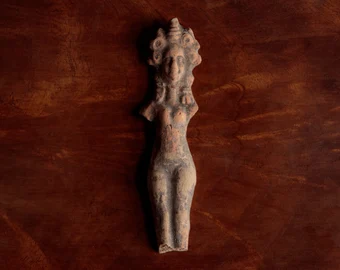
4.1 Terracotta Figurines: Mother Goddess Tradition
Stylized females with headdresses; suggest fertility worship.
Evidence: Marshall (1931). Mohenjo-daro and the Indus Civilization.
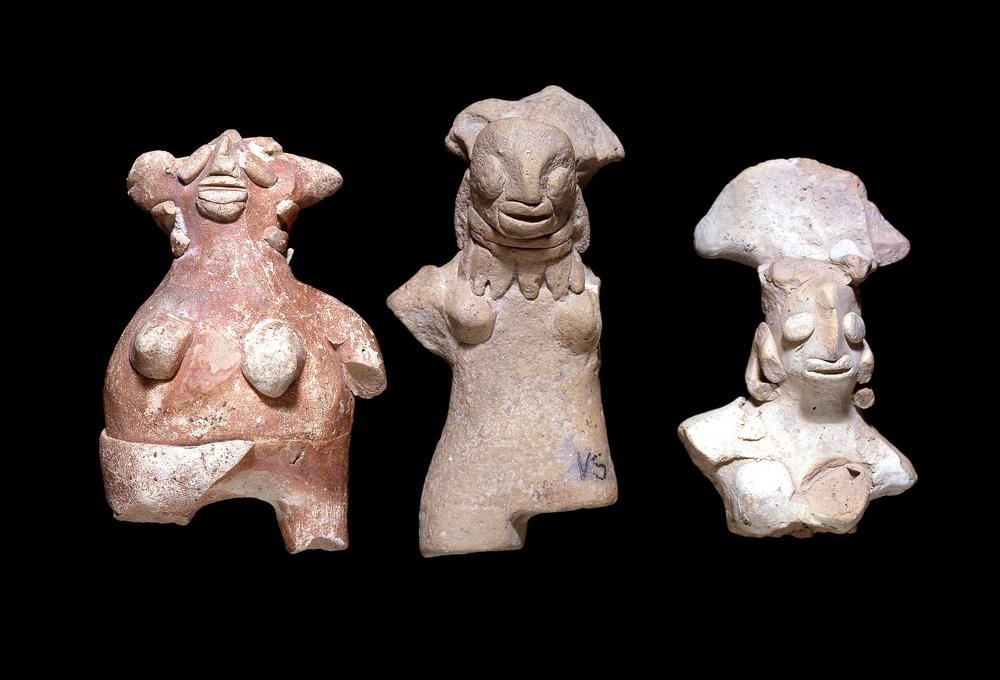
(Images: IVC terracotta mother goddess figures.)
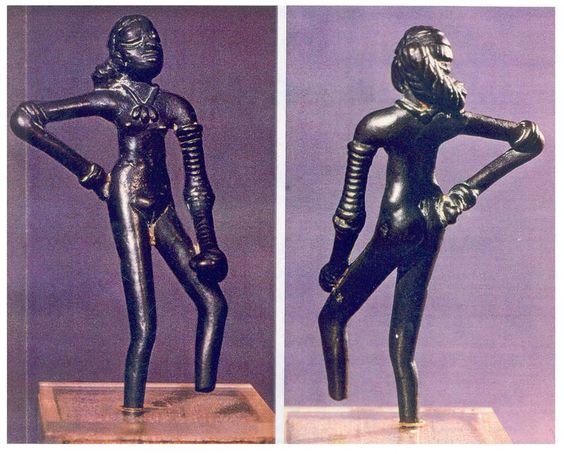
4.2 The Dancing Girl and Other Bronzes
Lost-wax bronze, ~2500 BCE; confident pose.
References: Possehl (2002). The Indus Civilization.
(Images: The famous Dancing Girl bronze.)
Proto-Shiva seals (e.g., Pashupati) are interpretive, not undisputed idols.
Part 5: The Kalpa Vigraha Hoax – Origins, Spread, and Debunking
The story claims a brass Shiva idol dated ~26,450 BCE, involving CIA experiments.
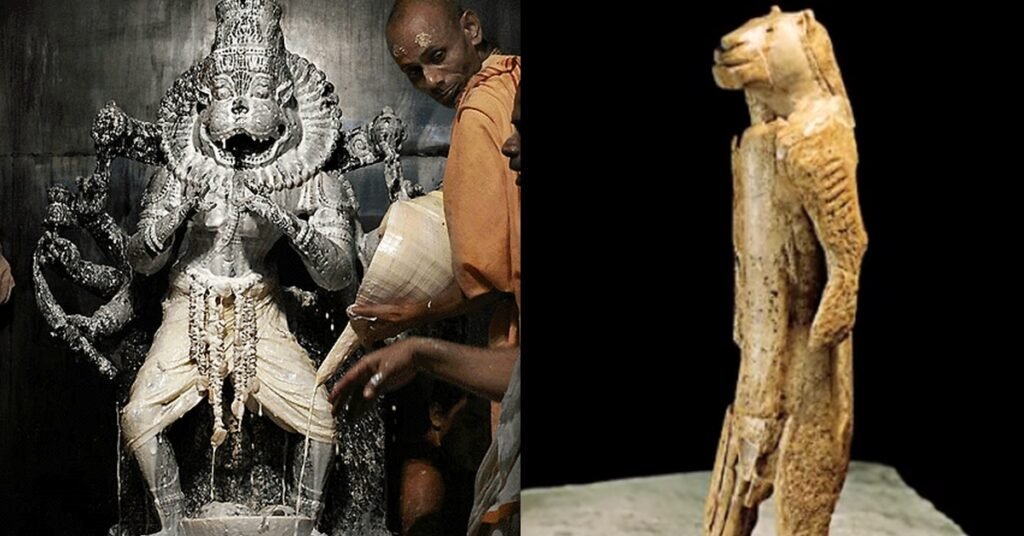
Origins: From booksfact.com (2012–2016); anonymous “CIA sources.”
Implausibilities:
- Brass metallurgy post-3000 BCE.
- No peer-reviewed dating; confuses organic chest with metal.
- No CIA/University records.
Spread: Viral on social media; appeals to nationalism.
Debunking Sources:
- Bahujansahitya.com (2024): Traces to hoax article.
- Fact-checks: No evidence; similar to conspiracy tropes.
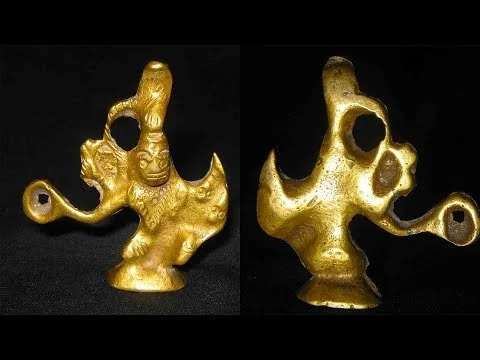
(Images: Circulating photos of alleged Kalpa Vigraha, typical of hoax replicas.)
Conclusion
Archaeology confirms anthropomorphic art origins ~40,000 years ago globally, ~4,500 in India. Sensational claims like Kalpa Vigraha lack evidence and contradict science.
Selected References:
- Conard (2009, 2003) in Nature.
- Terberger et al. (2021) in Quaternary International.
- Possehl (2002); Marshall (1931).
- Various UNESCO/DAI reports.
This evidence-based approach honors genuine discoveries while cautioning against misinformation.