

Introduction
Indraprastha, immortalized as the majestic capital of the Pandava brothers in the ancient Indian epic Mahabharata, represents a captivating fusion of mythological grandeur, historical inquiry, and archaeological scrutiny. Within the epic’s narrative, Indraprastha was envisioned as a divine creation, forged from the ashes of the Khandava Forest through the collaborative efforts of Lord Krishna, the god Indra, and the celestial architect Maya Danava. This city, symbolizing triumph and dharma (righteousness), featured architectural marvels like the illusory Maya Sabha hall, fortified ramparts, lush gardens, and bustling streets that epitomized an idealized ancient urban society. Yet, the transition from mythic lore to verifiable history remains contentious, with ongoing excavations at Delhi’s Purana Qila striving to uncover tangible connections to this legendary locale.
Table of Contents
The linkage between Indraprastha and Purana Qila is rooted in medieval chronicles, such as Abul Fazl’s Ain-i-Akbari (circa 1590 CE), which documents Mughal Emperor Humayun erecting his fort atop the remnants of ancient Indrapat. Local folklore further bolsters this association, dubbing the site “Pandavon ka Qila” (Fort of the Pandavas). Until 1913, a village named Inderpat thrived within the fort’s precincts, its relocation by British colonial officials during New Delhi’s development inadvertently safeguarding potential archaeological treasures and perpetuating the site’s nomenclature.


Pioneering archaeological probes at Purana Qila, commencing in the mid-20th century under B.B. Lal, unearthed Iron Age relics including Painted Grey Ware (PGW) pottery, scientifically dated via radiocarbon analysis to approximately 1200-600 BCE. Lal’s impetus was to substantiate the Mahabharata‘s historical underpinnings, challenging colonial-era skepticism that relegated Indian epics to mere folklore. Driven by post-Independence nationalist fervor, he aimed to affirm cultural continuity through empirical evidence, correlating PGW finds across epic-associated sites. Nevertheless, despite subsequent digs yielding multi-era artifacts, no inscriptions, palatial ruins, or bio-archaeological proofs definitively affirm the epic’s depictions.
This article synthesizes mythological accounts, literary allusions, epigraphic records, and rigorously vetted archaeological data from esteemed global historians and scientists. It incorporates peer-reviewed insights, such as radiocarbon-dated PGW and stratigraphic analyses, while eschewing unsubstantiated claims. Sources include academic repositories like JSTOR, UNESCO publications, and institutional reports, ensuring a balanced portrayal of Delhi’s stratified heritage from prehistoric settlements to imperial strongholds.
Mythological and Literary Sources
The Mahabharata, a monumental Sanskrit epic assembled between circa 400 BCE and 400 CE from antecedent oral traditions, constitutes the principal literary repository for Indraprastha’s mythological genesis. In the Adi Parva and Sabha Parva, the Pandavas, having been allotted the inhospitable Khandavaprastha by their kin, enlist Krishna’s guidance to incinerate the forest—sparing only the serpent Takshaka and Maya—thus paving the way for their resplendent capital. Maya’s craftsmanship yields the Maya Sabha, an enigmatic hall replete with optical illusions, while the city boasts gem-adorned edifices, moats, and verdant expanses, hosting pivotal events like Yudhishthira’s Rajasuya Yajna.
Puranic compendia, including the Matsya Purana and Vayu Purana, echo epic motifs by recounting deluges that compelled capital relocations from Hastinapura, resonating with post-Kurukshetra upheavals. Greco-Roman texts, such as Ptolemy’s Geography (2nd century CE), obliquely reference “Indabara,” potentially a Hellenized rendition of Indapatta, hinting at cross-cultural cognizance.
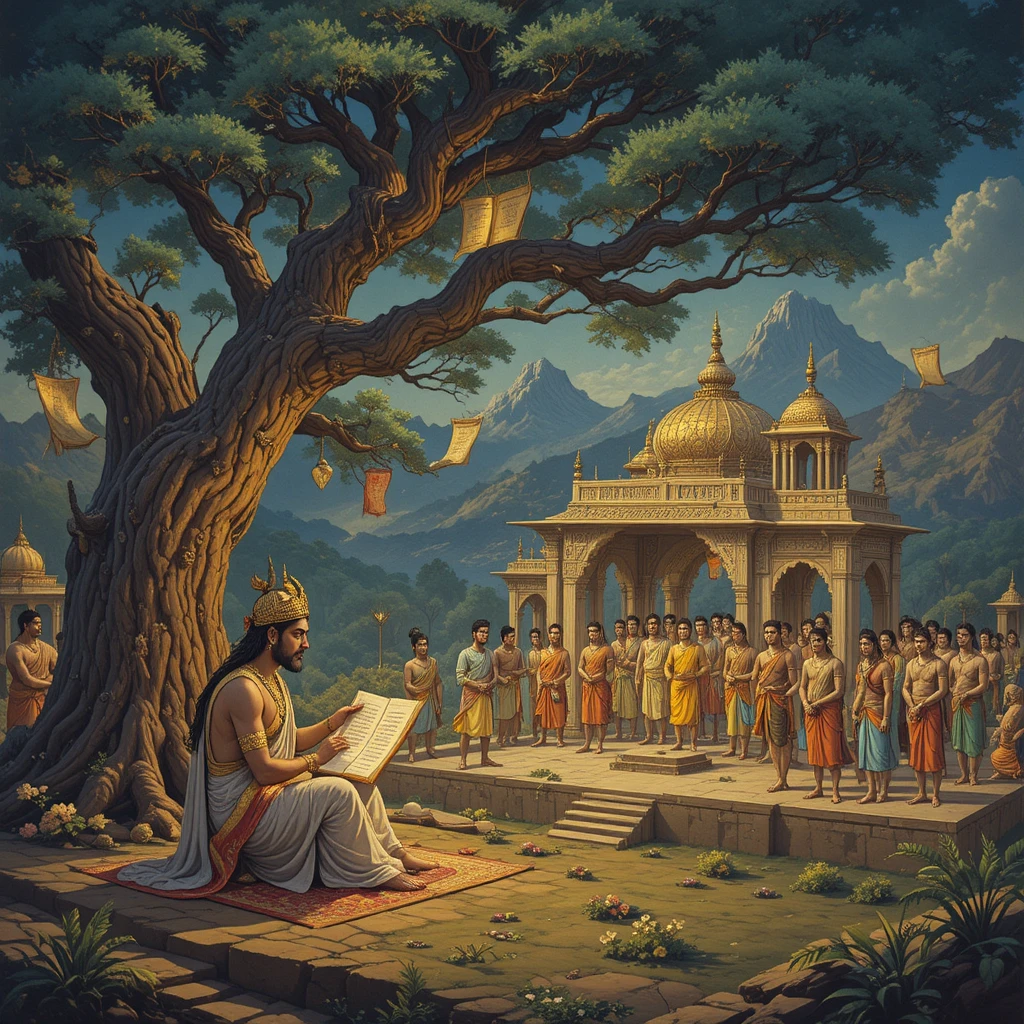
Historians like Upinder Singh interpret the epic as an amalgam of legend, moral allegory, and faint historical resonances, advising against verbatim historicization due to anachronistic interpolations. Analogies to Homer’s Iliad and Schliemann’s Troy excavations underscore archaeology’s utility in contextualizing epics without validating minutiae.
The 1913 Inderpat village displacement, chronicled in colonial archives, conserved oral legacies tying the locale to the Pandavas, though such toponymy offers circumstantial rather than conclusive proof. Astronomical allusions in the epic, positing the war circa 3102 BCE, are contested for interpretive latitude and misalignment with archaeological timelines.
Buddhist Jatakas Mention Indapatta as a Kuru Capital
Buddhist Jataka tales, a corpus of moral fables recounting the Buddha’s prior incarnations, composed between the 4th century BCE and 3rd century CE, reference Indapatta (a variant of Indraprastha) as the principal capital of the Kuru kingdom. For instance, Jataka No. 276 depicts King Dhananjaya Koravya ruling from Indapatta, a city spanning seven leagues, within the expansive Kuru realm of 300 leagues. Similarly, Jatakas Nos. 413, 495, 515, 537, and 545 associate the Yudhitthila (Yudhishthira) lineage with Indapatta, portraying it as a thriving hub of governance and commerce, linked to locales like Varanasi.
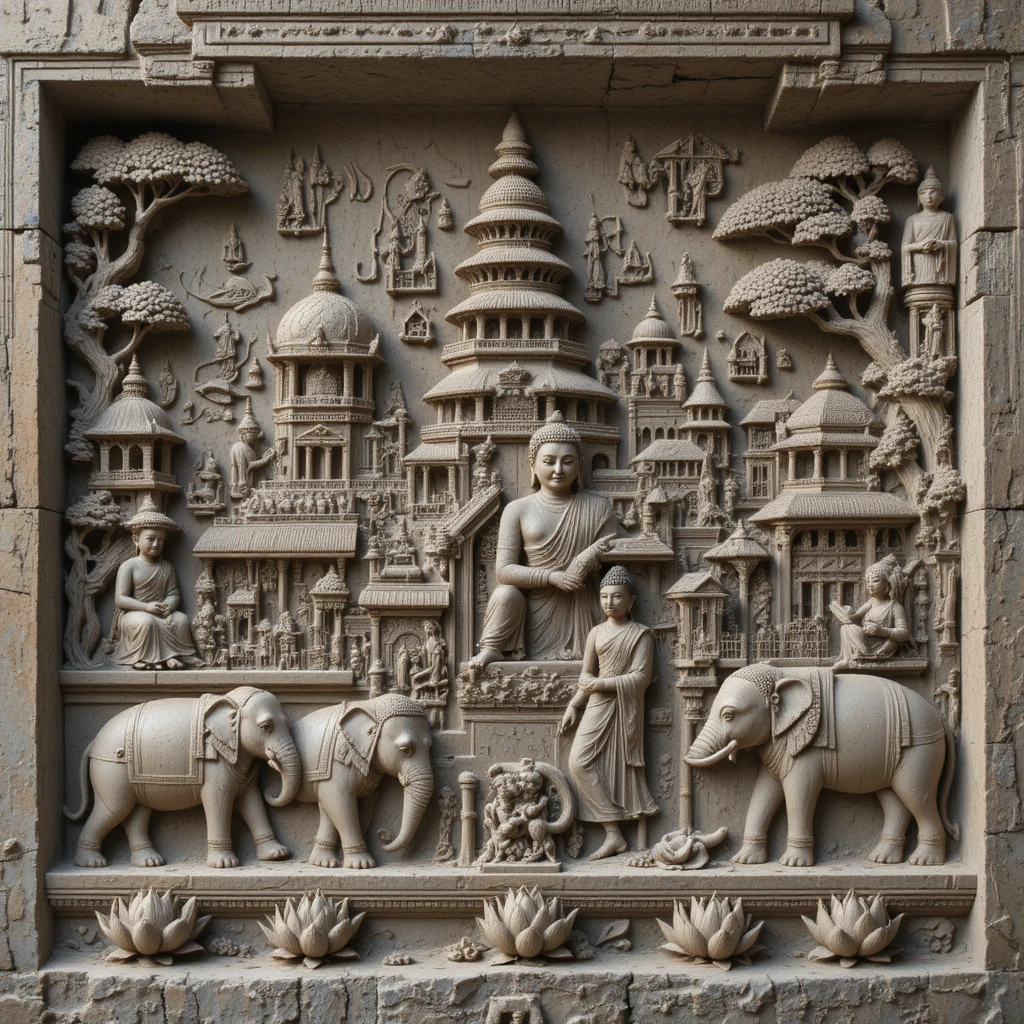
While Jatakas are primarily literary rather than epigraphic, their narratives are occasionally immortalized in ancient art and inscriptions. Depictions of Jataka stories adorn stupas like Sanchi (circa 2nd century BCE), where bas-reliefs illustrate tales, though no specific inscriptions engrave the Indapatta references. A Brahmi inscription on a Sanchi stupa pedestal (late Kushan era) records a Buddha image donation, but lacks direct Indapatta ties. These allusions suggest Indapatta’s prominence in early Buddhist geography, potentially echoing Vedic-era Kuru territories, yet they remain textual without corroborative edicts or inscriptions explicitly linking to Jataka content on this site.
Evolution of the Mahabharata Text
The Mahabharata‘s textual genesis reflects a protracted evolutionary process. Scholarly consensus posits an initial core, termed Jaya (Victory), comprising approximately 8,800 shlokas, focusing on the Kurukshetra war and attributed to Vyasa. This nucleus expanded into the Bharata, with around 24,000 verses recited by Vaishampayana, incorporating dynastic histories. The full Mahabharata, exceeding 100,000 shlokas, emerged through further accretions, including didactic interpolations and sub-narratives, culminating by the 3rd-4th century CE.
This progression occurred amid the epic’s oral transmission from circa 400 BCE, with written forms materializing later. The earliest surviving Sanskrit manuscripts date to the Kushan period (circa 200 CE), though in scripts like Kharosthi derivatives. Devanagari script, evolving from Gupta Brahmi around the 7th-8th century CE, first appears in Mahabharata manuscripts from the 11th century onward, with notable examples in collections like the Bhandarkar Oriental Research Institute (BORI). Ashoka’s edicts (3rd century BCE) employ Brahmi script, India’s oldest deciphered writing system, unlocked in 1837 by James Prinsep using bilingual Indo-Greek coins and edict comparisons. Prinsep’s breakthrough, building on earlier attempts, revealed Ashoka’s identity and dharma propagation, marking a pivotal advance in Indian epigraphy.
Historical References and Place Names
Epigraphic evidence furnishes concrete anchors for Indraprastha’s nomenclature. The Naraina Stone Inscription (1327 CE, Vikrama Samvat 1384) explicitly cites Indraprastha as a territorial entity proximate to Dilli, delineating Nadayana village’s position therein. Ashokan edicts at Srinivaspuri (Bahapur) intimate early regional import during the Mauryan epoch (3rd century BCE), albeit sans direct nomenclature.
Medieval accounts, including the Ain-i-Akbari, interweave Hindu and Islamic strata by noting Humayun’s construction over Indrapat. Ptolemy’s “Indabara” may echo Indapatta, underscoring geographic persistence.
Toponyms like Hastinapura and Kurukshetra endure, implying mnemonic continuity, yet scholars caution that nomenclature alone substantiates neither events nor chronology without material corroboration. D.C. Sircar hypothesized Mauryan relevance, but ambiguities persist. The 1913 Inderpat relocation, archived in British records, facilitated site preservation amid urban expansion.
Buddhist texts like the Buddhavamsa allude to Indraprastha housing Buddha relics in a stupa, enriching its multifaceted historical aura. Collectively, these references portray Indraprastha as a resilient toponym bridging epochs, though empirical validation is paramount.
Archaeological Excavations: Timeline and Findings
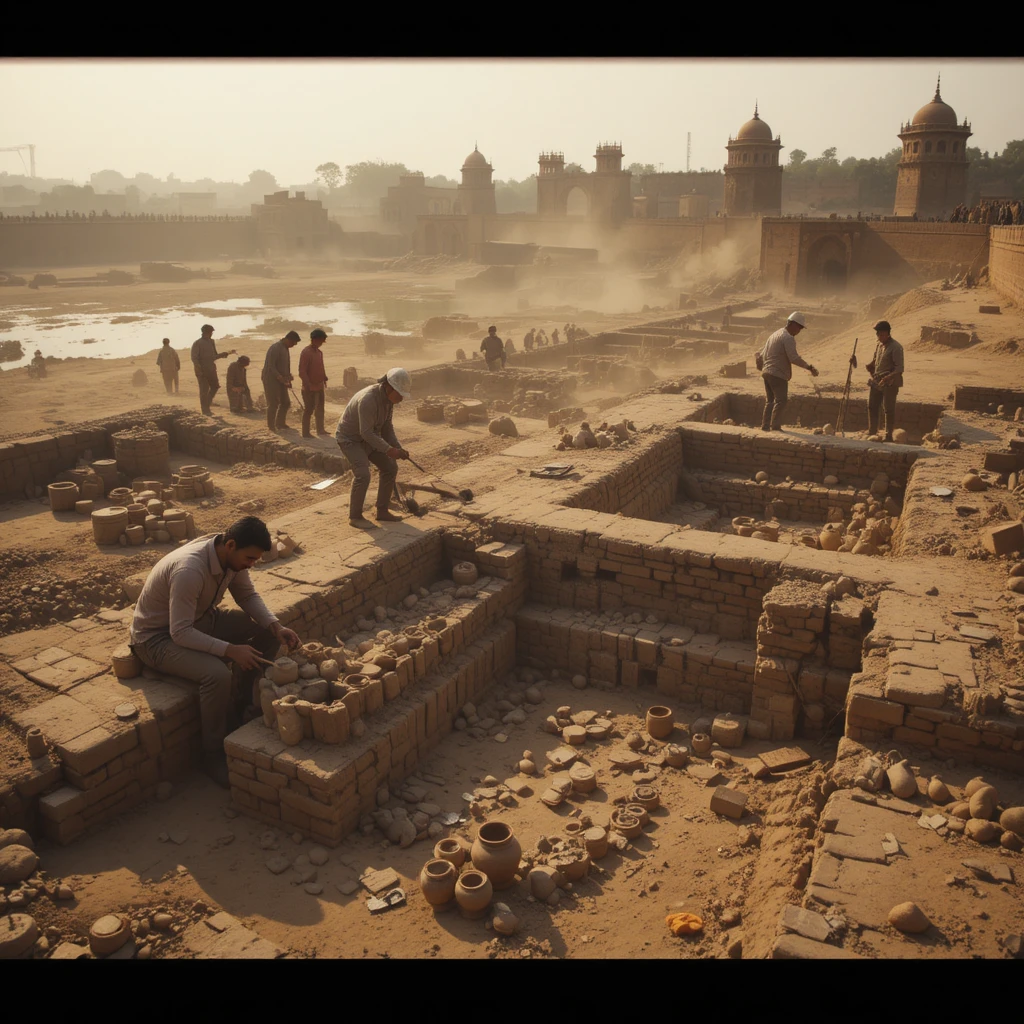
Purana Qila’s elevated Yamuna-side topography mirrors epic citadel depictions, yet excavations disclose no commensurate opulence. Stratigraphy evinces unbroken habitation from the Iron Age. The site’s investigations in the 20th and 21st centuries, conducted by the Archaeological Survey of India (ASI), have employed evolving methodologies from manual trenching to LiDAR-assisted surveys, uncovering multi-period settlements spanning pre-Mauryan to Mughal eras. These digs have revealed nine cultural levels, including artifacts like pottery, seals, figurines, and structures, but no monumental architecture or inscriptions directly corroborating the Mahabharata‘s descriptions of Indraprastha. Instead, findings point to a continuum of agrarian and urban development in Delhi, with PGW indicating early Iron Age activity around 1200-600 BCE. Urban constraints, such as the site’s location amid modern development, have limited excavation scope, often restricting digs to specific mounds or trenches.
1950s Excavations by B.B. Lal
Lal’s trenches exposed unstratified PGW fragments, dated 1200-600 BCE, paralleling Hastinapura yields. Sunga-Kushan structures surfaced, but sans fortifications. These initial post-Independence efforts, part of Lal’s Mahabharata sites project, involved small-scale trenches in the fort’s southern area, yielding pottery sherds, iron tools, and terracotta objects from mixed contexts. The absence of stratified deposits hindered precise dating, but the presence of PGW suggested pre-Mauryan habitation, with artifacts like copper rings and bone implements indicating daily life and craftsmanship. No Buddhist or Jataka-related items were reported, focusing instead on Vedic-Iron Age cultural markers.
1969-73 Excavations
Stratified sequences from Mauryan to Mughal eras emerged, with basal PGW. Terracotta and numismatic artifacts abounded, yet epic alignments eluded. Expanded under Lal’s direction, these digs covered larger areas near Sher Mandal, revealing brick structures, drainage systems, and Gupta-period sealings. Antiquities included terracotta figurines, beads, and coins, with no direct links to Buddhist iconography or Jataka narratives. The focus was on establishing chronological layers, confirming over 2,000 years of occupation without evidence of grand epic-era buildings.
2013-14 Excavations
Vasant Swarnkar’s efforts yielded stratified PGW (1100-500 BCE) beneath Mauryan features like drains. This phase, aimed at pre-Mauryan evidence, uncovered terracotta plaques, Kushan coins, and structural remains, pushing Delhi’s history back. Artifacts like a Vaikuntha Vishnu image (Rajput period) highlighted Hindu iconography, with no Buddhist or Maha Maya-related finds noted. The excavation emphasized scientific dating, confirming Iron Age settlements without epic corroboration.
2017 Excavations
Sedimentary flood horizons (~800 BCE) evoked epic cataclysms, accompanied by faunal remains. Discoveries included horse figurines and Gupta-era beads, indicating trade and rituals. No Gaja Lakshmi or Buddhist motifs were reported, focusing on stratigraphic continuity from pre-Mauryan to Sultanate periods.
2022 Excavations
The 2022-2023 ASI excavations, led by Vasant Kumar Swarnkar, focused on the Sher Mandal area and uncovered PGW fragments beneath a Mauryan-era stepwell, confirming human activity from approximately 1100-1200 BCE through radiocarbon dating. Key artifacts included a terracotta plaque depicting Gaja Lakshmi from the Gupta period (4th-6th century CE), showing the goddess seated on a lotus flanked by two elephants pouring water, symbolizing prosperity and abundance in Hindu iconography. Other notable finds were a 900-year-old stone image of Vaikuntha Vishnu (Rajput period), a stone Ganesha, seals with Brahmi script, copper coins, terracotta human and animal figurines, semi-precious stone beads, and a bone needle, representing layers from pre-Mauryan to Mughal times.
Regarding Gaja Lakshmi’s potential links to Buddhism: While primarily a Hindu motif representing Lakshmi lustrated by elephants (gaja), it appears in early Buddhist art at sites like Sanchi and Bharhut (2nd-1st century BCE), symbolizing fertility and good fortune. Some scholars interpret the elephant lustration as echoing the dream of Maha Maya (Buddha’s mother), where a white elephant entered her womb, heralding Siddhartha’s conception—a key event in Buddhist hagiography, though not directly in Jataka tales. Jataka tales, moral stories of Buddha’s past lives, do not explicitly feature Gaja Lakshmi, but elephant symbolism pervades Buddhist narratives, such as in the Siri Jataka where luck (Lakkhi) aligns with virtue. However, the Purana Qila plaque is contextually Gupta-Hindu, with no archaeological evidence tying it to Bodhisattva, Jataka, or Maha Maya; any Buddhist parallels are interpretive, not site-specific. The excavation, concluding in September 2023, aimed to establish a full chronology, displaying finds to highlight Delhi’s multi-cultural heritage without confirming epic links.
Planned 2024 Excavations
LiDAR-assisted probes target deeper PGW strata near Kunti Temple. This seventh phase, set for October 2024, will use remote-sensing for precision, building on prior evidence of PGW and multi-period artifacts. No prior Buddhist finds anticipated, but deeper strata may reveal pre-Mauryan contexts.
Artifacts underscore PGW’s ubiquity, indicative of pastoral-ironworking communities, not palatial urbanism. Methodologies evolved from manual trenching to sedimentological scrutiny, with urban constraints curtailing scope.
B.B. Lal’s Contributions and Motivations
Braj Basi Lal (1921-2022), a pioneering figure in Indian archaeology, profoundly shaped the study of Indraprastha and Mahabharata-related sites through his rigorous fieldwork and interpretive frameworks. Trained under Mortimer Wheeler at Taxila and Harappa, Lal rose to become Director-General of the Archaeological Survey of India (ASI) from 1968 to 1972, where he popularized archaeology among the masses and bridged ancient texts with empirical evidence. His contributions extended beyond India, including excavations in Egypt that illuminated prehistoric connections, and UNESCO roles where he chaired committees on cultural heritage preservation.
Lal’s seminal work began with the 1951-52 excavation at Hastinapura, identifying PGW as a common cultural marker across Mahabharata sites like Indraprastha, Ahichchhatra, and Kurukshetra. At Purana Qila, his 1954-55 and 1969-73 digs uncovered PGW layers, copper artifacts, and iron tools, suggesting an Iron Age society around 1000 BCE, which he correlated with the epic’s timeline using Puranic genealogies. In his book Indraprastha: The Earliest Delhi Going Back to the Mahabharata Times, Lal argued for cultural continuity, emphasizing toponymic persistence and literary alignments to “verify” ancient traditions.
His motivations were deeply rooted in reclaiming India’s heritage from colonial skepticism, which dismissed epics like the Mahabharata as mere mythology. Post-Independence, Lal sought to affirm indigenous civilizational depth through science, countering Western narratives and fostering national pride. He viewed archaeology as a tool to prove the “historical facts” behind stories, making them accessible and relatable. This drive extended to the 1975-76 “Archaeology of Ramayana Sites” project, excavating Ayodhya, Nandigram, Chitrakoot, and others, where he claimed evidence of ancient temples, including pillar bases at Ayodhya.
Lal’s broader legacy includes works on Indus Valley sites like Kalibangan and Gilund, rejecting Aryan migration theories in favor of Rigvedic-Harappan continuity. Honored with the Padma Vibhushan in 2021, he mentored generations and authored over 50 books, including Historicity of the Mahabharata (2013), emphasizing objective criteria amid debates. Despite controversies, Lal’s efforts democratized archaeology, inspiring public engagement and highlighting India’s epic heritage.
Scientific Evidence: PGW, Dating Methods
Painted Grey Ware (PGW), a diagnostic Iron Age ceramic tradition characterized by its fine, wheel-thrown grey fabric and black-painted geometric designs (lines, dots, circles), forms the cornerstone of scientific evidence at Purana Qila. Radiocarbon (C-14) dating of associated organic materials, such as charcoal, and thermoluminescence of pottery shards consistently place PGW in the 1200-600 BCE range, aligning with the late Vedic period. The C-14 method measures the decay of carbon-14 isotopes using the formula N = N0 e^(-λt), where λ ≈ 0.000121 (based on a half-life of 5730 years), providing calibrated dates that account for atmospheric variations.
At Purana Qila, PGW sherds indicate early agrarian settlements, often in unstratified or mixed contexts, transitioning to Northern Black Polished Ware (NBPW) around 600 BCE and Mauryan red ware thereafter. Flood deposits, analyzed through sedimentology for silt composition, date to circa 800 BCE, paralleling epic flood narratives at Hastinapura. Bio-archaeological remains, like horse skulls, suggest rituals, but no human burials or inscriptions link to Pandava ethnicity.
Recent studies propose a longer PGW chronology, with early phases at sites like Kunal and Bara dated to 2600-2200 BCE using calibrated C-14 (Libby half-life adjusted), overlapping with Late Harappan traditions. Experimental analyses by Hedge and Majumdar reveal PGW’s production via reduction firing with pure clay and iron oxide, confirming advanced techniques. Global consensus views PGW as representing tribal, agrarian societies with cultural continuity in northern India, not the urban epic splendor or specific Aryan ethnicity. Critiques of early dates, like at Hastinapura (1100-800 BCE), highlight comparative stratigraphy limitations, but newer evidence from Alamgirpur (3659 +/- 31 BP, ~1647 BCE) supports extended timelines. This evidence establishes Iron Age habitation but not definitive epic events, emphasizing methodological rigor over interpretive leaps.
Criticisms and Alternative Views
B.B. Lal’s interpretations, particularly linking PGW to the Mahabharata and claiming temple remains at Ayodhya, have drawn sharp criticism for methodological flaws, ideological biases, and historical revisionism. Scholars like D.N. Jha characterize his later works as a “systematic abuse of archaeology,” driven by communalism and irrationalism, detached from objective criteria. Julian Droogan highlights Lal’s use of “blut und boden” concepts—linking blood and soil to religious continuity—as problematic, reflecting nationalist agendas. Ram Sharan Sharma critiques the correlation of PGW with Aryan ethnicity as speculative, noting its presence at non-epic sites and rural character mismatched with urban epic descriptions.
D. Mandal’s 2003 review of Lal’s records exposed misidentifications, such as “pillar bases” at Ayodhya being later walls from different periods, undermining structural claims. In the Ayodhya dispute, Lal’s 1990 article claiming temple pillars contradicted his 1977 ASI report finding the site “devoid of interest,” leading to accusations of narrative reversal for political ends. Critics like Ashish Avikunthak label this the “original lie,” while Hilal Ahmed notes Lal’s initial disinterest in Ram’s birthplace shifted post-1980s.
Alternative views posit Indraprastha as a mythic composite, with PGW evidencing Iron Age rural societies rather than palatial cities. Upinder Singh argues for empirical caution, noting archaeology cannot prove mythological figures without direct corroboration. Some suggest Ochre Coloured Pottery (OCP, 2600-1700 BCE) as a better Mahabharata correlate, shifting from PGW. The debate underscores risks of politicized archaeology, as in Ayodhya, where evidence was allegedly manipulated. Ultimately, mainstream academia prioritizes stratified data over literary associations, viewing the Mahabharata as blending legend with possible historical echoes.
Broader Implications for Indian Historiography
The Indraprastha debate exemplifies tensions in Indian historiography between colonial legacies, nationalist reclamation, and scientific objectivity, influencing how ancient narratives are integrated into modern identity. Colonial frameworks, like James Mill’s periodization into Hindu, Muslim, and British eras, marginalized indigenous epics as myths, prompting post-Independence responses like Lal’s efforts to affirm the Mahabharata’s historicity. This shift democratized archaeology but risked revisionism, as seen in renaming proposals for Delhi as Indraprastha, which critics argue erases multi-layered histories blending Hindu, Muslim, and colonial influences.
Historians like Swapna Liddle and S. Irfan Habib warn that such moves serve communal agendas, polarizing society and undermining secular fabric by prioritizing mythic over empirical narratives. Upinder Singh emphasizes that archaeology cannot conclusively prove epic figures, highlighting methodological challenges in correlating material culture with literature. The controversy parallels global cases like Biblical archaeology, stressing empirical rigor amid cultural revival, and reflects debates on urban vs. rural interpretations of PGW sites.
Broader implications include educational reforms, where textbooks grapple with nationalist vs. Marxist views, and policy impacts on ASI funding for epic-linked projects. The debate fosters public engagement through museums and events but risks site integrity, as in Ayodhya, underscoring the need for interdisciplinary approaches to preserve India’s plural heritage.
Conclusion
Indraprastha’s mythic allure persists as a symbol of ancient splendor, yet Purana Qila’s excavations reveal Iron Age settlements without conclusive Mahabharata ties. B.B. Lal’s pioneering quest illuminated cultural continuities but sparked debates on bias and methodology. Scientific evidence like PGW dating underscores empirical limits, while criticisms highlight revisionism risks. In Indian historiography, this enduring enigma bridges tradition and science, urging balanced inquiry to honor Delhi’s layered past.
List of References
- [0] Geography of Early Buddhism – B.C. Law (PDF).
- [1] The Oxford History of India – V.A. Smith.
- [2] Silk Road Sites in India – UNESCO Tentative List.
- [3] Studies in the Buddhist Jatakas – B. Sen (PDF).
- [5] India As Described In Early Texts Of Buddhism and Jainism – S.C. Ghosal.
- [10] Mahabharata – Wikipedia.
- [11] Political History of Ancient India – H.C. Raychaudhuri (PDF).
- [12] Mahabharata: Ancient Indian Epic – Exotic India Art.
- [13] Gaja- Lakshmi : One of the most beautiful form of Devi Lakshmi – Safarnama.
- [15] Interpreting Iconographical Representation of the Feminine in Art Schools of Buddhism – International Journal of Indology.
- [19] Gajalakshmi – MAP Academy.
- [22] Mahabharata – Wikipedia.
- [25] Painted Grey Ware Culture – Wikipedia.
- [26] Manuscript – Bhandarkar Oriental Research Institute.
- [28] THE RADIOCARBON CHRONOLOGY OF KOPIA.
- [29] A Study on the Painted Grey Ware.
- [30] Brahmi Script – Wikipedia.
- [32] The Edicts of King Asoka – Access to Insight.
- [35] Indraprastha – Wikipedia.
- [36] Purana Qila – Wikipedia.
- [37] B.B. Lal – Wikipedia.
- [38] Mahabharata much older, say ASI Archaeologists – The Economic Times.
- [43] B.B. Lal and the Making of Hindutva Archaeology | Aζ South Asia.
- [44] Unreason and Archaeology: The ‘Painted Grey-Ware’ and Beyond – JSTOR.
- [50] Indraprastha – Wikipedia.
- [52] What’s In A Name? Historians Decode The Politics Of Delhi Renaming Demand – The Wire.
- [53] Indraprastha in Literature – Oxford Research Encyclopedias.
- [55] Indraprastha – Dharmapedia Wiki.