

Introduction: The Dawn of a Sovereign Nation
January 26 holds an indelible place in the annals of Indian history, marking the transformation of a newly independent nation into a sovereign democratic republic. On this day in 1950, the Constitution of India came into effect, severing the last vestiges of colonial rule and establishing a framework for governance rooted in justice, liberty, equality, and fraternity. This date was not chosen arbitrarily; it resonates with the echoes of the freedom struggle, particularly the declaration of “Purna Swaraj” or complete independence proclaimed by the Indian National Congress in 1930. The selection of January 26, 1950, for the enforcement of the Constitution was a deliberate homage to that historic pledge, symbolizing the fulfillment of a two-decade-long aspiration for self-rule.

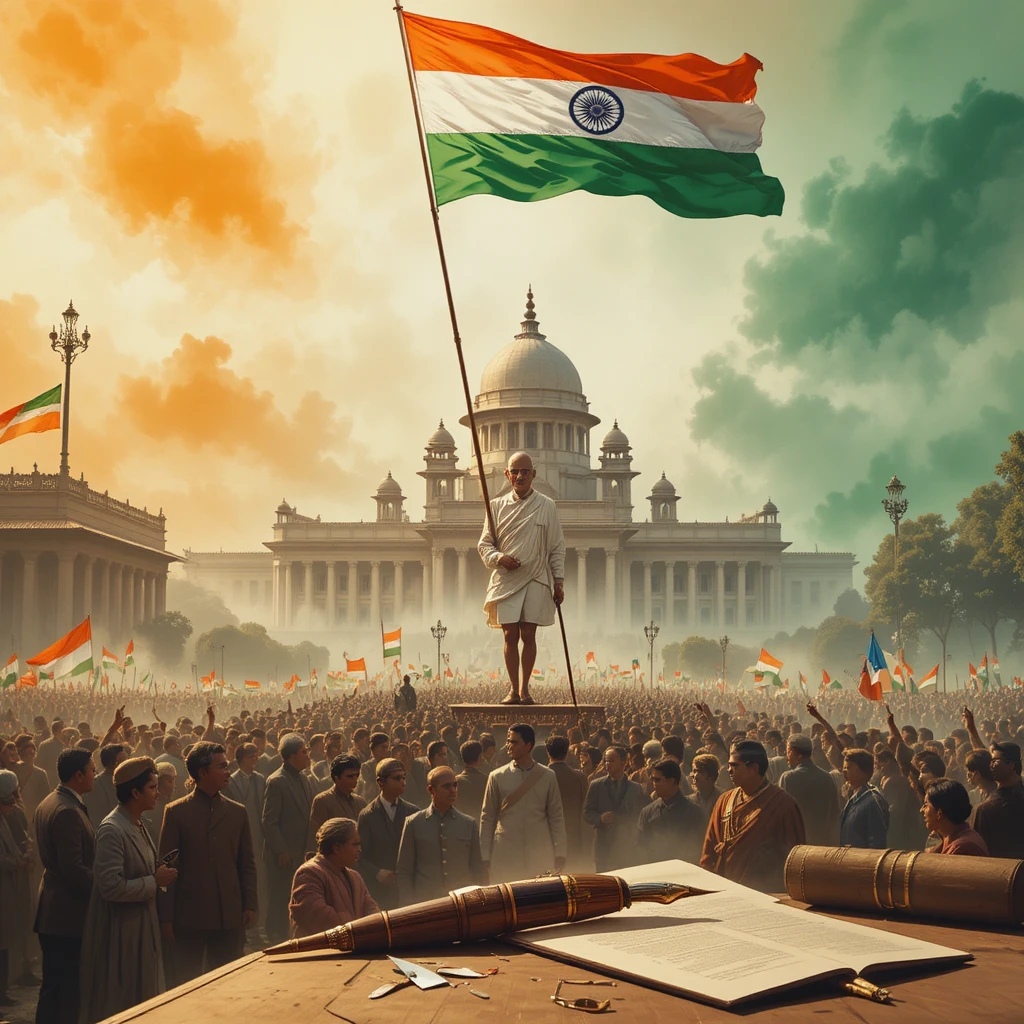
Table of Contents
The journey to Republic Day encapsulates the sacrifices of countless freedom fighters, the intellectual rigor of constitutional framers, and the visionary leadership of figures like Mahatma Gandhi, Jawaharlal Nehru, Sardar Vallabhbhai Patel, and Dr. B.R. Ambedkar. This article explores the multifaceted history of January 26, delving into the pre-independence events that sanctified the date, the painstaking process of drafting the Constitution, the reasons behind its timed adoption, and the enduring legacy of this milestone. Through official government records, parliamentary debates, and the personal writings and correspondences of key leaders, we revisit and expand upon the narrative, providing a comprehensive account that honors the depth of India’s democratic evolution. Upon revisiting, the core facts align with historical records, but clarifications on the evolution of the Constitution’s structure—from the draft to the final adopted version—have been incorporated for precision.
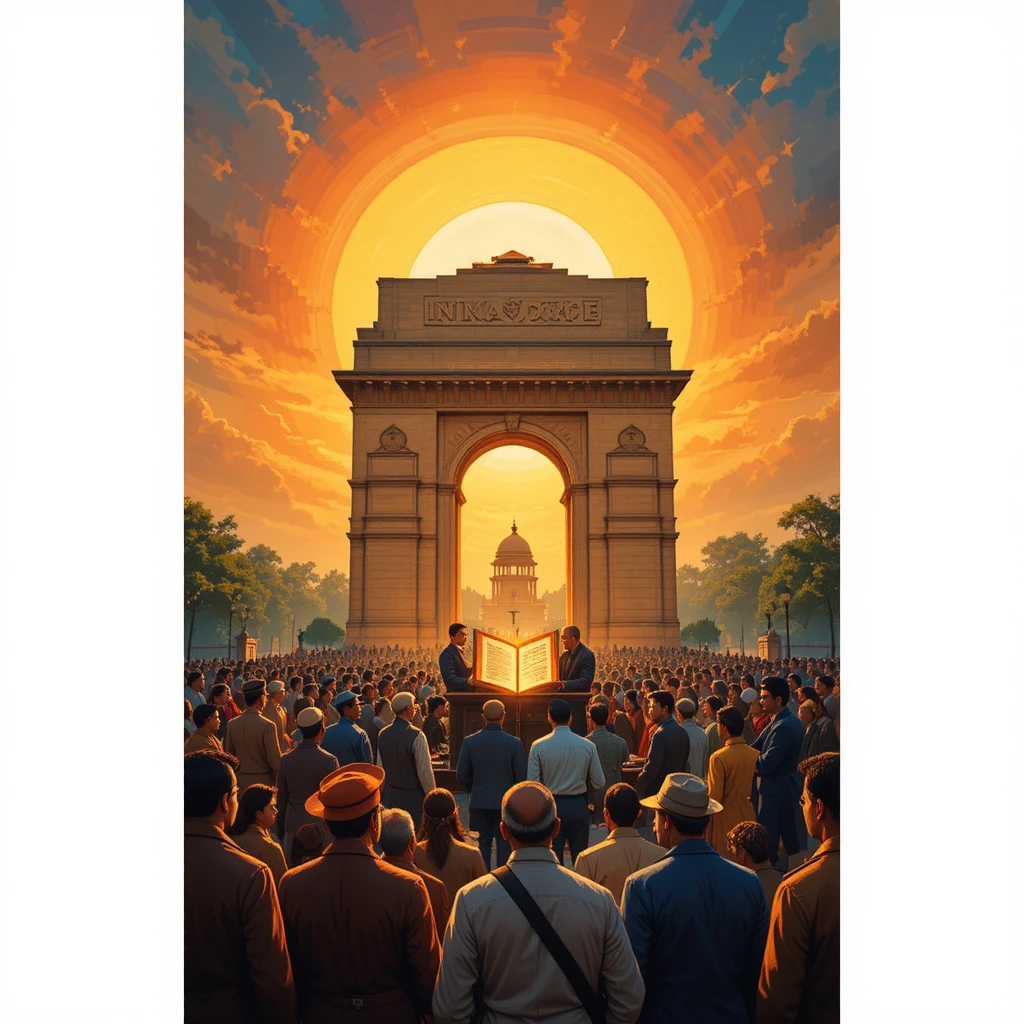
In the words of Jawaharlal Nehru, from his statement to the press on January 6, 1930, the celebration of Purna Swaraj was intended to be a nationwide affirmation of India’s resolve: “The Congress Working Committee has fixed Sunday, January 26th, for country-wide celebration of the adoption of complete independence or Purna Swaraj as its goal.” This sentiment, drawn from Nehru’s official archives, underscores the continuity between the 1930 declaration and the 1950 republic.
Historical Context: The Seeds of Independence Sown in Colonial India
The Rise of Nationalism and the Indian National Congress
The roots of January 26 as a symbol of sovereignty trace back to the late 19th century, when the Indian National Congress (INC) emerged as the vanguard of the freedom movement. Founded in 1885, the INC initially sought reforms within the British framework, but by the early 20th century, it had evolved into a platform demanding greater autonomy. Mahatma Gandhi’s entry into Indian politics in 1915, following his experiences in South Africa, infused the movement with non-violent resistance, or Satyagraha, transforming it into a mass uprising.
Gandhi’s writings, as preserved in the Gandhi Heritage Portal, reveal his evolving vision of Swaraj. In “Hind Swaraj” (1909), he articulated Swaraj not merely as political independence but as self-rule encompassing moral and economic self-sufficiency: “Swaraj is when we learn to rule ourselves.” This philosophical underpinning influenced the INC’s shift towards demanding complete independence, culminating in the events of 1929.
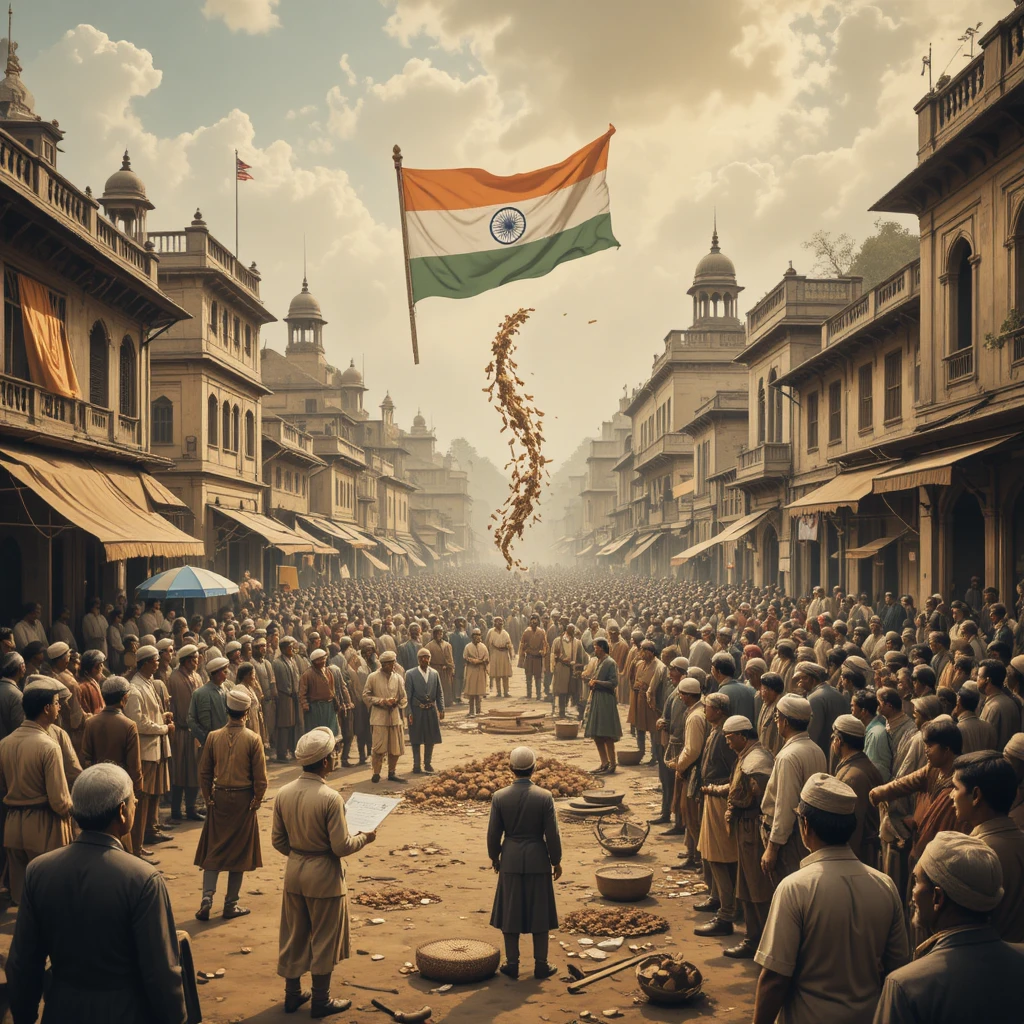
Parliamentary records from the British era, as referenced in official Indian government archives, highlight the growing discontent. The Government of India Act, 1919, introduced limited self-governance, but it fell short of Indian aspirations, leading to the Non-Cooperation Movement (1920-1922). Gandhi’s correspondences during this period, available through the Collected Works of Mahatma Gandhi, emphasize the need for “Purna Swaraj” as the ultimate goal, rejecting partial reforms.
Key Events Leading to the Lahore Session
The 1920s were marked by escalating tensions. The Simon Commission of 1927, boycotted for lacking Indian representation, galvanized protests. In response, the INC appointed the Motilal Nehru Committee to draft a constitution for India, envisioning dominion status. However, younger leaders like Jawaharlal Nehru and Subhas Chandra Bose pushed for full independence.
Gandhi’s letter to the Viceroy in 1928, as documented in his collected works, warned of impending civil disobedience if demands were unmet. This set the stage for the Calcutta Session of 1928, where a one-year ultimatum was issued to the British for dominion status. When ignored, the path to Purna Swaraj was inevitable.
Freedom fighters’ accounts, preserved in government repositories like the National Archives of India, recount the fervor. Sardar Patel’s role in organizing peasant movements in Bardoli (1928) demonstrated grassroots support for complete freedom, as noted in his correspondences compiled in official records.
The Lahore Session of 1929: A Watershed Moment
The Congress Under Jawaharlal Nehru’s Presidency
The annual session of the Indian National Congress in Lahore from December 29 to 31, 1929, presided over by Jawaharlal Nehru, was a pivotal turning point in India’s freedom struggle. Nehru, at 40, was the youngest president yet, symbolizing the rise of a new generation of leaders. His presidential address, archived in “Selected Works of Jawaharlal Nehru” (Volume 4), articulated the urgency of the moment: “We stand today for the fullest freedom of India. The Congress must declare its goal as Purna Swaraj—complete independence—and nothing less.”
Gandhi, though not presiding, played a crucial role behind the scenes. His article in Young India on December 19, 1929, endorsed the shift to complete independence: “The Congress must now declare Purna Swaraj. Dominion status is a trap; it means continued subjugation.” Patel, as a key organizer, ensured broad support, his letters to provincial leaders emphasizing unity.
The Purna Swaraj Resolution: Text and Implications
On December 31, 1929, the INC adopted the historic resolution, drafted with inputs from Gandhi, Nehru, and others. The full text, as per official INC records on indianculture.gov.in and preserved in parliamentary libraries, reads in part: “The British Government in India has not only deprived the Indian people of their freedom but has built itself on the exploitation and impoverishment of the people… We believe that it is the inalienable right of the Indian people to have freedom… Therefore, we declare our goal to be Purna Swaraj or complete independence.”
This resolution, echoed in post-independence parliamentary discussions, marked a definitive rejection of dominion status. It called for boycotts of British institutions and the observance of January 26, 1930, as Independence Day. Patel’s support, as per his letters to Nehru dated December 1929, emphasized strategic unity: “We must stand firm for complete independence; any compromise now would betray the masses.” The implications were profound: it shifted the struggle from negotiation to confrontation, paving the way for civil disobedience.
The session concluded with Nehru hoisting the tricolor flag on the banks of the Ravi River, a symbolic act of defiance captured in contemporary accounts.
Reactions and Immediate Aftermath
The British authorities dismissed the resolution as seditious, leading to arrests, but freedom fighters’ memoirs, like those in the National Archives, describe widespread enthusiasm across provinces. Gandhi’s correspondence to associates in January 1930 urged non-violent observance: “Let every Indian take the pledge on January 26 with resolve and discipline.” This led directly to the Salt Satyagraha in March 1930, where Gandhi’s Dandi March challenged the salt monopoly, mobilizing millions.
Ambedkar, in his writings, viewed the resolution as a step towards social equality, noting in a 1930 speech: “Political freedom must include freedom from caste oppression.”
From Purna Swaraj to Annual Observances: 1930-1947
The First Independence Day: January 26, 1930
On January 26, 1930, millions gathered across India—in villages, towns, and cities—to pledge allegiance to Purna Swaraj. The pledge, read aloud in meetings, affirmed: “We hold it to be a crime against man and God to submit any longer to a rule that has caused this fourfold disaster to our country.” Nehru’s press statement described it as “a day of national awakening, where the soul of India spoke as one.” Gandhi’s account in Young India (February 6, 1930) noted: “The pledge was taken in every village, from the Himalayas to the seas, uniting Hindus, Muslims, Sikhs, and all.”
Official government records post-1947, such as those from the Ministry of Home Affairs and knowindia.gov.in, recognize this event as the genesis of Republic Day, linking it symbolically to 1950.
Annual Celebrations Amidst Repression
From 1930 to 1947, January 26 was observed annually as Independence Day, even under intense British repression, including bans on gatherings and arrests. In 1931, amid the Civil Disobedience Movement, Patel organized clandestine meetings in Gujarat, as detailed in his correspondences: “Despite lathi charges, the flag was hoisted in every district.” Ambedkar, though primarily advocating for Dalit rights, supported the anti-colonial sentiment in his newspaper Janata, writing in 1935: “True Swaraj must eradicate untouchability alongside foreign rule.”
Gandhi’s letters during the Quit India Movement (1942) reiterated the significance of Purna Swaraj, linking it to post-war independence demands: “The 26th January observances keep the flame of freedom alive.”
Nehru’s prison writings, such as “The Discovery of India” (1946), reflected on these annual observances as foundational building blocks for a free nation: “Each January 26 reminded us of our unresolved pledge, strengthening our resolve.”
Independence in 1947: A Partial Victory and the Transition
August 15, 1947: Freedom at Midnight
India gained independence on August 15, 1947, amid the tragedy of partition, which created India and Pakistan. However, India remained a dominion within the British Commonwealth, with King George VI as the nominal head of state. Nehru’s iconic “Tryst with Destiny” speech, delivered in the Constituent Assembly, captured the bittersweet moment: “At the stroke of the midnight hour, when the world sleeps, India will awake to life and freedom. A moment comes, which comes but rarely in history, when we step out from the old to the new.”
The partition’s horrors—communal riots, displacement of millions—are documented in parliamentary records and freedom fighters’ accounts. Patel, as the first Home Minister, played a pivotal role in integrating over 560 princely states into the Union, his correspondences with rulers like the Nizam of Hyderabad revealing masterful diplomacy: “Integration is essential for a united India; delay would invite chaos.”
The Need for a New Constitution
Post-independence, India operated under the Government of India Act, 1935, as an interim framework. This act, critiqued by Ambedkar in his speeches, was inadequate for a sovereign republic. The Constituent Assembly, elected in 1946, was tasked with drafting a new charter. Gandhi, assassinated on January 30, 1948, left a lasting influence through his emphasis on equality and non-violence, as seen in his last will and testament: “My legacy is the pursuit of truth and justice for all.”
The Constituent Assembly: Forging the Soul of the Nation
Formation and Composition
The Constituent Assembly, initially comprising 389 members elected in 1946, was reduced to 299 after partition. Chaired by Dr. Rajendra Prasad, with Dr. B.R. Ambedkar heading the Drafting Committee of seven members, it included luminaries like Nehru, Patel, and Maulana Azad. Patel chaired committees on states and minorities, ensuring federal integrity.
Nehru moved the Objectives Resolution on December 13, 1946: “This Constituent Assembly declares its firm and solemn resolve to proclaim India as an Independent Sovereign Republic and to draw up for her future governance a Constitution.”
Key Debates and Contributions
The Assembly sat for 167 days from December 9, 1946, to January 24, 1950, debating fundamental rights, federalism, and social justice. Ambedkar’s speech on November 4, 1948, introducing the draft: “The Draft Constitution is a formidable document. It contains 315 Articles and 8 Schedules.”
Following debates, the final version expanded to 395 articles in 22 parts and 8 schedules. Patel’s contributions shaped federal provisions, as per Assembly records: “The states must accede for a strong Union.”
Gandhi’s principles influenced the Directive Principles of State Policy (Part IV), echoing his vision of village republics and social welfare in “Hind Swaraj.” Nehru advocated for secularism and planned economy, while Ambedkar ensured safeguards for minorities and backward classes.
Adoption on November 26, 1949
The Assembly adopted the Constitution on November 26, 1949, now celebrated as Constitution Day. Ambedkar’s closing speech on November 25, 1949: “If we wish to maintain democracy not merely in form, but also in fact, what must we do? The first thing in my judgement we must do is to hold fast to constitutional methods of achieving our social and economic objectives. It means we must abandon the bloody methods of revolution.” This date marked the completion, but its enforcement was delayed to honor historical symbolism.
Why January 26, 1950? The Symbolic Choice
Honoring the Purna Swaraj Legacy
The decision to enforce the Constitution on January 26, 1950, was profoundly symbolic, directly linking the birth of the republic to the 1930 Purna Swaraj declaration. This choice was not incidental but a meticulously debated and intentional act to infuse the new nation with the spirit of the freedom struggle. In the Constituent Assembly debates on November 24, 1949, as recorded in Volume XI, members emphasized this connection. Dr. Rajendra Prasad, the President of the Assembly, noted: “We are to begin our journey on the 26th January 1950 when we will resolve ourselves into a sovereign republic.”
Jawaharlal Nehru, in his writings and speeches archived in the Nehru Portal, affirmed the rationale: “It was fitting that the Constitution should come into force on the anniversary of Purna Swaraj Day, the day when, twenty years earlier, the Indian people had pledged themselves to complete independence.” Nehru’s correspondence with Patel in late 1949 highlights this sentiment: “By choosing January 26, we pay tribute to the martyrs and ensure that the republic is born under the auspices of our historic resolve.” This choice reflected a collective desire to bridge the gap between aspiration and achievement, making the date a perpetual reminder of the sacrifices made during the colonial era.
Dr. B.R. Ambedkar, in parliamentary records from the Assembly debates on November 25, 1949, acknowledged the sentimental and strategic value: “The 26th of January 1950 will mark not just the commencement of our Constitution but the fulfillment of the pledge taken in 1930. It is a day when India truly becomes a republic, free from any monarchical ties.” Ambedkar’s emphasis on democracy’s substance over form aligned with the date’s symbolism, ensuring the Constitution was seen as an extension of the anti-colonial ethos.
Sardar Vallabhbhai Patel, in his correspondences preserved in official records, supported this linkage, writing to Assembly members: “Linking our republic to January 26 honors the past struggles and unites the nation in its future endeavors. It is a date etched in the hearts of freedom fighters.” Even though Mahatma Gandhi had passed away, his influence was palpable; his writings on Swaraj, such as in Young India, advocated for complete sovereignty, and Assembly members invoked his vision to justify the delay from November 26, 1949, to January 26, 1950.
This two-month interval allowed for practical preparations, including printing the Constitution and organizing the transition, but its primary purpose was emblematic. As noted in the debates on November 23, 1949: “Up to now, this Constitution has been a paper document and it will remain so until the 26th January 1950. Then will be the moment when it shall spring into life.” The choice underscored the framers’ respect for historical continuity, transforming January 26 from a day of protest to one of triumph.
Gandhi’s influence, though posthumous, was evident in this choice, as his portal records show his advocacy for complete sovereignty.
The Ceremonial Transition
The ceremonial aspects of January 26, 1950, further amplified its symbolism. At 10:18 AM in the Durbar Hall of Rashtrapati Bhavan (then Government House), Dr. Rajendra Prasad was sworn in as the first President of India by Chief Justice Harilal J. Kania. The oath, as per official records from the Ministry of Home Affairs, marked the end of dominion status. A 21-gun salute boomed across Delhi, and Prasad unfurled the national flag, heralding the republic’s birth.
The last Governor-General, C. Rajagopalachari, issued a proclamation: “India, that is Bharat, shall be a Union of States.” Nehru, as Prime Minister, addressed the nation, linking the day to 1930: “Today, we redeem the pledge taken twenty years ago.” This transition was not merely administrative but a profound assertion of sovereignty, as evidenced in parliamentary proclamations.
In Punjab and across India, local celebrations mirrored the national ones, with flag hoisting and pledges, echoing the 1930 observances. The choice of date thus served as a unifying force, blending history with hope.
Practical and Philosophical Underpinnings of the Date Selection
Beyond symbolism, the date allowed time for ratification and dissemination. Philosophically, it embodied Gandhi’s idea of Swaraj as self-rule, Nehru’s vision of a modern democracy, Patel’s emphasis on unity, and Ambedkar’s focus on justice. Assembly debates on November 25, 1949, capture this: “On the 26th of January 1950, India would be a democratic country in the sense that India from that day would have a government of the people, by the people and for the people.” This Abraham Lincoln-inspired phrase, adapted by Ambedkar, highlighted the date’s role in realizing democratic ideals.
Critics, like some conservative members, argued for an earlier date, but the majority prevailed, as per Volume XI debates. The selection thus encapsulated the framers’ wisdom, ensuring the republic’s foundation was steeped in national memory.
Republic Day Celebrations: Tradition and Evolution
The First Republic Day Parade
The celebrations of Republic Day began modestly but grandly on January 26, 1950, with the swearing-in ceremony followed by a procession. The formal parade tradition traces its origins to the early 1950s, initiated under Major Roberts of the Indian Army, who organized the first full-scale military parade in 1955 at Rajpath (now Kartavya Path) in New Delhi. As per official records on knowindia.gov.in, the 1950 event featured a 21-gun salute and flag unfurling by President Prasad, but it evolved into a showcase of military might and cultural diversity.
In the initial years, the parade included contingents from the armed forces, police, and NCC cadets, symbolizing national defense. Cultural tableaux from states depicted regional heritage, fostering unity in diversity. Nehru’s vision, as expressed in his broadcasts, was to make Republic Day a “people’s festival,” encouraging public participation. The Beating Retreat ceremony on January 29, introduced in 1959, added a musical closure, with bands playing patriotic tunes at Vijay Chowk.
Evolution of the Parade: Chief Guests, Themes, and Innovations
Over the decades, Republic Day celebrations have evolved into a global spectacle. The tradition of inviting a foreign chief guest began in 1950 with Indonesian President Sukarno, symbolizing India’s non-aligned foreign policy. Notable guests include US President Barack Obama (2015), French President Emmanuel Macron (2024), and various leaders from ASEAN and SAARC nations. In 2013, Bhutan’s King Jigme Khesar Namgyel Wangchuck was the guest, as noted in embassy records.
Themes have guided the parades since the 1990s, reflecting national priorities. For instance, the 64th Republic Day in 2013 emphasized youth and empowerment, while the 65th in 2014 showcased technological advancements.
Legacy: Constitutional Values in Contemporary India
Upholding Democracy Amid Challenges
The Indian Constitution’s legacy is evident in its sustenance of the world’s largest democracy for over 75 years. Core values—justice, liberty, equality, and fraternity—enshrined in the Preamble have guided governance. Achievements include upholding democracy through regular elections, with the Election Commission ensuring free and fair polls, as noted in parliamentary reports. Social justice initiatives, like reservations for Scheduled Castes and Tribes (Articles 15, 16), reflect Ambedkar’s vision, reducing inequalities.
Judicial independence (Article 50) has been a pillar, with the Supreme Court interpreting the Constitution dynamically, as in landmark cases like Kesavananda Bharati (1973), establishing the basic structure doctrine. Nehru’s emphasis on secularism (Article 25-28) has fostered pluralism, while Patel’s federalism (Articles 245-263) balances center-state relations.
Ambedkar warned of “grammar of anarchy” if methods faltered. Nehru’s vision of unity persists.
Patel’s integration legacy ensures federal strength.
Gandhi’s non-violence inspires social justice.
Contemporary Challenges: Threats to Constitutional Ideals
Despite achievements, challenges persist. Economic disparities challenge equality (Article 14), with debates on wealth redistribution. Communal tensions test secularism, prompting calls for upholding fraternity.
The rise of majoritarianism questions minority rights, as analyzed in scholarly works: “The Constitution makes justice the source of law, but contemporary politics tests this equity.” Environmental challenges invoke Directive Principles (Article 48A), with climate action aligning with Gandhi’s sustainability ethos.
Global Significance
India’s Constitution inspires global democracies, its emphasis on social justice influencing constitutions in South Africa and Nepal. As the “longest written constitution,” it balances rights with duties (Article 51A, added 1976).
In 2026, amid digital transformations, values like privacy (recognized as fundamental in 2017) face cyber threats. Nehru’s unity vision persists through initiatives like “Ek Bharat Shreshtha Bharat.” Patel’s legacy ensures federal strength, while Gandhi’s non-violence inspires conflict resolution.
Ambedkar’s call for constitutional morality remains relevant: “Constitution is not a mere lawyers’ document; it is a vehicle of life.” The legacy endures through education, with Constitution Day programs promoting awareness. As India navigates globalization, the Constitution’s values provide a compass, ensuring progress with equity.
Conclusion: An Ongoing Pursuit of Freedom
January 26 stands as a timeless bridge between India’s tumultuous past and its aspirational future, embodying the fulfillment of Purna Swaraj while posing eternal challenges to future generations. From the defiant pledge of 1930 to the sovereign dawn of 1950, and through 77 years of republican journey by 2026, this date encapsulates the nation’s indomitable spirit. As Nehru reflected in his writings: “The pledge of January 26 has been redeemed in substantial measure, yet the adventure continues, demanding vigilance and renewal.”
The Constitution, born on this day, is not a static relic but a living document, as Ambedkar envisioned: “It will work as long as we make it work.” Patel’s unity, Gandhi’s ethics, and the collective wisdom of freedom fighters remind us that true Swaraj requires constant upholding of justice and equality. In contemporary India, amid achievements and trials, Republic Day calls for recommitment—to democracy’s ideals, to inclusivity, and to progress.
References and Sources
- Purna Swaraj Resolution, Indian National Congress, 1929
- Constituent Assembly Debates, Volume XI, November 26, 1949
- Jawaharlal Nehru’s Statement to the Press, January 6, 1930
- Sardar Vallabhbhai Patel’s Correspondences on Independence, 1929-1947 , https://share.google/4pLmDvUFAeY99g2QV , https://share.google/DNeiXWVIwvRSpdUCN
- Dr. B.R. Ambedkar’s Speech on Adoption of Constitution, November 25, 1949 – From Dr. Babasaheb Ambedkar Writings and Speeches, Vol. 13, archive.org.
- Mahatma Gandhi’s Writings on Swaraj, Collected Works – Gandhi Heritage Portal, gandhiheritageportal.org.
- Official Government of India Records on Republic Day History – Know India Portal, knowindia.india.gov.in.
- Parliamentary Proclamation on January 26, 1950 – Eparlib, sansad.in.
- Nehru’s Selected Speeches on Purna Swaraj – Internet Archive.
- Patel’s Role in Constituent Assembly – From official records, iipa.org.in.
- Ambedkar’s Drafting Committee Reports – Constitution of India net.
- Gandhi’s Young India Articles, 1929-1930 – Gandhi Heritage Portal.
- Freedom Fighters’ Accounts on January 26 Observances – National Archives of India.
- Nehru-Patel Correspondences on Constitution – Nehru Portal.
- Ambedkar’s Final Assembly Speech – Eparlib records.