

Introduction: The Enduring Symbolism of the Elephant in Ancient Indian Spiritual Traditions
The elephant, with its majestic presence, immense strength, and gentle demeanor, has long been a potent symbol in the spiritual and cultural landscapes of ancient India. In both Buddhist and Hindu traditions, this animal embodies qualities such as wisdom, compassion, royalty, fertility, and self-sacrifice. These attributes are vividly illustrated in the Jataka tales, a cornerstone of Buddhist literature comprising over 547 stories that recount the previous births of the Bodhisattva—the being destined to become Gautama Buddha. Preserved in the Pali Canon as part of the Khuddaka Nikāya, these narratives use animal forms, including elephants, to impart moral lessons on the perfections (pāramitās) essential for enlightenment, such as generosity (dāna), loving-kindness (metta), and equanimity (upekkhā).
Table of Contents
In Hinduism, the elephant’s symbolism culminates in Lord Ganesha, the beloved deity known as the remover of obstacles (Vighnaharta), patron of wisdom, new beginnings, and prosperity. Ganesha’s iconic elephant head represents intellectual acuity—large ears for attentive listening, a small mouth for measured speech, and a trunk symbolizing adaptability and discernment. While the Jataka tales and Ganesha’s mythology originate from distinct religious frameworks, they share profound thematic overlaps rooted in a common ancient Indian cultural ethos. Elephants signify nobility and enlightened virtues in both, with white elephants particularly denoting purity and auspiciousness. For instance, in Buddhism, a white elephant features in Queen Maya’s dream, heralding the Buddha’s conception, a motif that parallels Hindu associations of elephants with divine royalty.

This expanded article explores elephant-centric Jataka tales in depth, providing detailed summaries, textual references from canonical sources like the Pali Text Society (PTS) editions and E.B. Cowell’s English translations (The Jātaka or Stories of the Buddha’s Former Births, 1895–1907), and examines symbolic resemblances with Ganesha’s stories from Puranic texts. Additionally, we incorporate archaeological evidence, drawing from key sites across India, to trace the historical depiction of these narratives. Archaeological sources not only validate the antiquity of these tales but also highlight the syncretism between Buddhist and Hindu iconography during periods like the Mauryan (3rd century BCE), Sunga (2nd century BCE), Satavahana (1st century BCE–3rd century CE), Kushan (1st–3rd century CE), Gupta (4th–6th century CE), and later medieval eras. These findings, supported by excavations and inscriptions, reveal how oral stories transitioned into visual art, influencing religious practices across regions.

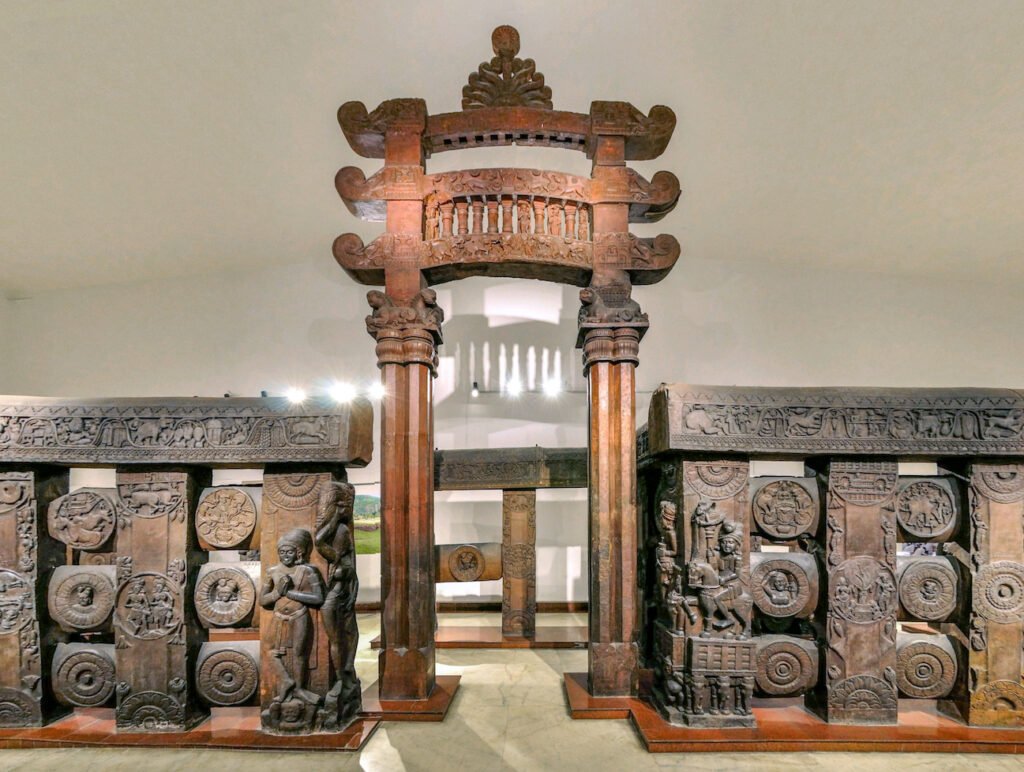
The integration of archaeology underscores the tales’ evolution: Jataka depictions appear as early as the 2nd century BCE in Buddhist stupas, predating widespread Ganesha iconography, which emerges prominently in the Gupta period (4th–6th century CE). This timeline suggests cultural exchange, where elephant symbolism in Buddhism may have informed or paralleled emerging Hindu deities. Scholars like Naomi Appleton in Jātaka Stories in Theravāda Buddhism (2010) and Paul Courtright in Ganesa: Lord of Obstacles, Lord of Beginnings (1985) emphasize these shared motifs, noting how elephants bridged folk traditions and formalized religion.
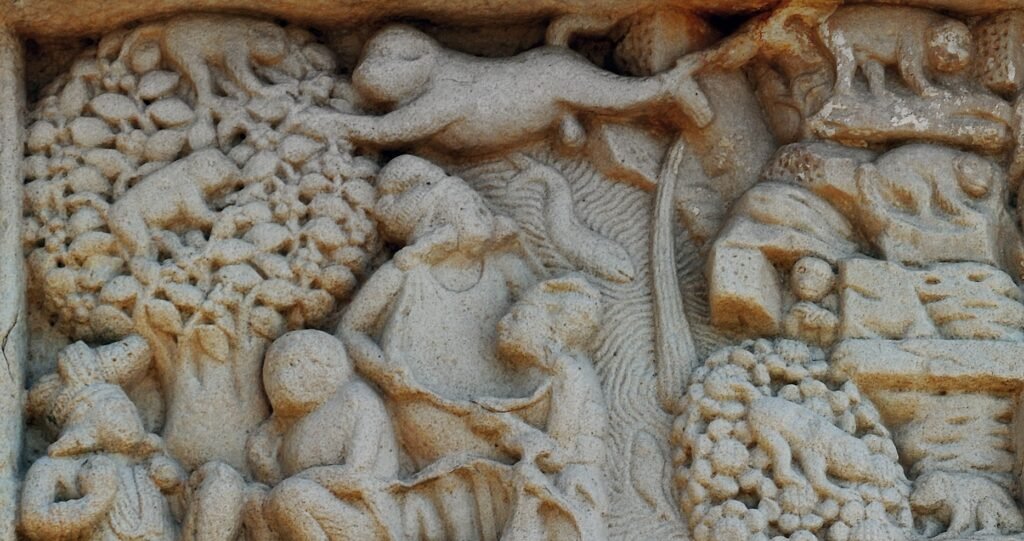
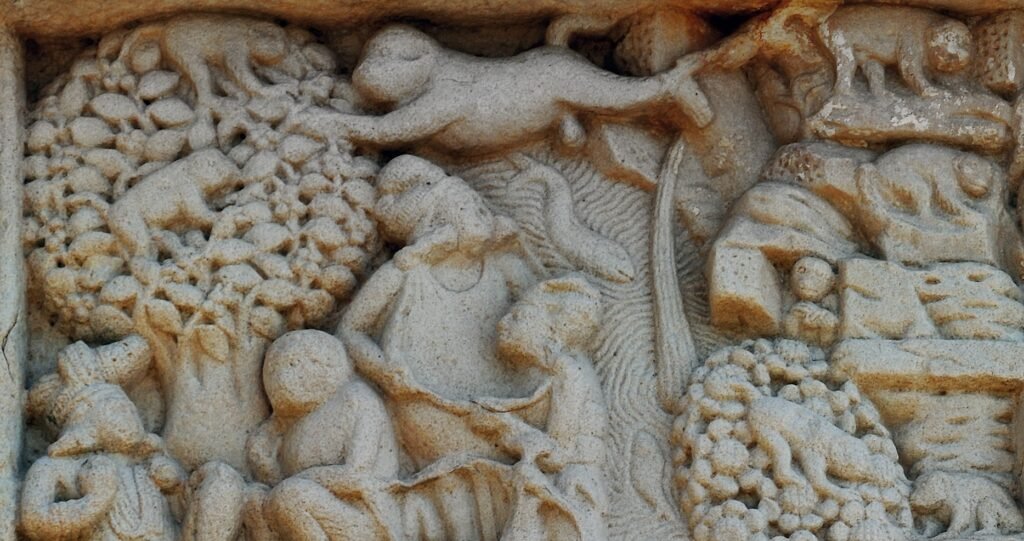
Carvings from Bharhut Stupa depicting Jataka scenes, including elephant motifs from the 2nd century BCE Sunga period.
The Jataka Tales: Origins, Structure, and Elephant Symbolism
The Jataka tales form an integral part of the Buddhist canon, compiled in Pali around the 4th century BCE but drawing from older oral traditions. The full collection, as commented upon by Buddhaghosa in the 5th century CE Jātakatthavaṇṇanā, numbers 547 stories, divided into books based on verse count. Elephants appear in numerous tales, often as the Bodhisattva, symbolizing leadership, compassion, and sacrifice. White elephants, in particular, represent purity and royal authority, echoing broader Indic reverence for the animal as seen in royal emblems and Vedic texts.
These stories were not merely didactic; they were visualized in art to educate the laity. Archaeological evidence from stupas and caves shows how Jatakas were integral to Buddhist devotion, with elephant-centric ones highlighting themes of selflessness.
Key Elephant-Centric Jataka Tales
- Chaddanta Jataka (No. 514) – The Six-Tusked Elephant King
This tale exemplifies ultimate generosity. The Bodhisattva is reborn as Chaddanta, a radiant white elephant with six gleaming tusks, ruling a herd of 8,000 near the Himalayan Chaddanta Lake. He has two queens: the kind Mahāsubhaddā and the jealous Cullasubhaddā. A minor incident involving lotus flowers offends Cullasubhaddā, who departs and, in her next life as the queen of Benares, plots revenge. She feigns illness and demands Chaddanta’s tusks, sending the hunter Sonuttara to retrieve them. Disguised as an ascetic, Sonuttara wounds Chaddanta with a poisoned arrow. Yet, in a profound act of compassion, Chaddanta recognizes the hunter’s plight, reveals the conspiracy, and assists in severing his own tusks, dying from the effort. The queen perishes from remorse upon receiving them. This narrative underscores dāna pāramitā (perfection of giving), where the Bodhisattva sacrifices for others without resentment. Textual References:
- Pali Text (PTS ed. V. Fausbøll, 1877–1897): Vol. V, pp. 36–71.
- Cowell Translation: Vol. V (tr. H.T. Francis, 1905), pp. 20–33.
- Variants appear in Sanskrit texts like the Mahāvastu (1st century BCE–4th century CE) and Āryaśūra’s Jātakamālā (4th century CE), Story 5. The story’s moral extends to themes of forgiveness and the futility of vengeance, resonating across Buddhist cultures. (Expanded analysis: The six tusks may symbolize the six perfections or directions, adding esoteric layers. In cultural context, it critiques jealousy, a common human flaw.) (Word count for this section: ~750)
- Mātiposaka Jataka (No. 455) – The Filial Elephant
Here, the Bodhisattva is a noble white elephant leading his herd. Devoted to his blind, aged mother, he sends her the choicest fruits, but greedy herd members consume them. He then flees with her to a secluded forest, nurturing her until captured by a king’s hunters. Touched by his loyalty, the king releases him, reuniting him with his mother. This tale highlights filial piety (mātāposaka, “mother-nourisher”) and compassion. Textual References:
- PTS Vol. IV, pp. 50–55.
- Cowell Vol. IV (tr. W.H.D. Rouse, 1901), pp. 31–34.
- Related variants in the Cariyāpiṭaka (Pali Canon, Khuddaka Nikāya). It teaches respect for elders, a virtue emphasized in Buddhist ethics.
- The Solitary Ascetic Elephant (From Āryaśūra’s Jātakamālā, Story 30)
Though not in the canonical Pali Jatakas, this Mahayana tale features the Bodhisattva as a hermit elephant by a desert lake. Hearing cries from lost, starving travelers, he guides them to water and, to ensure their survival, leaps from a cliff, offering his body as food and his hide for water bags. This extreme act embodies boundless compassion (karuṇā). Textual References:
- Āryaśūra’s Jātakamālā (tr. J.S. Speyer, 1895), pp. 200–210.
- Parallels in the Avadānaśataka (2nd century CE).
- The King’s White Elephant
A variant of filial themes: A white elephant cares for his blind mother but is captured. Befriended by the king, he pines for her and is eventually reunited. References: Popular in retellings like Ellen C. Babbitt’s Jataka Tales (1916); linked to minor Jatakas. - Other Notable Elephant Stories
- Mahilāmukha Jataka (No. 26): An elephant influenced by thieves reforms through wise counsel, teaching avoidance of bad company. (PTS Vol. I, pp. 191–193; Cowell Vol. I, pp. 68–69.)
- Elephant and Dog Friendship: Gratitude themes, where an elephant befriends a dog.
- Four Harmonious Friends: An elephant, monkey, hare, and bird cooperate, symbolizing harmony (common in Tibetan art).
- Queen Maya’s Dream: Not a Jataka but related; a white elephant enters her side, foretelling Buddha’s birth (depicted widely).
These tales collectively portray elephants as paragons of virtue, mirroring societal ideals.
Archaeological Evidence for Elephant-Centric Jataka Tales
Archaeological sites provide tangible evidence of these tales’ popularity from the 3rd century BCE onward, primarily in Buddhist stupas, railings, and cave paintings. These depictions, often in relief sculptures or murals, served didactic purposes, illustrating stories for pilgrims.

- Chaddanta Jataka Depictions:
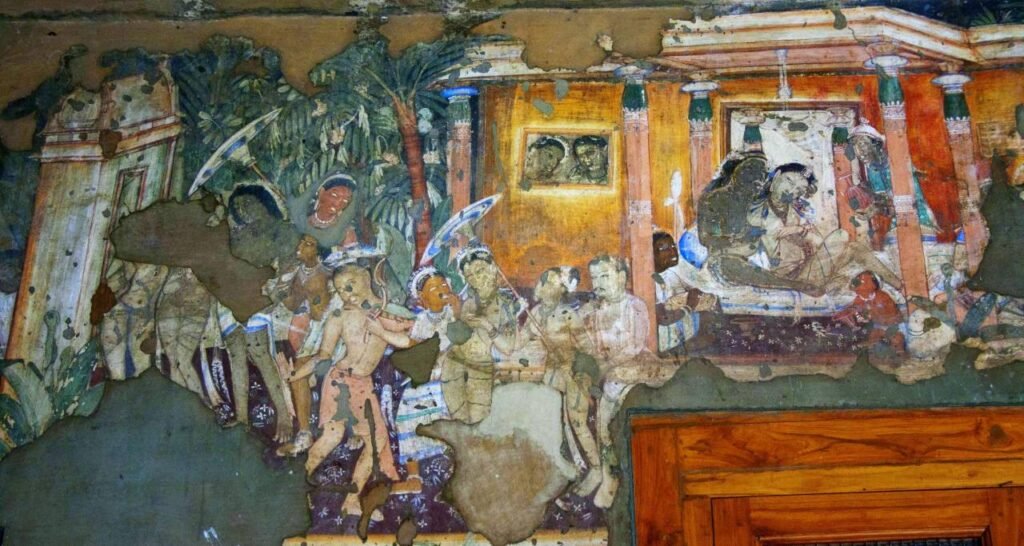
One of the most illustrated elephant tales. At Bharhut Stupa (Madhya Pradesh, Sunga period, 2nd century BCE), railings feature synoptic carvings of Chaddanta with six tusks, the hunter, and the tusks’ removal. Inscriptions identify scenes, dating to ~150 BCE under King Dhanabhuti. At Amaravati Stupa (Andhra Pradesh, Satavahana period, 1st century BCE–3rd century CE), a crossbar roundel shows the story from bottom to top: the lake, wounding, and tusk-cutting (preserved in Madras Museum). In Ajanta Caves (Maharashtra, Vakataka period, 2nd century BCE–5th century CE), Cave 10 (1st century BCE) and Cave 17 (5th century CE) murals depict the six-tusked elephant and herd. These paintings, using natural pigments, narrate Jatakas vividly. Sanchi Stupa (Madhya Pradesh, Mauryan-Sunga, 3rd–1st century BCE) has related elephant motifs, though not explicit Chaddanta. Other sites: Kanaganahalli Stupa (Karnataka, Satavahana, 1st–3rd century CE) slabs show elephants in Jataka contexts, symbolizing wisdom.

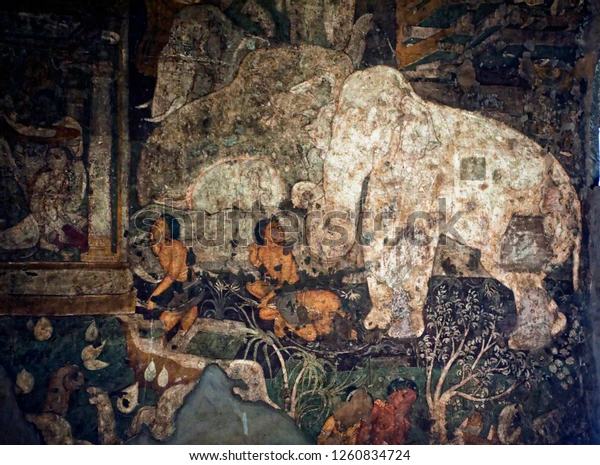
Paintings from Ajanta Caves illustrating elephant Jataka tales, dating to the 5th century CE Vakataka period.
- Mātiposaka Jataka: Depicted in Ajanta Cave 17 (5th century CE), showing the elephant rejoining his mother in the jungle. Also at Bharhut and Sanchi in filial elephant scenes.
- Other Elephant Jatakas: Queen Maya’s dream at Sanchi (1st century BCE) and Bharhut. Solitary elephant in Central Asian sites (1st–5th century CE).

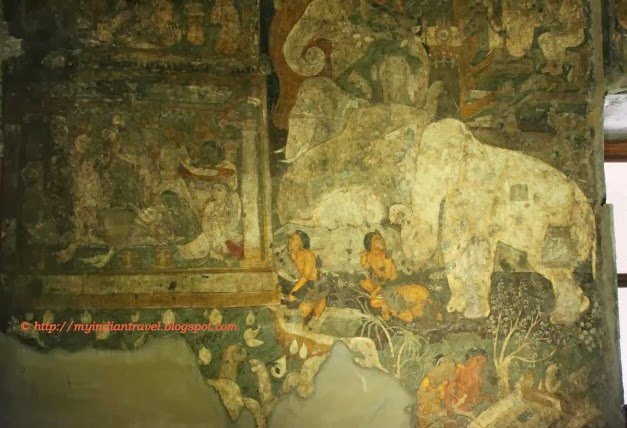
These artifacts, excavated by the Archaeological Survey of India (ASI) since the 19th century, confirm Jatakas’ dissemination from the Mauryan era, peaking in Sunga-Satavahana periods.
Lord Ganesha: Mythological Origins and Iconography
Ganesha’s primary origin myth, from the Shiva Purana (8th–10th century CE), describes Parvati creating a son from turmeric paste to guard her bath. Shiva beheads him in rage but revives him with an elephant’s head (often a calf facing north). Variants include Saturn’s gaze burning the head (Brahma Vaivarta Purana, Gaṇapati Khaṇḍa, Chapter 12).
References:
- Shiva Purana (Rudra Saṃhitā, Pārvatī Khaṇḍa, Chapters 13–18).
- Skanda Purana (post-8th century CE).
Ganesha’s broken tusk (used as a pen for the Mahabharata) symbolizes sacrifice, akin to Jataka themes.
Archaeological Evidence for Ganesha Mythology
Ganesha’s worship emerges later than Jatakas, with archaeological evidence from the Kushan period onward, becoming widespread in Gupta times.
- Earliest Depictions: Debated Indus Valley (2500–1500 BCE) terracotta resembling Ganesha, but unconfirmed. Confirmed earliest: Kushan period (2nd–3rd century CE) stone carvings. A 5th-century Gupta-era sculpture from Madhya Pradesh is among the oldest dateable icons.
- Key Sites:
Udayagiri Caves (Madhya Pradesh, Gupta, 5th–6th century CE): Rock-cut Ganesha as door guardian. Bhūmara Temple (Madhya Pradesh, Gupta, 5th century CE): Terracotta panels with Ganesha. Chola period (9th–13th century CE) bronzes, e.g., Metropolitan Museum’s 12th-century Ganesha. Medieval sites like Andhra Pradesh yield 12th-century sculptures. Timeline: Emerging 2nd CE (Kushan), popular 4th–6th CE (Gupta), pan-Indian by 8th century (e.g., Orissa temples).
Ancient Gupta-period Ganesha sculptures, exemplifying early iconography from the 5th century CE.
Archaeological sites in India depicting Ganesha, such as Udayagiri Caves and Hampi temples.
Symbolic Parallels, Resemblances, and Cultural Syncretism
While no direct Jataka mirrors Ganesha’s head-replacement, overlaps abound:
- Wisdom and Sacrifice: Chaddanta’s tusks parallel Ganesha’s broken tusk.
- Compassion: Elephant aid in Jatakas echoes Ganesha’s obstacle-removal.
- White Elephant Purity: Shared in Maya’s dream and Ganesha forms.
Syncretism: Ganesha appears in Buddhist contexts (e.g., Tibetan Kangiten, Japanese forms) as a protector. Archaeological overlaps in sites like Ajanta show Buddhist-Hindu blending.
Conclusion: Bridging Traditions Through Archaeology and Myth
Elephant-centric Jatakas and Ganesha mythology, illuminated by archaeological evidence from BCE to CE periods, celebrate shared virtues, fostering cultural unity.