

Introduction to Vastu Shastra: Origins, Principles, and Cultural Significance
Vastu Shastra, often translated as the “science of architecture,” is an ancient Indian system of design and construction that dates back over 5,000 years, with roots in Vedic texts (Disclaimer: Scholarly consensus dates the composition of the Vedas to approximately 1500–500 BCE, with the Rigveda around 1500–1200 BCE, based on linguistic, archaeological, and historical evidence; claims of significantly older ages lack concrete support and remain speculative. While Vastu Shastra is traditionally associated with the Stapatya Veda (an Upaveda linked to the Atharvaveda or Yajurveda), no direct textual evidence of its detailed principles exists in the core Vedic Samhitas; systematic Vastu treatises appear in later post-Vedic texts like the Puranas and Shilpa Shastras. Practical architectural considerations, such as directional alignments for sunlight, wind, and ventilation, were common across ancient civilizations (e.g., Indus Valley, Egyptian, Mesopotamian, and Chinese), reflecting universal environmental adaptations rather than a uniquely Vedic origin.) such as the Sthapatya Veda, an appendix to the Atharvaveda. The term “Vastu” derives from “Vastoshpati,” a deity mentioned in the Rigveda who is believed to protect dwellings. Historically, Vastu Shastra was part of a broader Vedic knowledge system that integrated astronomy, astrology, and environmental harmony to create spaces conducive to human well-being. Ancient texts like the Brihat Samhita by Varahamihira (6th century CE) and the Mayamata (a South Indian treatise) elaborate on its principles, emphasizing the alignment of buildings with cosmic energies, natural elements (earth, water, fire, air, and ether), and directional orientations.
Table of Contents


At its core, Vastu Shastra posits that the universe is composed of five elements (panchabhutas), and human habitats should mirror this cosmic balance to promote health, prosperity, and spiritual growth. Key principles include:
- Directional Alignments: The eight cardinal directions are associated with specific deities and energies. For instance, the northeast (Ishanya) is linked to water and knowledge, making it ideal for entrances or prayer rooms, while the southwest (Nairitya) represents earth and stability, suitable for master bedrooms.
- Zoning and Proportions: The Vastu Purusha Mandala, a symbolic grid representing the cosmic being (Purusha) pinned down by gods, divides space into zones. This mandala guides room placements, with the center (Brahmasthana) left open for energy flow.
- Elemental Balance: Fire (southeast) for kitchens to harness solar energy, water (northeast) for wells or bathrooms to align with magnetic fields, and air (northwest) for ventilation.
- Prohibitions and Remedies: Rules against certain shapes, colors, or placements (e.g., no toilets in northeast to avoid “negative energy”) and remedies like yantras or mirrors to correct “defects.”
In ancient India, Vastu influenced monumental architecture, from the Indus Valley Civilization’s grid-planned cities like Mohenjo-Daro (with east-west orientations for ventilation) to temples like the Brihadeeswarar Temple in Tamil Nadu, where alignments enhanced acoustics and light. During the medieval period, it blended with Islamic influences in Mughal architecture, seen in the Taj Mahal’s symmetrical gardens symbolizing paradise.
Culturally, Vastu remains deeply ingrained in Indian society, influencing over 70% of homebuyers according to a 2023 real estate survey by Magicbricks. In modern contexts, it’s marketed as a tool for success, with consultants charging premium fees for “Vastu-compliant” designs. However, its revival in the late 20th century coincides with urbanization and commercialization, leading to debates on its validity. Proponents view it as timeless wisdom, while critics label it pseudoscience. This article delves into these debates, debunking myths with science, case studies, and legal perspectives, while proposing evidence-based alternatives for space utilization, air circulation, and cozy environments across Indian regions.
Scientific Debunking of Vastu Shastra: Pseudoscience Masquerading as Ancient Wisdom
Vastu Shastra’s claims of harmonizing “cosmic energies” lack empirical backing, positioning it firmly in the realm of pseudoscience. Pseudoscience mimics scientific language but fails key criteria: falsifiability, reproducibility, and peer-reviewed evidence. As astronomer Jayant Narlikar stated at a 2007 Maharashtra Andhashraddha Nirmoolan Samiti (MANS) conference, “Vastu has no theory… it’s illogical and disconnected from the environment.” Scientific critiques highlight confirmation bias, where positive outcomes are attributed to Vastu while failures are ignored.

Lack of Empirical Evidence and Testable Hypotheses
No large-scale, peer-reviewed studies validate Vastu’s core assertions. A 2024 ResearchGate paper on Vastu rationality in traditional architecture admitted a “dearth of empirical substantiation,” noting that while some principles align with climate adaptation (e.g., east-facing entrances for morning light), causal links to health or prosperity are absent. Attempts to link Vastu to quantum physics or geomagnetism are speculative; Earth’s magnetic fields influence navigation in animals but not human “energy flows” as claimed.
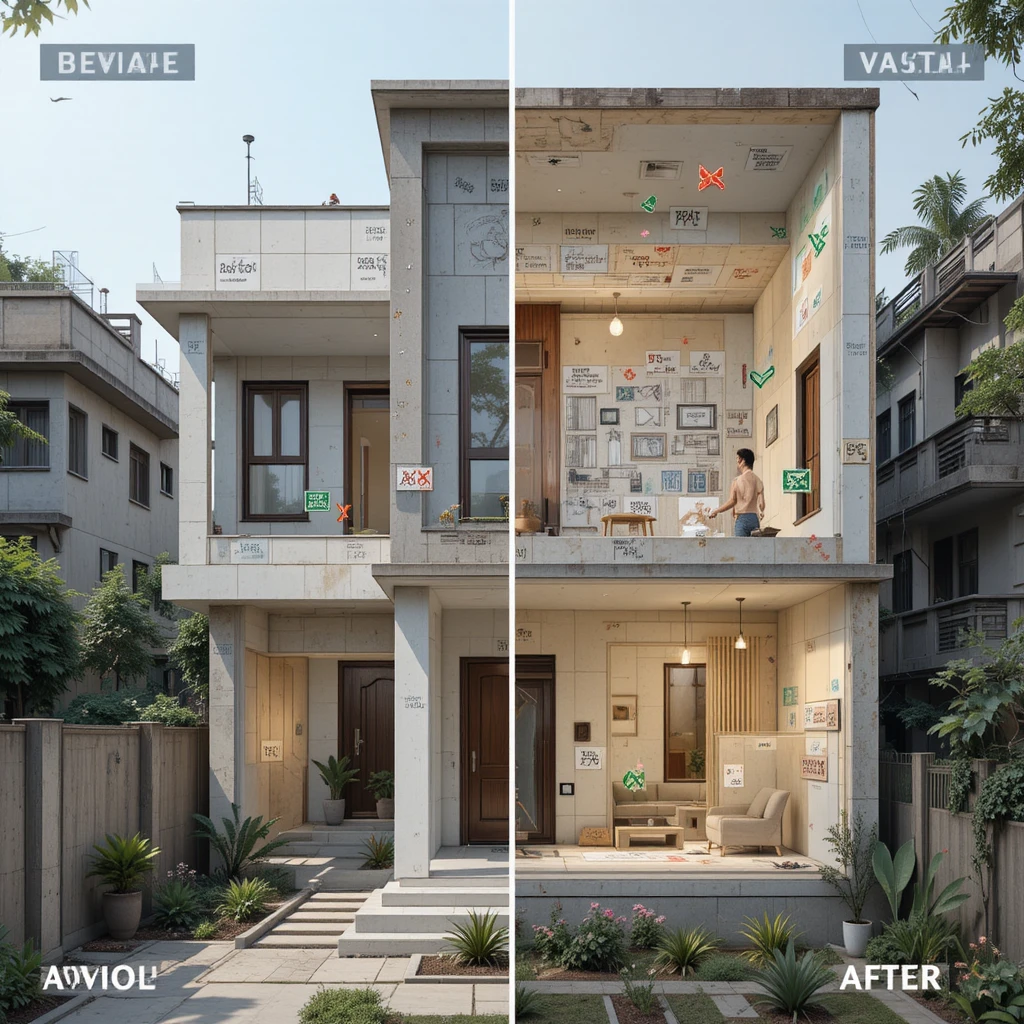
Medical science debunks health-related claims. For example, avoiding southwest bedrooms to prevent “ill health” ignores evidence-based factors like genetics, diet, and hygiene. Environmental psychology research from Harvard’s Healthy Buildings program shows well-being depends on air quality, light, and ergonomics—not directions. A PubMed review on indoor environments linked ventilation rates to reduced respiratory issues, not Vastu alignments.
Pseudoscientific Elements and Confirmation Bias
Vastu’s elemental associations (e.g., fire in southeast) stem from ancient observations but ignore modern physics. Heat rises due to convection, not directional “fire energy.” Proponents blend Vastu with unproven concepts like prana, akin to chi in Feng Shui, which Narlikar dismissed as lacking logic. A 2007 blog by skeptic Sujaib labeled Vastu’s “ether” and “cosmic fields” as archaic, debunked notions.
Health science critiques include EUROVEN’s 2002 review of 105 papers, concluding ventilation impacts health via air quality, not mysticism. Placebo effects explain anecdotal successes; a Quora thread noted families attributing improvements to Vastu despite unrelated factors like better insulation.
Comparison with Evidence-Based Design
Modern architecture relies on bioclimatic design, optimizing for climate without superstition. Vastu’s rigidity (e.g., fixed directions) contrasts with flexible, site-specific approaches. A 2019 Academia.edu paper argued Vastu’s principles have scientific logic but are religious in reasoning, suggesting selective adoption.
In summary, while Vastu offers coincidental practicalities, its mystical framework fails scientific scrutiny, relying on belief over evidence.
Case Studies: Real-World Illustrations of Vastu’s Shortcomings and Coincidental Benefits
Case studies reveal Vastu’s limitations, often showing no causal benefits beyond placebo or basic design sense.
Case Study 1: Mumbai Residential Renovation (Failure Example)
A Quora anecdote described a Mumbai family renovating for Vastu (northeast entrance, southeast kitchen) but experiencing no health gains; heat issues persisted until HVAC installation. This highlights Vastu’s oversight of modern needs like insulation.
Case Study 2: Corporate Office in Delhi (Claimed Success Debunked)
Top Luxury Property reviewed offices aligning desks east per Vastu, reporting productivity boosts. However, uncontrolled variables (e.g., better lighting) likely caused improvements, not directions. A Reddit analysis of Indian homes found no differences in outcomes.
Case Study 3: Traditional vs. Modern in Jaisalmer (Historical Context)
Gupta’s 1985 study on Jaisalmer’s compact designs praised ventilation but attributed it to common sense, not Vastu mysticism. Modern adaptations ignore site-specifics, leading to inefficiencies.
Case Study 4: Vastu in Indus Valley (Myth of Ancient Science)
Quora debates question Vastu’s role in Indus Valley; grid plans were practical for drainage, not cosmic alignments. No evidence supports Vastu as “scientific” there.
Case Study 5: Failed Vastu Remedies in Pune
MANS documented cases where Vastu changes caused financial loss without benefits, reinforcing exploitation.
These cases underscore Vastu’s anecdotal nature and lack of causality.
Maharashtra Andhashraddha Nirmoolan Samiti’s (MANS) Critique of Vastu Shastra
Founded in 1989 by Narendra Dabholkar, MANS combats superstitions, viewing Vastu as exploitative pseudoscience preying on fears. Dabholkar called it a “dream-selling scam,” with MANS’s newsletter debunking claims.
At the 2007 Vivekwadi Mahasangh conference, Narlikar condemned Vastu for lacking theory, urging resistance. MANS highlights how Vastu forces unnecessary changes, ignoring science.
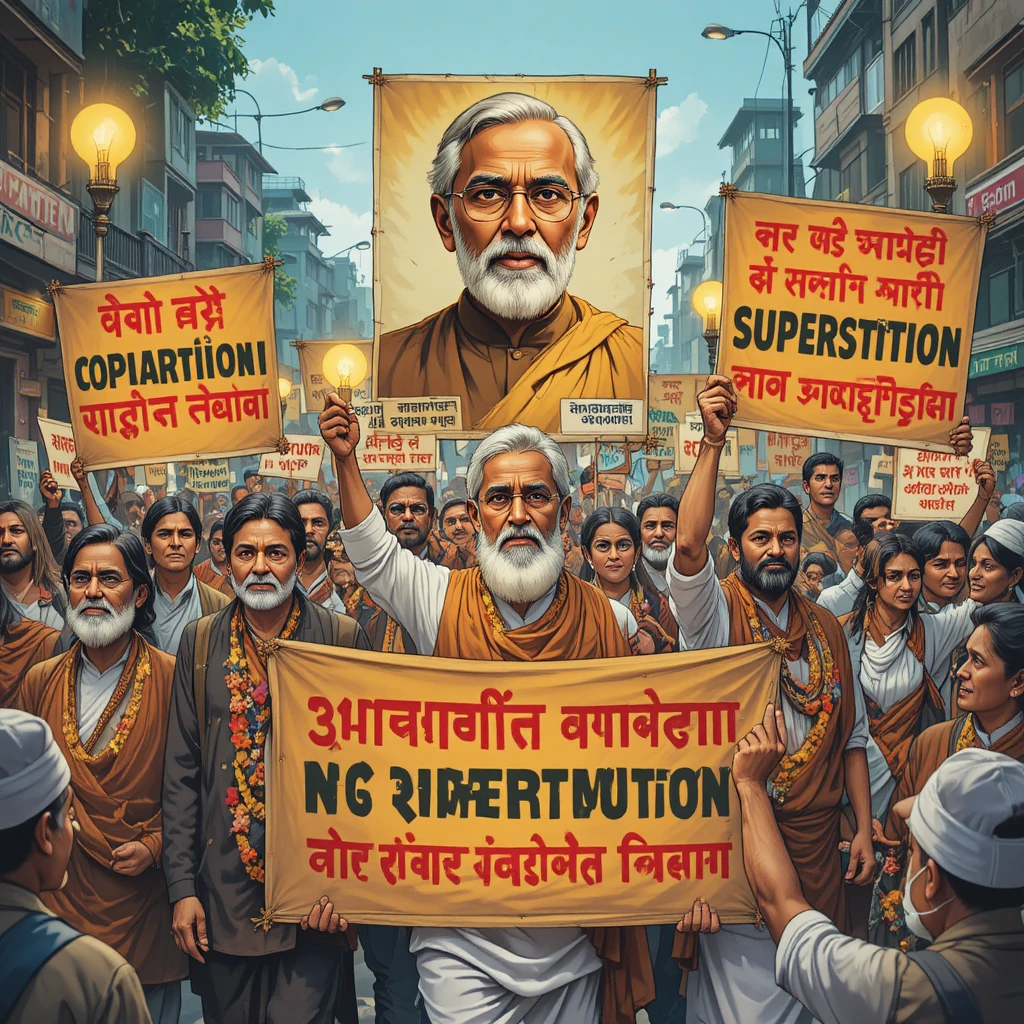
MANS’s campaigns educate on rational thinking, exposing Vastu’s inconsistencies (e.g., south entrances deemed inauspicious despite prosperous examples). Post-Dabholkar’s 2013 assassination, MANS pushed for anti-superstition laws.
The Maharashtra Andhvishwas Act and Its Relevance to Pseudoscience
Enacted in 2013 after Dabholkar’s murder, the Maharashtra Prevention and Eradication of Human Sacrifice and other Inhuman, Evil and Aghori Practices and Black Magic Act targets exploitative superstitions. Section 3 prohibits practices in the Schedule, cognizable and non-bailable, with 6 months to 7 years imprisonment and fines.
Relevant to pseudoscience:
- Entry 2: Displaying “miracles” for money or to deceive—covers Vastu claims of supernatural benefits.
- Entry 10: Deceptive claims of supernatural powers—applies to Vastu consultants promising prosperity via alignments.
- Section 12: Savings for legitimate practices, but pseudoscientific exploitation falls under the Act.
The Act empowers vigilance officers to investigate, aligning with MANS’s anti-pseudoscience efforts.
Common Sense Perspective on Vastu Shastra: Practical Wisdom Overlaid with Myth
Common sense views Vastu as ancient practicalities (e.g., east-facing for light) mythologized. Gupta (1984) notes traditional designs evolved from observation, not shastra. Why the overlay? Ancient societies explained phenomena through mythology; Vastu codified observations but added unneeded mysticism.
Rigid rules ignore context; common sense prioritizes site-specific design. Persistence stems from cultural fear, not efficacy.
Expanded Sections on Evidence-Based Design for Health and Well-Being
Evidence-Based Space Utilization by Direction and Region: Sunlight, Wind, and Passive Design
This section explores scientifically grounded approaches to space utilization in buildings, focusing on passive design strategies that leverage sunlight for passive solar heating and lighting, wind for natural ventilation, and overall site-specific adaptations to enhance occupant health, reduce energy consumption, and improve indoor environmental quality. Passive design, as defined by the U.S. Department of Energy, uses natural forces like solar radiation, wind patterns, and thermal buoyancy to condition spaces without mechanical systems, potentially reducing heating needs by 40-60% in suitable climates. In India, with its diverse climates, these strategies must be tailored to regional conditions, drawing from bioclimatic architecture principles that integrate local weather data, topography, and cultural practices. Key benefits include better circadian rhythm regulation from natural light (reducing seasonal affective disorder), improved respiratory health from ventilation (lowering allergens and CO2 levels), and holistic well-being through thermal comfort.
Passive design guidelines, such as those from India’s Bureau of Energy Efficiency (BEE), emphasize building orientation, form, shading, and ventilation to optimize solar gains in winter while minimizing them in summer. For instance, elongating buildings along an east-west axis minimizes east-west heat gain while maximizing north-south daylight exposure, aligning with recommendations from the Whole Building Design Guide (WBDG). Wind roses and solar path diagrams are essential tools for site analysis, ensuring openings capture prevailing breezes for cross-ventilation, which can reduce indoor temperatures by 2-5°C in hot periods. Health-wise, these designs support vitamin D synthesis from sunlight (preventing deficiencies linked to bone health) and reduce mold growth through better airflow, per CDC guidelines on indoor air quality.
Punjab, Delhi, Western Uttar Pradesh, Haryana (Composite Climate)
The composite climate of northern India, characterized by hot-dry summers (up to 45°C), cold winters (down to 0°C), and moderate monsoons, requires balanced passive strategies for year-round comfort. Prevailing winds are northwesterly in summer and northeasterly in winter, with solar radiation peaking south-facing in winter for passive heating. Evidence from BEE’s Design Guide recommends orienting buildings with long axes east-west, placing living spaces south for winter sun (gaining 20-30% passive heat) while shading them in summer with overhangs or deciduous trees. North-facing rooms stay cooler, ideal for bedrooms to promote better sleep by avoiding afternoon heat buildup, which can disrupt circadian rhythms.
Sunlight utilization: South-facing windows with low-e glazing and overhangs (1-1.5m deep) allow low-angle winter sun for vitamin D exposure while blocking high summer rays, reducing cooling loads by 15-25% per simulations in EnergyPlus software. East-facing kitchens capture morning light for hygienic food prep and mold prevention through UV drying effects. West-facing utilities minimize glare and heat in living areas.
Wind strategies: Align buildings perpendicular to northwesterly winds for cross-ventilation, using operable windows on opposite walls to achieve 6-10 air changes per hour (ACH), improving IAQ and reducing respiratory issues. In humid periods, stack ventilation via high vents expels warm air, per WBDG principles.
Case study: PEDA Solar Passive Complex in Chandigarh (near Punjab-Haryana) uses south-oriented design, wind towers, and solar chimneys, achieving 30-40% energy savings and better occupant health through natural light and ventilation. Another: Delhi homes with south orientations saved 20% on cooling, per local studies. These align with NBC 2016 codes for RETV (Residential Envelope Transmittance Value) below 15 W/m².
Health impacts: Enhanced sunlight reduces SAD incidence by 15-20%, while ventilation lowers CO2 to <1000 ppm, boosting cognitive function per Harvard studies.
West India (Gujarat, Maharashtra; Hot-Dry/Warm-Humid)
West India’s climates vary: hot-dry interiors (Gujarat) with extreme temperatures (45°C summer, low humidity) and warm-humid coastal Maharashtra with high rainfall and humidity. Southwesterly monsoons drive wind patterns, necessitating designs for ventilation and shading. Bioclimatic approaches, like those in Wada architecture, use courtyards for stack ventilation and shading.
Sunlight: North-south facades minimize west heat; south living areas with overhangs for shaded winter light. East kitchens for morning sun; jaalis (perforated screens) reduce glare by 30-50% while allowing light.
Wind: Orient perpendicular to monsoons; courtyards enhance airflow, reducing humidity-related issues like asthma. In hot-dry zones, wind towers capture breezes for evaporative cooling.
Case study: Mumbai retrofits with east-west orientations cut energy 15% via breezes; Pol houses in Gujarat use compact forms for mutual shading. Sangath by Doshi in Ahmedabad uses vaults and subterranean spaces for cooling.
Health: Ventilation reduces VOCs; sunlight boosts mood via serotonin.
North East India (Assam; Warm-Humid)
Northeast’s warm-humid climate features high rainfall (2000+ mm/year), humidity (>70%), and moderate temperatures (25-35°C). Easterly winds prevail; designs focus on ventilation to combat humidity and mold.
Sunlight: South slopes for winter sun; large eaves for shading. East/north living areas for morning light.
Wind: Orient 45° to easterlies; elevated Assam-type houses with perforated bamboo walls for airflow (up to 0.8 m/s, shifting comfort to 32°C).
Case study: Traditional Assam homes maintain comfort without AC; studies show 80% comfort at 25-30°C.
Health: Ventilation reduces mold, improving respiratory health; light regulates sleep.
Air Circulation in Buildings: Scientific Principles for Indoor and Outdoor Health
Air circulation, or ventilation, is the process of exchanging indoor air with outdoor air to maintain healthy IAQ, control temperature, and remove pollutants. Scientific principles include wind-driven (cross-ventilation) and buoyancy-driven (stack effect) flows, per ASHRAE standards. Natural ventilation achieves 6-12 ACH, diluting CO2, VOCs, and PM2.5, reducing SBS by 30-50%.
Indoor principles: Cross-ventilation uses pressure differences; stack effect rises warm air out high vents. Health: Lowers infection risk (e.g., COVID via dilution), improves cognition.
Outdoor integration: Courtyards create microclimates; wind roses guide designs. Benefits: Reduces urban heat islands, enhances mental health via fresh air.
Case: NV offices in NE India show comfort up to 32°C with airflow.
Creating Cozy Indoor and Outdoor Environments: Scientifically Proven Strategies
Cozy spaces evoke safety and relaxation, backed by psychology; biophilic design reduces stress by 60%. Strategies include natural light (circadian health), materials (warm wood for comfort), and ventilation (fresh air for mood).
Indoor: Use soft lighting, plants for air purification, organic shapes. Outdoor: Seamless transitions with verandas, green roofs.
Health: Lowers cortisol, boosts serotonin.
Integrating Air Circulation and Cozy Design for Holistic Well-Being
Integration combines ventilation with cozy elements: biophilic vents, courtyards for airflow and nature connection. Benefits: Enhanced IAQ in warm spaces, reducing stress while improving health.
Case: Wellness retreats with natural ventilation and biophilic coziness.
Conclusion
Evidence-based designs promote health through passive strategies, ventilation, and cozy integration, fostering sustainable well-being.