

Introduction: The Ancient Guardian Under Siege
The Aravalli Range, spanning approximately 800 km from southwestern Gujarat through Rajasthan and Haryana into Delhi, is not merely a chain of hills—it is one of the oldest geological formations on Earth, with rocks dating back 2.5–3.5 billion years. Far older than the Himalayas, these eroded ridges have survived multiple orogenies and serve as northwestern India’s last natural defense against the relentless advance of the Thar Desert.
Table of Contents


For centuries, the Aravallis have sustained life: recharging groundwater for millions, moderating climate, filtering dust and pollutants, supporting unique biodiversity, and cradling ancient civilizations and medieval kingdoms. Yet, in the name of “development,” this irreplaceable ecosystem is being systematically dismantled through mining, real estate encroachment, policy dilution, and selective enforcement.
Recent events—particularly the Supreme Court’s November 2025 judgment narrowing the definition of “Aravalli Hills” and ongoing demolitions in heritage villages like Anangpur and Surajkund in Faridabad—have exposed a pattern: create an environmental crisis, displace communities, and then privatize the solutions for corporate gain.

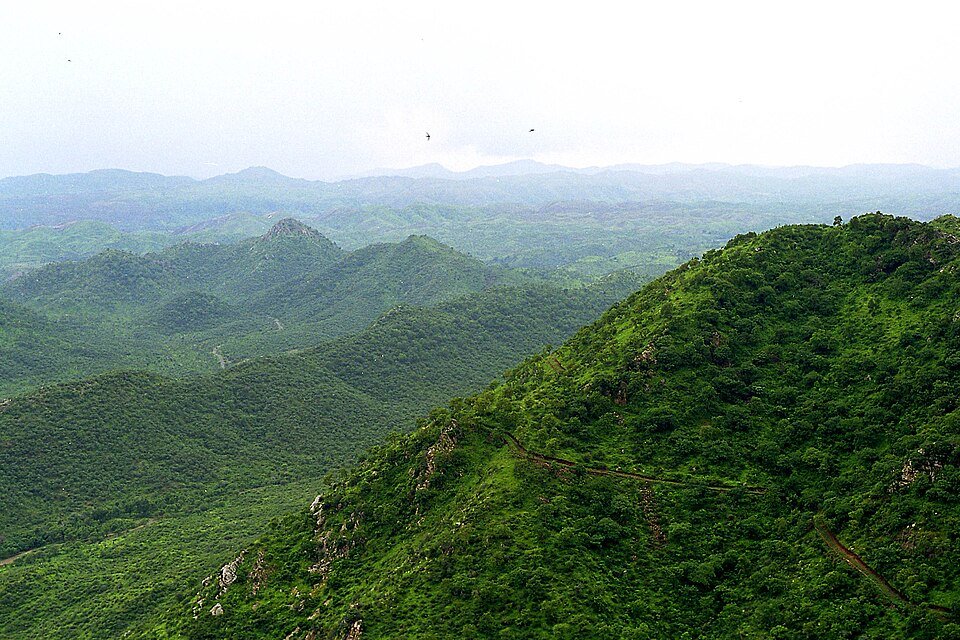
This 10,000+ word article examines the Aravalli’s geological, historical, ecological, and cultural significance; documents how successive governments have enabled its destruction; analyzes the human, agricultural, health, and climatic consequences; and exposes the “privatize the crisis” model evident in policy shifts and ground realities.
Part 1: Geological and Historical Significance
Geological Origins
The Aravalli Craton forms part of the ancient Indian Shield. Its basement rocks belong to the Banded Gneissic Complex (BGC), dated 3.3–3.5 billion years old. The Aravalli Orogeny (1.9–1.8 Ga) and Delhi Orogeny (1.0–0.85 Ga) folded sedimentary and volcanic sequences into mountains that once rivalled the Himalayas in height.
Composed primarily of quartzite, schist, gneiss, marble, and granite, the range has undergone extreme erosion, leaving undulating hills with the highest peak, Guru Shikhar (1,722 m) on Mount Abu. Fractured quartzite aquifers make it an exceptional groundwater recharge zone.

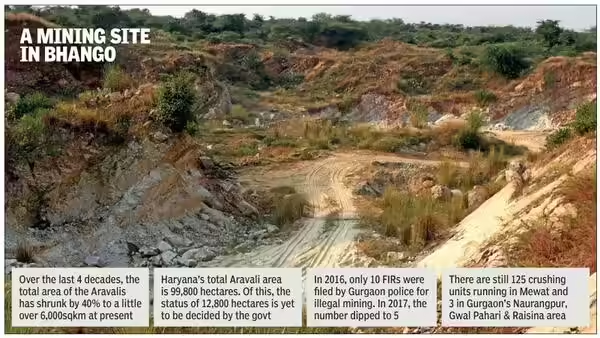
Evidence of early human activity dates to the Paleolithic; copper mining from sites like Ganeshwar (3000 BCE) supplied the Indus Valley Civilization.


References: Geological Survey of India (GSI) reports; Precambrian Research papers (2010–2020); Wikipedia (Aravalli Range, validated with primary sources).
Historical and Cultural Legacy
The Aravallis sheltered prehistoric rock art, medieval Rajput forts (Kumbhalgarh, Ranthambore—UNESCO World Heritage), Jain temples (Dilwara), and trade routes. They provided strategic defense and water security during droughts.
The Bishnoi community’s bond is profound. Founded by Guru Jambheshwar (1451–1536), their 29 principles prohibit cutting green trees and harming animals. The 1730 Khejarli Massacre—363 Bishnois martyred hugging khejri trees—remains a global symbol of environmental sacrifice, inspiring Chipko and earning India’s Amrita Devi Bishnoi Wildlife Protection Award.
References: Sahapedia; Global Nonviolent Action Database; Bishnoi community records.
Part 2: Ecological Importance and Biodiversity
Role as Desert Barrier and Climate Moderator
The Aravallis block hot, dry westerly winds and Thar sands, preventing desertification of the Indo-Gangetic Plain. Studies show they cool regional temperatures by 2–4°C and reduce dust load in Delhi-NCR.
They influence monsoon currents; vegetation enhances moisture retention and rainfall orographic effects.
Groundwater Recharge
Fractured rock systems and forests enable high infiltration rates—estimated 1–2 million liters per hectare annually. Aquifers here supply Delhi (30–40% dependency in parts), Gurugram, Faridabad, Alwar, and Jaipur. Rivers Banas, Luni, Sahibi, and seasonal streams originate in the range.
Biodiversity Hotspot
At the desert-forest ecotone, the Aravallis host tropical dry deciduous and thorn scrub forests. Flagship species: leopard, striped hyena, jungle cat, nilgai, blackbuck, Indian peafowl, great Indian bustard (critically endangered), Egyptian and Indian vultures.
Restored sites like Aravalli Biodiversity Park (Delhi) harbor 981 plant species, 209 birds, 113 butterflies, 19 mammals. Overall estimates: 400+ plants, 300+ birds, 50+ reptiles/amphibians.
National parks: Sariska (tiger reintroduction), Ranthambore, Mount Abu Sanctuary.
References: Wildlife Institute of India (WII) reports; Mongabay India; Delhi Biodiversity Parks documentation; eBird/Forest Survey of India (FSI).
Part 3: Systematic Destruction – The Timeline of Betrayal
Early Encroachment and Mining Boom
Post-independence, mining for marble, soapstone, quartzite, and copper intensified. By the 1980s, Rajasthan had thousands of leases; illegal mining flourished.
Supreme Court interventions:
- 1992: Ban on tree felling in parts.
- 2002: Complete mining ban in Aravalli portions of Haryana (MC Mehta case).
- 2009: Ban extended; Central Empowered Committee (CEC) documented massive violations.
Yet, loopholes persisted: “renewals” of old leases, state-level permissions, and non-recognition of ecological continuity.
Policy Dilution and Definition Changes
Earlier protections (FSI 2010, CEC reports) considered:
- Slopes >3°
- Contiguous hillocks
- Buffer zones
- Recorded forests under PLPA/Indian Forest Act
The November 2025 Supreme Court judgment (in a Haryana mining case) accepted a narrow geological definition: “hill” as landforms ≥100 m local relief, “range” within 500 m proximity. This excludes ~90–92% of features previously protected, per FSI mapping.
Critics argue this aligns with mining lobby demands; government claims it prevents “misuse” of broad definitions.
Timeline of Erosion
- 2019: Definition quietly narrowed in notifications.
- 2020: Mining licenses renewed/issued despite bans.
- 2021: Protests against encroachments suppressed.
- 2022: Environmental Impact Assessment (EIA) norms diluted.
- 2023–2025: Extraction intensifies; demolitions begin.
References: Supreme Court judgment (Nov 2025); The Wire (Nov–Dec 2025 articles); Down to Earth reports; CEC submissions.
Real Estate Encroachment
Gurugram and Faridabad boomed on Aravalli foothills. Farmhouses, gated colonies, and commercial projects encroached notified forests. Many projects obtained clearances via manipulated maps excluding Aravalli features.
Part 4: Ground Reality – Anangpur and Surajkund Demolitions
Anangpur village, near Surajkund lake (built 8th–10th century by Tomar king Anangpal), has inhabited history spanning 600–1200 years. Revenue records (jamabandi) show ancestral land ownership.
In 2024–2025, Haryana government launched PLPA “encroachment” drives:
- Over 6,000 structures identified.
- Demolitions targeted poor villagers’ homes, small farms, and old settlements.
- Elite farmhouses and banquet halls (often politically connected) faced delays or partial action.
- Government/tourism structures (e.g., Faridabad Gymkhana Club) untouched.
Residents allege selective action to clear prime land for corporate real estate. Maha Panchayats protested; police used force.
References: Ground reports (People for Aravallis, The Wire, Newslaundry); resident petitions; Haryana Forest Department notices.
Part 5: The “Privatize the Crisis” Model
As public resources degrade, private markets boom:
- Groundwater depletion → Packaged water, RO plants, tankers.
- Air pollution → Air purifiers, masks, private hospitals.
- Health crises → Specialized respiratory/climate-related treatments.
The slides presented capture this perfectly:
- Step 5: Privatize the Crisis – Create scarcity, then sell solutions.
- Predicted outcomes: Permanent water crisis in Delhi-NCR, intensified dust storms, collapsed farmer productivity, 10-fold rise in public health expenditure.
Corporates benefit while costs are socialized.
References: Down to Earth analysis; NITI Aayog water reports; CSE studies on air purifier market growth.
Part 6: Catastrophic Impacts of Continued Destruction
Soil Erosion and Agricultural Collapse
Loss of vegetative cover accelerates erosion; dust blankets fields, reducing fertility. Yields of wheat, mustard, and millet in Haryana/Rajasthan border areas already declining.
Desertification threatens 31 million hectares potentially turning arid.
Groundwater Depletion
Recharge zones destroyed → irreversible drop in water tables. Delhi-NCR already extracts 2–3 times sustainable yield; further loss could make aquifers saline or dry permanently.
Weather and Monsoon Disruption
Breaches alter wind patterns; models predict reduced monsoon rainfall in northwest India, more intense storms elsewhere.
Dust storms frequency doubled in recent decades; projected to intensify.
Biodiversity Loss
Habitat fragmentation → local extinctions. Leopards increasingly enter human areas; vulture populations near collapse.
Human Health Crisis
Silicosis from mining dust; respiratory diseases from pollution. Delhi’s AQI spikes linked to Aravalli breaches.
Health costs: CSE estimates pollution-related expenditure already ₹ billions; projected 10x rise with worsened conditions.
Displacement and Social Injustice
Poor and indigenous communities (Bishnoi, Gujjar, Meo) lose livelihoods and ancestral lands while elites gain.
Part 7: Conservation Efforts and Hope
- Aravalli Green Wall Project (announced 2023): 1,400 km corridor, afforestation, water harvesting.
- Community restoration: Aravalli Biodiversity Park success.
- Activism: People for Aravallis, Bishnoi-led protection.
Yet, these remain underfunded amid ongoing plunder.
Conclusion: A Call to Reverse the Betrayal
The Aravalli is not disposable real estate—it is India’s ecological backbone. Narrow definitions, selective demolitions, and corporate favoritism reveal a dangerous prioritization of profit over survival.
Restoring broad protections, recognizing community rights, halting mining/real estate in recharge zones, and adequately funding restoration are urgent imperatives. Failing this, northwest India faces desertification, water wars, agricultural collapse, and health catastrophes—all while corporations profit from the crisis they helped create.
The Bishnois showed in 1730 that some things are worth more than life itself. Today, the question is whether modern India values its ancient guardian enough to save it.
Key References and Sources:
- Supreme Court of India judgments (MC Mehta cases, Nov 2025 Aravalli definition case)
- Central Empowered Committee reports (2009–2025)
- Forest Survey of India State of Forest Reports (2019–2023)
- Geological Survey of India publications
- Wildlife Institute of India biodiversity assessments
- Down to Earth, The Wire, The Hindu, Mongabay India, Newslaundry (2020–2025 articles)
- People for Aravallis ground reports and petitions
- Centre for Science and Environment (CSE) studies on pollution and water
- NITI Aayog Composite Water Management Index
- Bishnoi community sources and Khejarli documentation
- Academic papers: Precambrian Research, Gondwana Research, Current Science
The Aravalli’s survival is not just environmental—it is civilizational.